Sample receiving bench
Sealed sample boxes, labels, chain-of-custody sheets, freezer, disinfectant station and a clear intake routine.
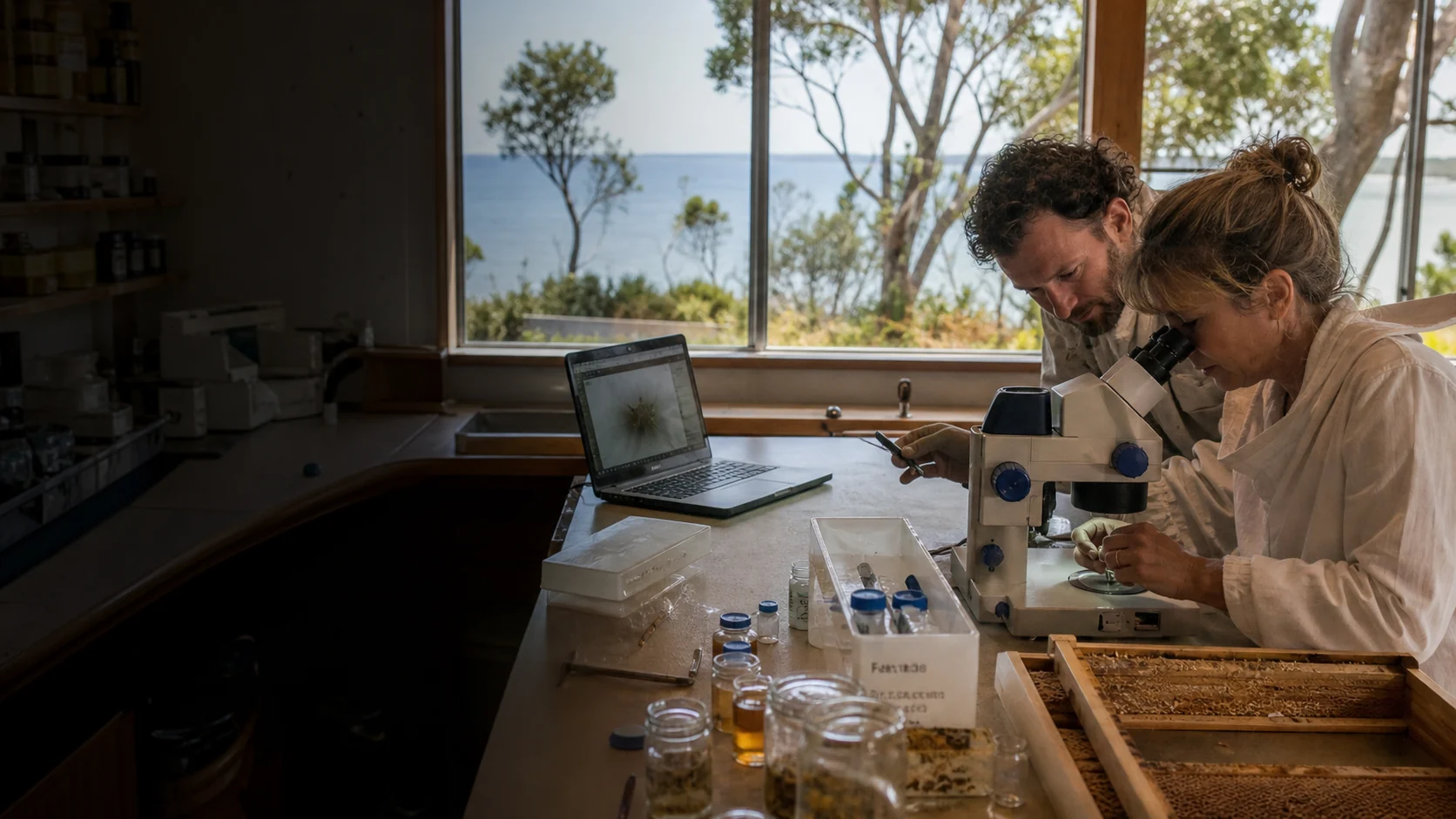
No location is chosen yet. The better first move is a digital twin: map the needs, access, neighbours, services, Country, transport, risks and options before anyone points at a building or asks another facility to make room.
Digital twin first
The aim is to add capacity, not take capacity from other people. A digital twin can compare possible new sites, shared-use options, mobile lab routes and community apiary nodes before anyone commits to a physical footprint.
That order matters. The model can test sample flow, microscopes, data, training, vehicle access, neighbours, utilities, field practice, fire risk and seasonal demand without assuming the answer.
Lab zones
These are not luxury ideas. They could become simple working places where samples, people and questions stop getting mixed up.
Sealed sample boxes, labels, chain-of-custody sheets, freezer, disinfectant station and a clear intake routine.
Stereomicroscopes, a compound microscope, camera mount and reference sheets for mites, beetles, larvae and brood symptoms.
Bee cages, incubator, humidity control, scales, microplates and timers for testing ideas before hive trials.
Controlled work on beetle behaviour, trap prototypes, pupation containers and freezer kill steps.
Workshops, dashboard review, printed protocols, map wall and a secure beekeeper data system.
Clear links to universities, technical labs, CSIRO or other partners for tests that need deeper equipment.
Reality check
A real lab is not defined by grand language. It is defined by samples handled well, local workshops that people attend, data that helps decisions, and partners who make beekeeper life easier.
If a suspicious sample comes in, can it be labelled, stored, photographed and referred without confusion?
Does a workshop help someone monitor better, reduce beetle pressure, report correctly or check treatment effectiveness?
Can the project model pressure patterns, access, services and site options at the detail level people choose before physical investment begins?