What is being observed?
Local beekeepers are reporting pressure, Queensland is managing varroa risk, and small hive beetle is plausible in warm coastal conditions.
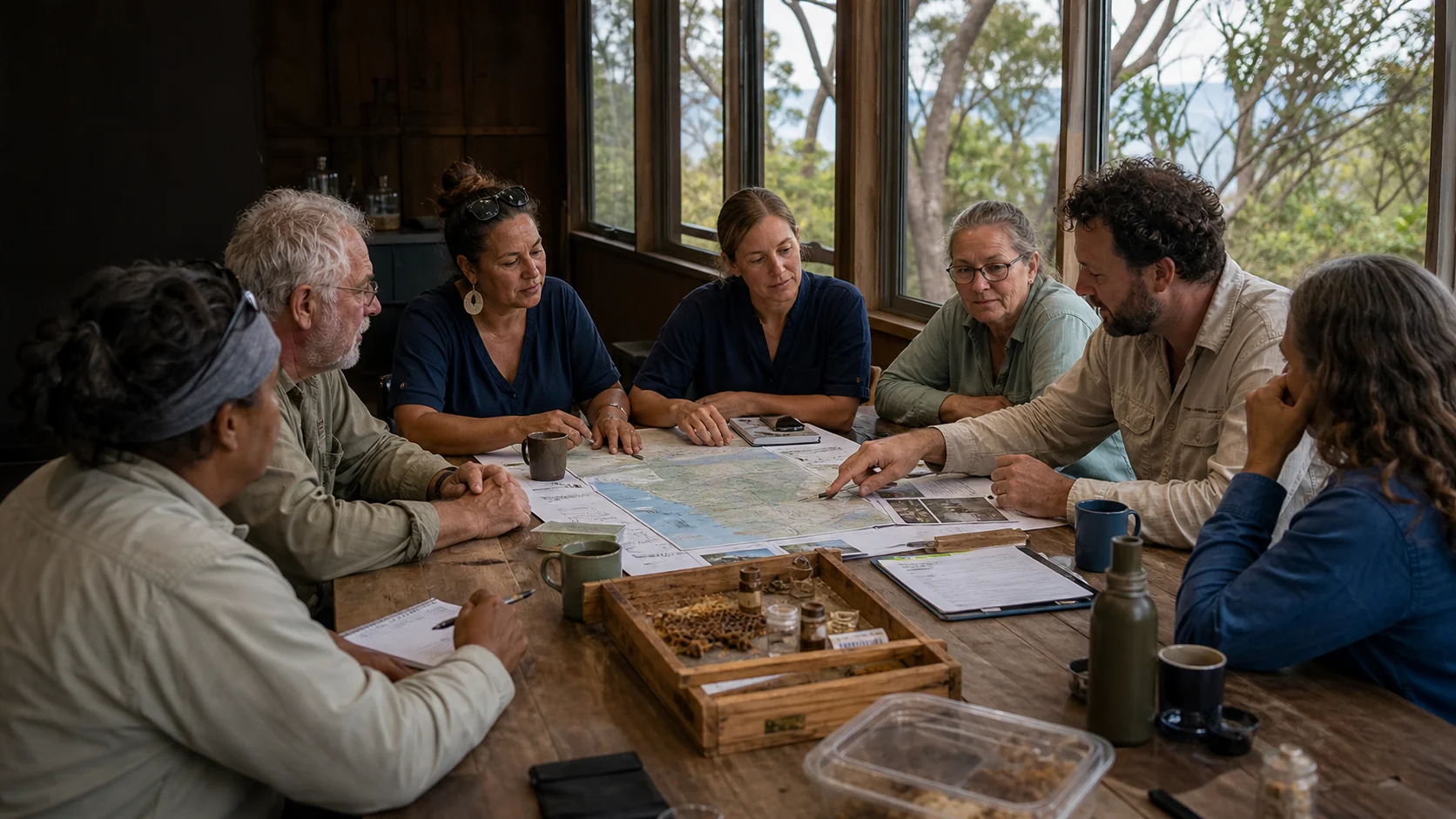
The partner question is not who gets the logo at the top or who gets to be in charge. It is how a co-op model of responsible stewardship can make local beekeeper action more capable, better resourced and better connected while respecting Country, self-sovereignty and practical hive knowledge.
Partner pack
A useful partner pack could make the first meeting concrete. It could state the problem, name the island asset, explain the community base, set stewardship principles, show research value and ask for named contributions.
Local beekeepers are reporting pressure, Queensland is managing varroa risk, and small hive beetle is plausible in warm coastal conditions.
The partner pack could ask what new bee-health capacity the island needs, then use a digital twin to explore options before choosing a site.
Beekeepers can provide observations, samples, practice knowledge and field reality at the sharing level they choose.
Everyone is invited into the stewardship conversation. No single organisation is assumed to hold the project; Country, plants, data and benefit-sharing still need respectful care.
Bee biosecurity, resistant varroa, beetle pressure, community surveillance, native plant chemistry and island ecology all meet here.
One academic lead, one technical contact, one student pathway and one in-kind service, modelling or specialist-testing contribution.
Co-op stewardship
The table can make local knowledge visible on chosen terms without presuming who is in charge before people have even gathered. Beekeepers are not just participants; in the best version they are co-researchers, paid for structured observation work when funding allows.
Best partner sequence
The cleanest path is not to invite every institution into the same fog. It is to ask the first partners for narrow, useful contributions.
Could universities, council, local makers and technical allies help model new capacity before any physical location is chosen?
Could SCU help design mite and beetle monitoring, IPM training and beekeeper extension?
Could official and technical advisors keep the lab aligned with reporting, movement, treatment and surveillance rules?