Kids and makers
What would a five-minute sketch reveal?
Could school groups, surfers, fishers, artists, makers, engineers and marine scientists all add pattern ideas to the same public board?
Could wave and tide be explored from first principles: flutter, vortex shedding, shrimp timing, mantis-shrimp strikes, reef geometry, sensors, play, modelling and maker-space tests?
First principles ocean lab
The known wave and tidal options explored by humans are only a small patch of the design space. A no-underwater-blades posture can invite more imagination: flutter cascades, shrimp appendage timing, mantis-shrimp strike physics, vortex shedding, oscillating foils, flexible flags, membranes, reef lattices, buoyant hinges, shell geometries, sensor trickle-power and ideas a kid can sketch in five minutes.
Wave atlas
Could ARENA and CSIRO-style resource mapping show swell, season, direction and energy while leaving the design space open?
Open sourceFlutter
Could inverted flags, kelp-like strips, soft hinges or piezo surfaces turn small oscillations into useful sensor power or lessons?
Open sourceVortex
Could vortex-induced vibration, fish-like timing or oscillating bodies offer no-blade current ideas for models and careful field questions?
Open sourceShrimp clue
Swimming shrimp show cascading appendage timing. Peacock mantis shrimp deliver one of the fastest animal strikes measured: their hammer-like mouthparts can hit 12-23 m/s in water and make cavitation bubbles. Could those clues become sketches, simulations and bench rigs?
Open Patek LabFoils
Could biomimetic foils, fish-fin movement and flexible hydrokinetic forms be compared with standard turbines instead of dismissed?
Open sourceReef geometry
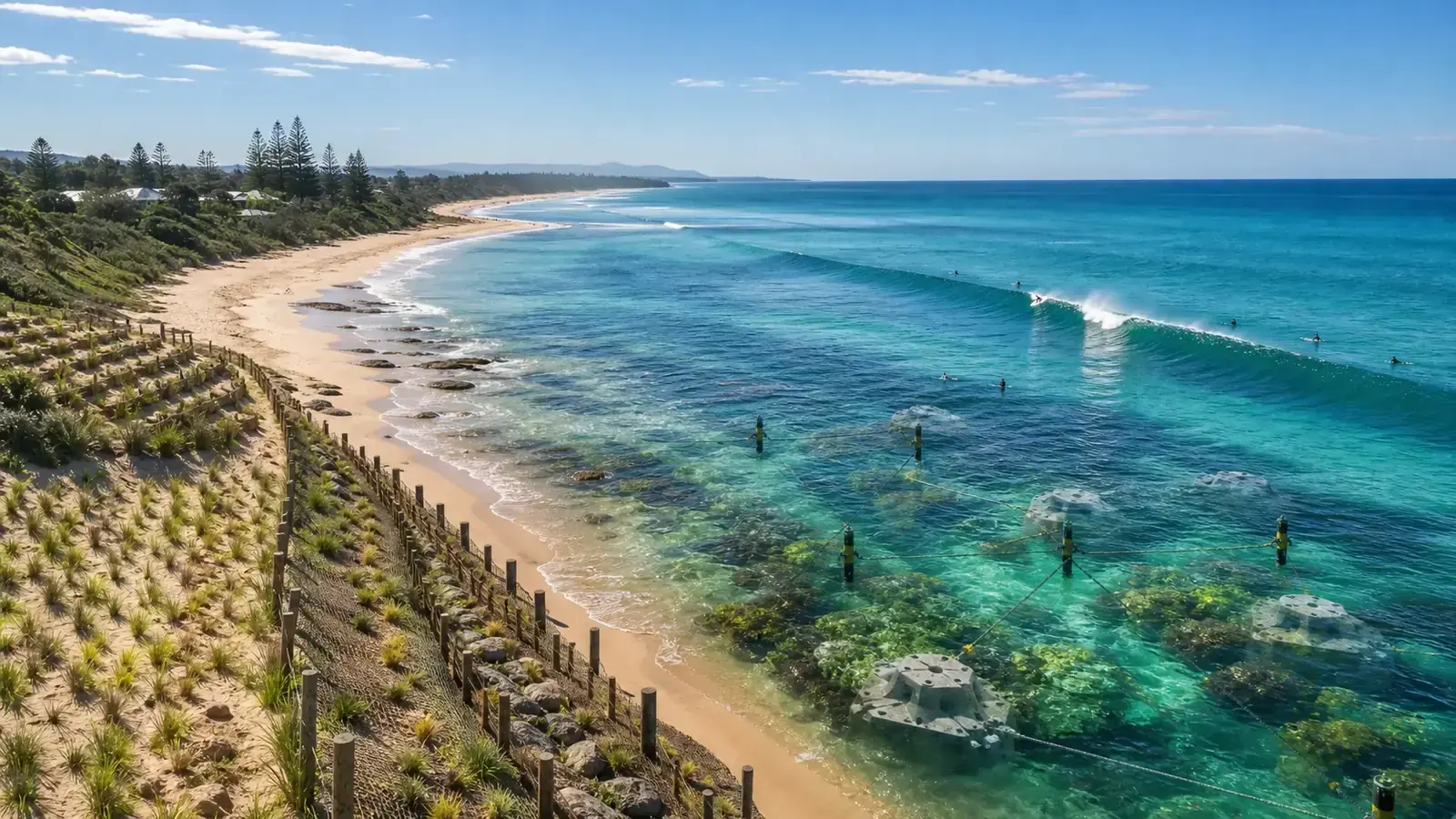
Could oyster reefs, living shorelines, surf banks, reef modules and Sandworm material flows become their own public calculator and map?
Open reefsKids and makers
Could school groups, surfers, fishers, artists, makers, engineers and marine scientists all add pattern ideas to the same public board?