Heavier experimental kiosks for local simulation, weather context, saved knowledge, AI models and resilience planning.
Everyday public infrastructure
Island screens that work every day.
Straddie Disaster Kiosks can grow from a simple idea: make public screens useful in normal life, so the same trusted screen layer can carry emergency information, local help, weather context and permissioned community notices when pressure hits.
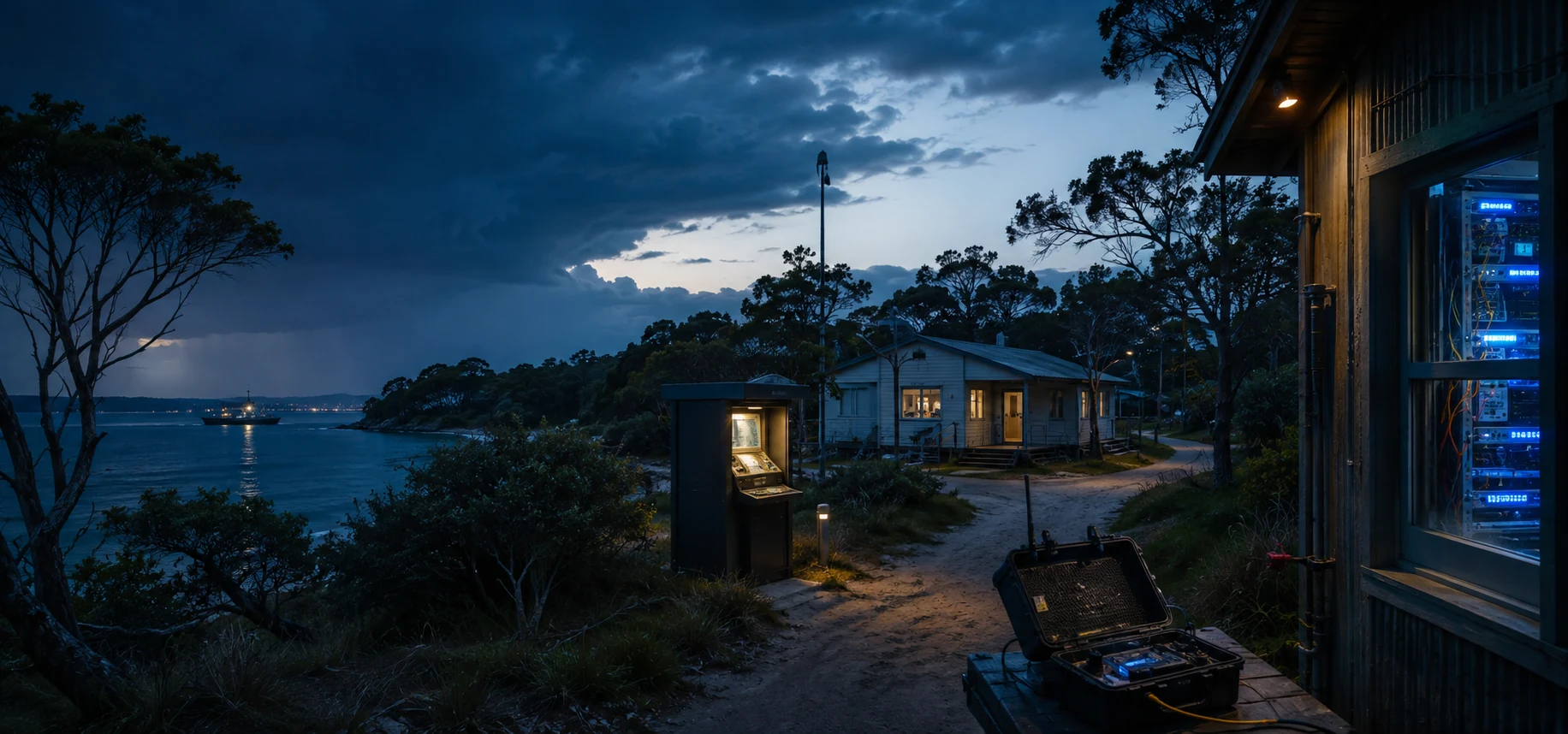
Island layer
Not one kiosk. A public layer.
Rugged simulation kiosks, venue TVs, community notice screens, local notice spots, Markdown builders, beach and weather camera points, Ready S.E.T. Co-op media work and permissioned cloud AI can become one calm public information layer.
The basics stay clear. Official emergency channels keep their role, while local screens support public understanding, local coordination, everyday usefulness and preparedness habits.
A small computer behind a venue TV, with a touch overlay where useful, can turn the screen into part of a local publishing layer.
Online AI can help draft, summarise, translate, analyse and package content, while local screens keep the public layer useful when the internet drops.
Main paths
Follow the build path.
The work has a few clear parts: rugged simulation kiosks, venue TVs, community notice screens, local publishers, sensors, cloud AI support, local media and the workforce layer that keeps everything maintained.
01Rugged kiosks
How to scope heavier island kiosks with power, weather protection, sensors, local models and offline readiness.
02Community notice screensHow local notice spots and venue TVs can become the everyday Power On Abundance display layer.
03Venue publishersHow any venue can use Markdown builders, permission notes and review habits to shape useful local updates.
04Cameras and weatherHow beach, surf and weather monitoring points can feed useful public signal with care for people and place.
05Ready S.E.T. Co-op and cloud AIHow hyperlocal media, training, screen care, cloud AI support and local work pathways could make the proposed screen layer sustainable.
06Roadmap and docsPhases, source documents, public boundaries and links for the next partner conversation.
Power On Abundance
The screen is useful long before the hard day.
On normal days a future screen layer could show ferry notes, community events, local job help, repair offers, weather windows, training clips, market updates, grant windows, club notices and local media. During outages or disruptions, the same screens could shift to saved maps, verified alerts, help requests, device charging and calm local instructions.
That is the abundance layer: more local signal, more local skill, more ways for people to help, and more shared ways to stay informed.
Planning references
Connect the companion plans.
The kiosk concept can share a planning family with companion experiments for noticeboards, content assets, grants, profiles, honour boards, civic builders, Ready S.E.T. Co-op Hyperlocal Media and the wider Strange but True community ledger pattern.
Noticeboard network prototype
Reference patterns for public notice files, screen targets, category pages, device manifests and noticeboard builders.
Ready S.E.T. Co-op media planA proposed training, storytelling and local publishing pathway that could help keep future screens fresh.
Content assets toolkitPlanning builders for business profiles, shared assets, equipment wishlists and local media needs.
Grants profile kitProfile, business, readiness and milestone Markdown files for grant drafting and public evidence.
Community ledger and honour boardsOpt-in public recognition ideas for supporters, pledges, contribution records and project evidence.
Night-market noticeboard bridgeMarket and event packets that can become public notices, private planning notes, media seeds and simulation inputs.