Episode Seed
Why this episode
The contact page points to AI-Native Indie Distribution as a related doorway. That makes it a good bridge between Two Dogs, I C. Infinity, music archives and agent-ready creative infrastructure.
Red Dog angle
Red Dog can talk about how songs, metadata, release notes and context files can help future agents understand what a track is, where it came from and how it should be used.
Main beats
- Why music metadata is cultural memory, not just admin.
- What provenance means for indie artists in an AI-shaped media world.
- How recommendation systems change what gets heard.
- How a podcast can become part of the release memory around songs and worlds.
Next action
Create a source-reference template for songs used in Two Dogs episodes.
Scene Draft
Scene title
AI-Native Indie Distribution: First Visual Beat
Visual beat
Red Dog interviews a song as if it has its own passport.
Conversation beat
Red Dog asks what happens when indie music distribution is not just upload, hope and forget, but metadata, provenance, recommendation systems, licensing context and AI-readable memory.
The scene should land the episode question quickly, then leave room for the conversation to open naturally.
Animation notes
- Keep Blue Dog visually present but do not script Angel's voice.
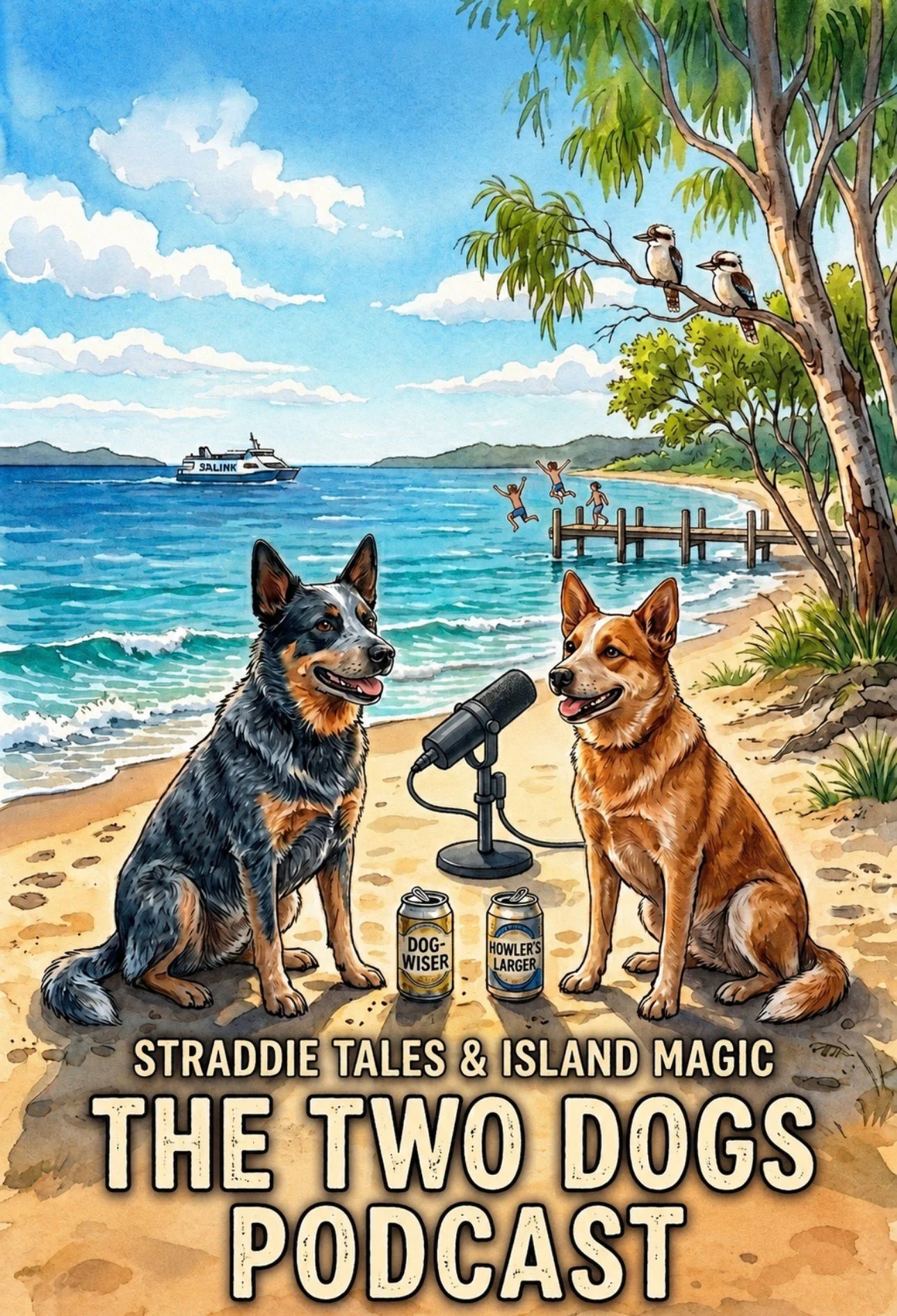
- Use the Two Dogs beach/poster world as the visual anchor.
- Let props, labels and background signs carry the more abstract idea.
- Make the first image clear enough to work as a short clip thumbnail.
Sound notes
- Waves, relaxed microphone presence and small island ambience.
- Use a short theme-song sting if it fits the cut.
- Leave timing space for Angel-directed Blue Dog reactions later.
Segment Draft
Segment name
Metadata with a soul
Purpose
Give the AI-Native Indie Distribution episode a repeatable piece that can stand alone as a clip while still feeding the larger yarn.
Format
- Red Dog names the question in one sentence.
- One concrete example is pulled from the episode seed.
- The hosts test whether the idea is useful, funny, risky, or still too muddy.
- Blue Dog timing and voice remain blank for Angel to direct.
- Close with one practical question for the listener, guest or future scene pass.
Red Dog role
Red Dog can talk about how songs, metadata, release notes and context files can help future agents understand what a track is, where it came from and how it should be used.
Guest boundary
Only include guest animal, nickname or lived examples after the guest chooses and consents to them.
Ad/Sponsor Draft
Idea
The Decent Yarn Test - AI-Native Indie Distribution
Fit
This works as an in-world sponsor or mock sponsor because AI-Native Indie Distribution needs a light practical break before the bigger idea gets too dense.
Use it as a playful ad read, not a real sponsor claim, until a real supporter or sponsor exists.
Offer
A short, clearly labelled Two Dogs ad slot that offers one useful habit, tool or local support idea connected to AI-Native Indie Distribution.
Red Dog read
Red Dog: This bit is brought to you by The Decent Yarn Test for AI-Native Indie Distribution.
If the idea cannot survive one plain-language explanation, one useful example, and one laugh at itself, it goes back in the esky until it behaves.
Not a real sponsor yet - just a reminder to keep the yarn useful.
Boundaries
Mark mock sponsor material clearly until there is a real sponsor.
Do not imply medical, legal, financial or safety outcomes unless a qualified source supports the claim.
Do not write Blue Dog copy unless Angel supplies it.
Keep the ad useful, cheeky and short.
Source Draft
Why it matters
This source trail keeps the AI-Native Indie Distribution episode connected to its originating Strange But True, Aura, local, or public-planning context without flooding the episode with every deeper document.
Useful for
- Luke and Angel discussion
- Red Dog research prep
- Scene and ad/sponsor checks
- Segment framing
- Future public/private review before publishing clips
Plain-English takeaway
Red Dog asks what happens when indie music distribution is not just upload, hope and forget, but metadata, provenance, recommendation systems, licensing context and AI-readable memory.
Do not overclaim
Do not present AI-Native Indie Distribution as a complete plan, finished policy, expert finding or public promise. Treat it as a first-draft discussion seed until Luke and Angel review it.