 C-Hour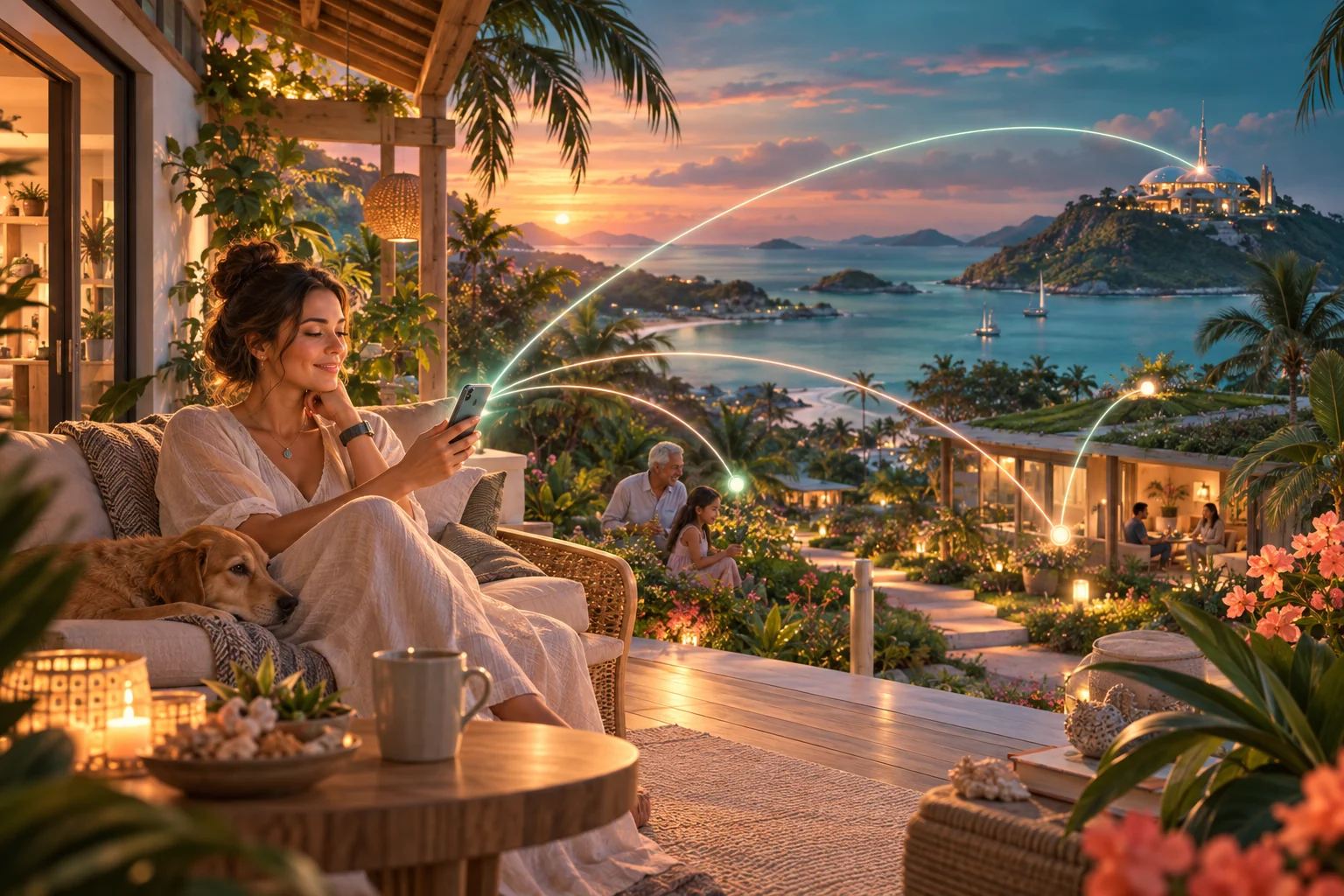
Adapted from the 23 September 2026 plan. The proposed system is open to development with participants.
A connected environment
The Web3 Sensorium is the proposed connective environment for the whole adventure. It brings personal agents, phones, smart wearables, local computing, digital twins and shared knowledge into a system people can direct. Food, health, civic learning, creative work and contribution records become connected parts of everyday life. Each connection serves a purpose the participant understands and chooses. [P3]
“Sensorium” describes the ways the system receives and interprets observations. “Web3” describes the ambition for distributed control, verifiable records and cooperation across independently shaped communities. The intended experience is an intelligent conversation and useful assistance. Buying a token or understanding cryptocurrency is not a participation requirement.
Begin with the person
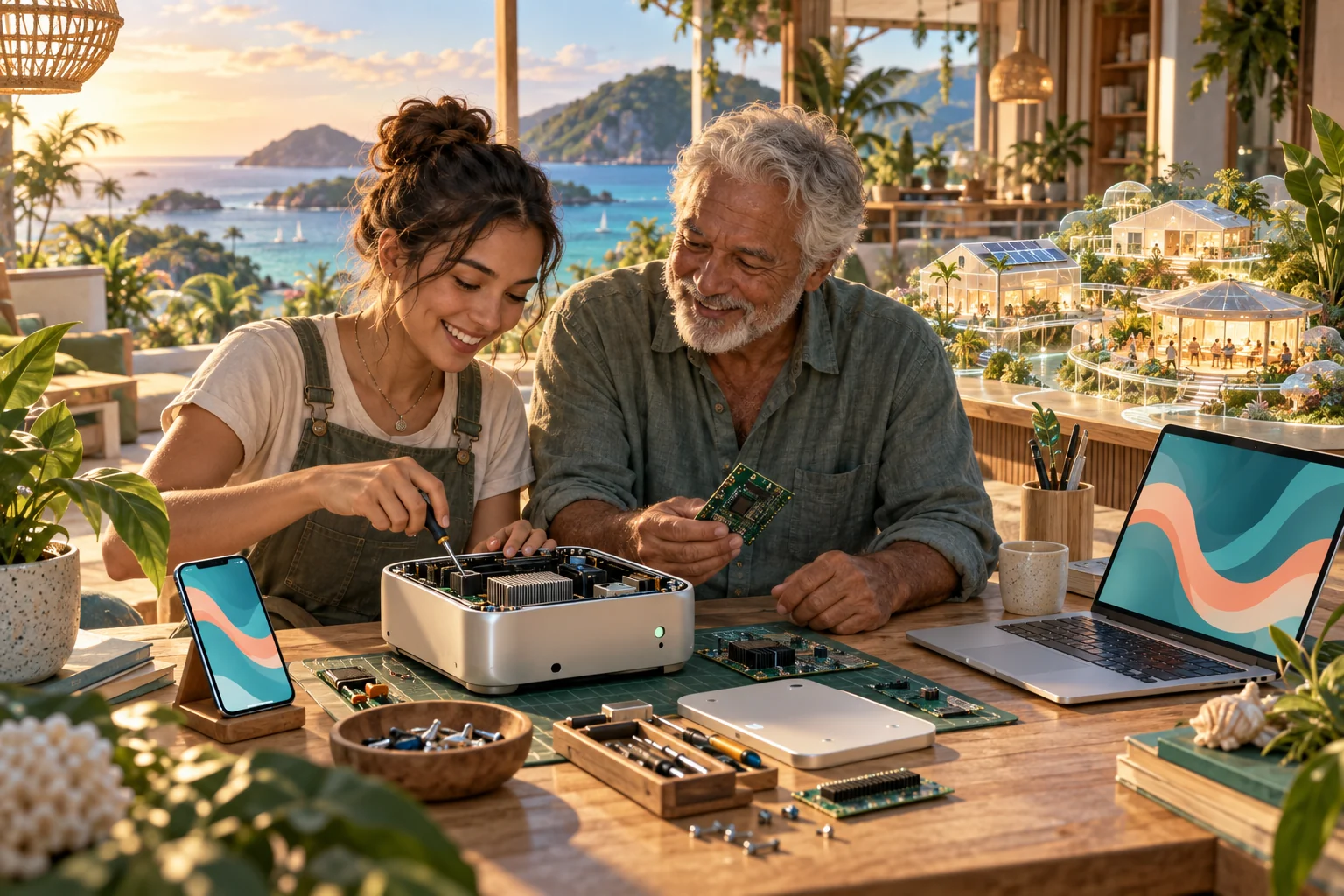
Level Zero or L0 is the private citizen and their controlled private environment. This includes the information, devices, spaces and agent interactions they choose to manage within it. Aura of Intelligence is the proposed personal organising environment. Its body-and-mind digital twin is a representation the person can inspect, correct and develop as their interests and life change.
Self-moderated data sovereignty starts with the person: their choices about observation, interpretation, retention and sharing. Standing preferences, specific agreements, pauses and changes of mind are possible ways of expressing that control. The pilot question is how to make it real and understandable in everyday interactions, including an honest account of technical limits. The software serves that sovereignty; it does not grant it.
Recognising existing care work, organising a project or exploring a learning goal offers a useful place to begin. Participants would help shape how an agent explains a proposed data use and checks that it matches their intention. Agreement about one contribution does not imply agreement to a health profile, public story or unrelated model training. A new purpose calls for a new conversation with the person concerned.
Choices across devices and networks
Phones, wearables and other sensors offer ways to reduce effort when their use suits the person. Edge networks process information close to the person or activity, on a device or nearby computing service. Keeping detailed private observations local and sharing only what the person intends is a design direction to explore. Local processing alone does not guarantee privacy; trials would examine how the proposed controls behave in practice.
For example, an agent could prepare an agreed contribution record locally, then share the confirmed activity and duration with a community ledger. Raw movement, conversation or health data need not accompany it. Where connectivity is poor, approved records can wait locally and synchronise when a connection returns, with uncertainty and duplicate entries handled explicitly.
“What are you collecting?”, “Who can see this?”, “Stop recording”, “Correct that” and “Keep this private” are examples of interactions to try. Participants would help discover whether the responses actually give them clarity and control. That includes what happens after consent changes, what is still held elsewhere and what withdrawal or deletion means in practice. Personally controlled private life remains the foundation of this exploration.
Real interactions would reveal more than a polished demonstration: a mistake, changed preference, lost connection or a request the agent misunderstands. People using supported conversations bring especially important insights about assistance without surrendering control. Questions that need human judgement would be worked through with the people concerned, with the approach itself open to revision.
Learn through personal and place-based twins
A personal Aura connects interests, learning and projects. A place-based digital twin connects maps, observations, models and project information. Minjerribah’s proposed twins could support events, accessibility, environmental inquiry, transport discussions and local planning. Distinguishing observation, simulation, proposal and uncertainty is one useful idea to test.
Sovereign Space Builder gives this a playable learning loop: observe a place, imagine an improvement, explore it in a simulation, act in the real world and learn from the result. Begin with a project people care about, such as a productive garden or a more accessible gathering. Participants choose which information crosses from their private environment into the shared project.
The proposed connections also offer a pathway into community science. People can contribute authorised observations, preserve sources, compare interpretations and improve knowledge together. The reciprocity ledger recognises human effort; the twin helps explore the project; the archive preserves evidence and learning. These connections allow a contribution made today to strengthen the community’s ability to act tomorrow.