Founding participants
People willing to map their own body, mind, place and story across time: subjective journals, wearable signals, care context, preferences, hopes, limits, routines and the strange little details that make a person real.
The first job is not software. It is finding self-sovereign people who still believe a brighter future can be built, and who are willing to help define the Aura process, form a cooperative health pact, pool practical resources, and prepare for a 120-hour pathway with qualified support.
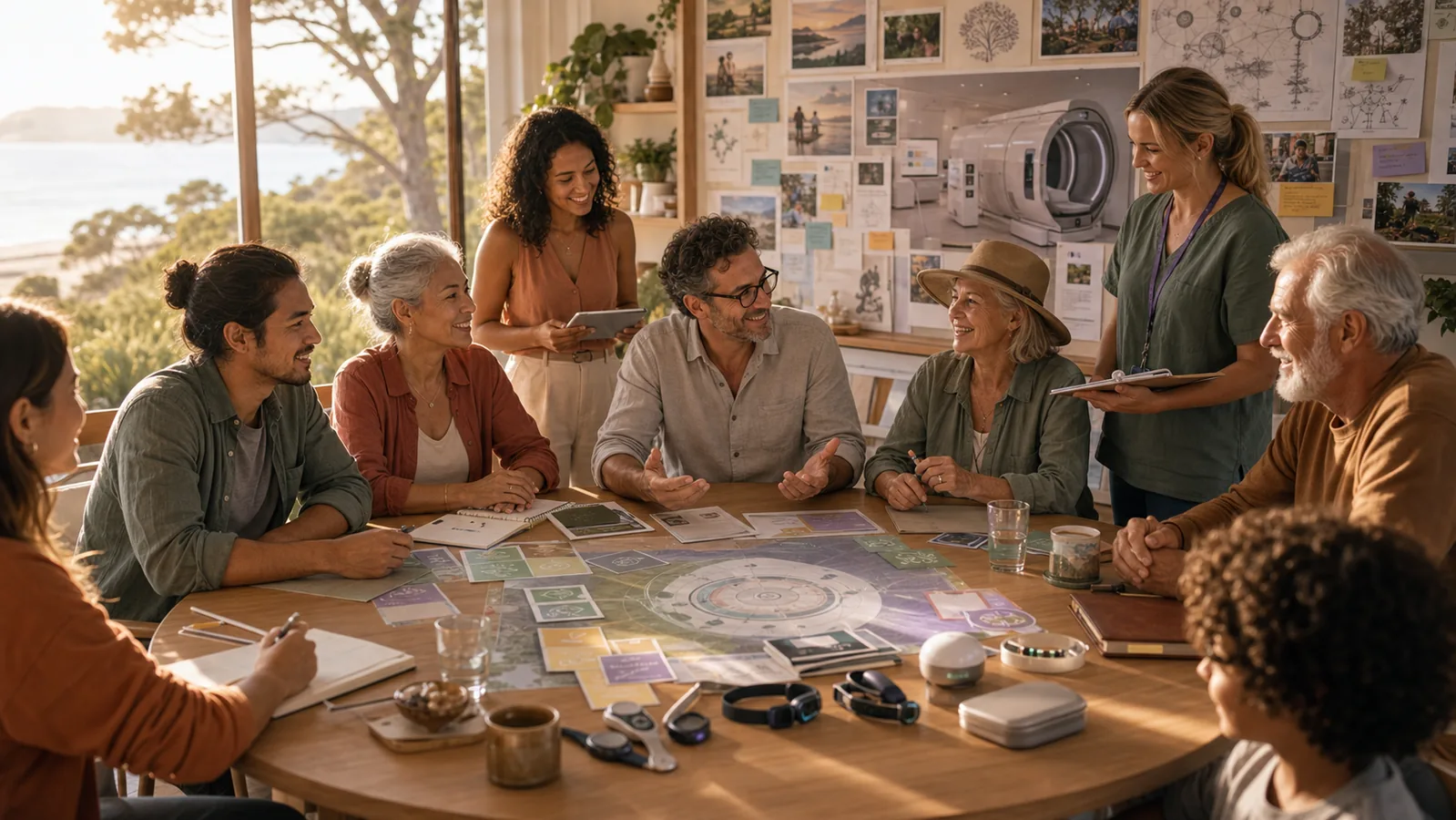
The Aura pact is for people ready to move from “interesting idea” into shared design, shared risk, shared learning and shared benefit. Hope matters because the work asks people to stay curious while money, health, privacy, equipment and evidence are still in the messy middle.
People willing to map their own body, mind, place and story across time: subjective journals, wearable signals, care context, preferences, hopes, limits, routines and the strange little details that make a person real.
Carers, family members, allied health workers, dementia advocates, ethics-minded clinicians and lived-experience voices who can keep dignity, consent and plain-language usefulness at the centre.
People who can help with cooperative rules, member onboarding, equipment access, biosensor kits, privacy design, clinical-grade exports, community finance, local rooms and documentation ordinary people can read.
The source plan imagines a member-owned pathway where high-cost equipment becomes shared community infrastructure. In plain terms: a small founding cohort explores whether it can fairly pool money, time, equipment, rooms, professional support and trust to make the Aura-building process accessible without turning people into passive customers.
The business-plan source frames the first practical unit as a small group, large enough to share responsibility and small enough to know each other.
Equipment, qualified support, sensor kits, insurance, safe rooms, software experiments, documentation, transport, cleaning, administration and time all go on the table.
Cooperative shares, group loans, member fees, patronage rebates, Community-Hours and gift labour can be compared openly before anyone is asked to commit.
The pact records what the group is exploring, who can join, how decisions are made, how people leave, what stays private, and which claims are still only hypotheses.
The source architecture describes 60 two-hour sessions. That is bold enough to matter: not a weekend workshop, not a wearable dashboard, but a sustained attempt to build a rich personal map from lived experience, measured context, reflection and care.
Baseline patterns, tolerances, hopes, stressors, sleep, breath, movement, sensory preferences, place effects and early responses are observed with humility.
The group tests timed combinations of dialogue, atmosphere, light, sound, scent, rest, movement, care input and ordinary-life practices where appropriate.
Promising patterns are repeated, challenged, compared and translated into summaries that the person, carers or professionals can actually use.
This is where the idea becomes materially honest. A cooperative pact can name the practical pieces instead of hiding behind inspiration.
Hyperbaric Oxygen Therapy equipment is expensive, regulated and serious. The pact can explore qualified partner settings first, then later compare ownership, leasing, clinic partnerships or mobile access if the group earns that level of readiness.
Wearables, breath context, sleep logs, heart rhythm patterns, brainwave readings where useful, subjective check-ins and environmental notes can be shaped into a practical starter kit.
The work includes carers, facilitators, technical help, plain-English documentation, privacy review, clinical advice, conflict handling and integration conversations after sessions.
Member contribution can include money, organising, care work, repairs, transport, testing, writing, outreach and trust-building. Community-Hours are one way the source documents try to make that visible.
What do you still have hope for? What would you want your Aura to help you understand? What would make shared equipment access feel fair? Which sensor data feels useful, and which feels too intimate? What would you contribute beyond money? What evidence would help you trust the process? What would make you pause?