Local starters
Heat, fire, flood, ferry logistics, water, food, power, check-ins, repair, shelter and official warnings.
The Great Filters are not just storms and supply chains. They are a ladder of test rooms: local resilience, civilisation stress, Kardashev transition risk, solar-system sensing, subterranean respawn, black-swan ocean diplomacy and story-world rehearsal.
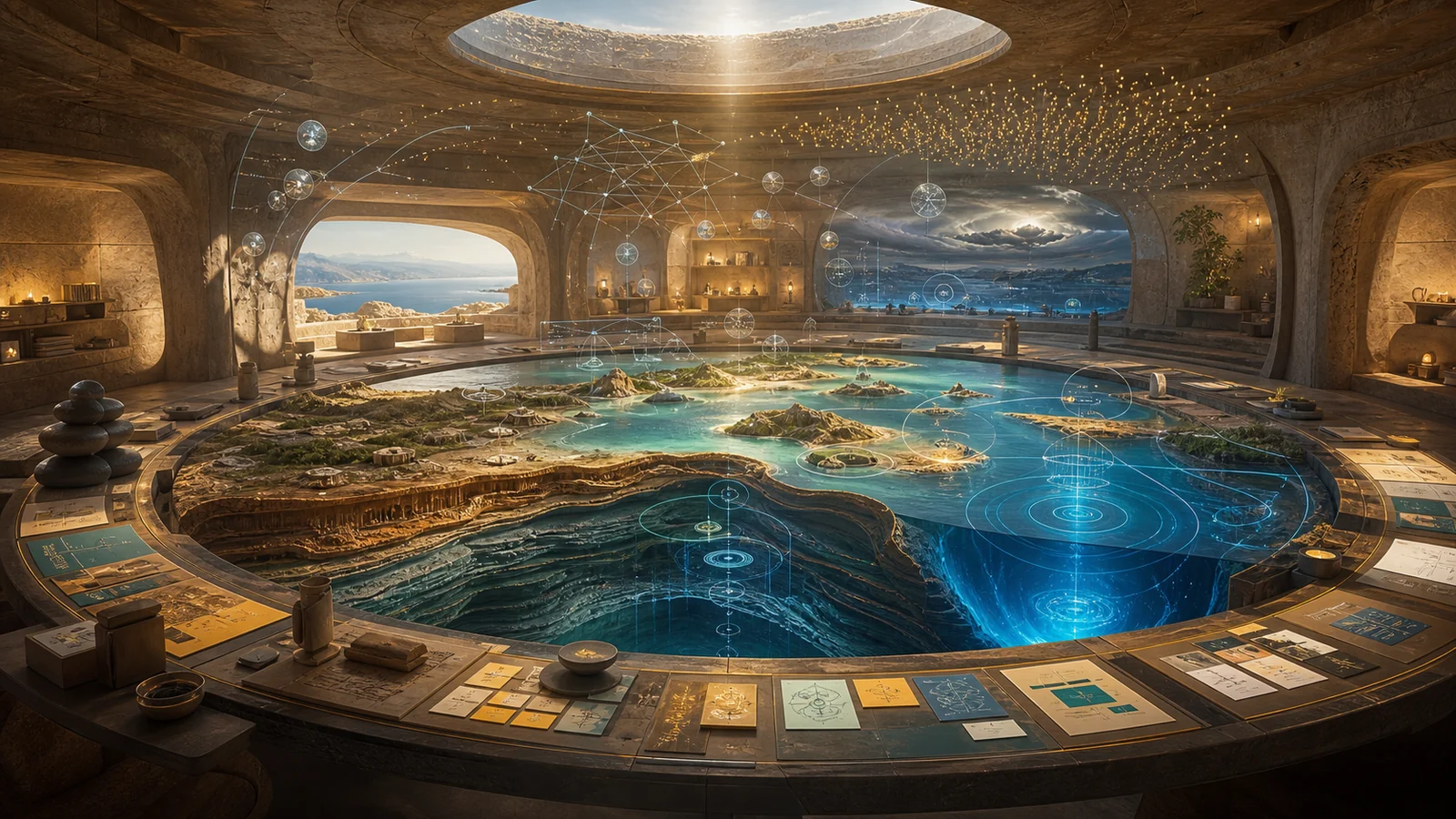
A useful filter map lets visitors choose their depth. Local starters make today safer. Middle-way rooms test regional and planetary systems. Deep edge cases keep the sci-fi alive while staying labelled as hypothesis, film world, simulation or source trail.
Heat, fire, flood, ferry logistics, water, food, power, check-ins, repair, shelter and official warnings.
Grid and internet fracture, geomagnetic storms, food-system shocks, cyber failures, AI governance failure, health events and institutional trust loss.
Solar micro-nova hypotheses, Virtual Solar Swarm sensing, Kardashev transition misfires, subterranean respawn cities, Sub-Oceanic Technate scenarios and first-contact diplomacy.
Use story, screenings, challenges and source trails to let people rehearse hard futures without pretending the fiction is evidence.
These are not apocalypse fantasies. They are sober system tests that can still produce practical local action.
Solar flares, geomagnetic storms, comms disruption, backup power, island-mode microgrids and readable public warnings.
OpenFerry interruption, fuel price shock, crop disruption, shared tables, storage, gardens, filtration, repair and fair distribution.
Bad automated decisions, hacked services, fake evidence, privacy leaks, dependency collapse and human override rules.
OpenSemiconductors, batteries, magnets, medical parts, pumps, water fittings and repairable appliances as local capability questions.
OpenRumours, coercive scoring, weak ledgers, exclusion, burnout and the need for correction-friendly public records.
OpenThe system moves too slowly for the risk. Scenario rooms can rehearse public choices before panic chooses for everyone.
OpenThis is where Civilisation of Sand should be brave and disciplined. The rule is simple: keep the idea exciting, label its evidence state, and turn it into a useful rehearsal question.
Could underground refuges preserve food, culture, seed, tooling, data, stories and skills if surface systems were damaged?
OpenCould a local stack learn from Type I and Type II ideas without surrendering sovereignty, ecology or consent?
OpenCould a decentralised solar-system sensor network make space-weather and planetary-risk data more public, verifiable and useful?
Could open digital twins compare known science, fringe hypotheses, uncertainty and model failures without collapsing them into one claim?
OpenIf underwater civilisation or trans-medium UAP scenarios are treated as wargames, what ecological politeness, acoustic restraint and diplomacy habits improve anyway?
Open Cosmic NexusWho sits in the room, who can say no, what gets recorded, what stays private, and what is the verifiable no?
Open governanceThe repetition is useful. It helps a sceptical reader compare risks without needing technical jargon.
Cosmic Nexus and Quandamooka Film Festival make this material playable. Films, screenings and story-builder workshops can let people explore frightening or far-out futures with source notes, consent, credits and review boundaries intact.
The wider adventure atlas for mystery, myth, UAP, travel, festival and governance lanes.
Open Cosmic NexusA phone-first filmmaking and screening doorway for AI storyboarding, source trails, asset sharing and public/private story care.
Open festivalGreat-filter rooms can become challenge prompts: make a short film, source map, debate scene, repair plan, dashboard mockup or festival session.