Quartz and silica
Glass, optics, filtration, structural ceramics, solar silicon, sand batteries, transparent dashboards and safe vitrified samples.
Mineral-sands mapThe resource story starts with what is already here: mineral-sands literacy, quartz and silica, titanium minerals, zircon ceramics, rare-earth discipline, waste streams, repair skills, maker-space experiments and clean public records.
Mineral Moonshots gives this site the missing atom-level spine. This page should not imply extraction permission; it should show why the sand story matters for education, repair, materials, energy, tools and deep civilisation design.
Glass, optics, filtration, structural ceramics, solar silicon, sand batteries, transparent dashboards and safe vitrified samples.
Mineral-sands mapTitanium dioxide, corrosion-resistant coastal hardware, photocatalytic surfaces, alloy research and future 3D-printing powder questions.
High-temperature ceramics, glaze opacifiers, thermal barriers, oxygen sensors, pump bearings, cutter-head ideas and durable underground components.
Lanthanum, cerium and neodymium sit in the narrow rare-earth lane, with thorium treated as a serious stewardship boundary.
Useful companion elements for pigments, biology, ceramics, batteries, soil, food-loop education and the whole periodic-table context.
Element atlasSilica thermal storage gives a grounded bridge from tiny benchtop physics to process heat, microgrids and resilience.
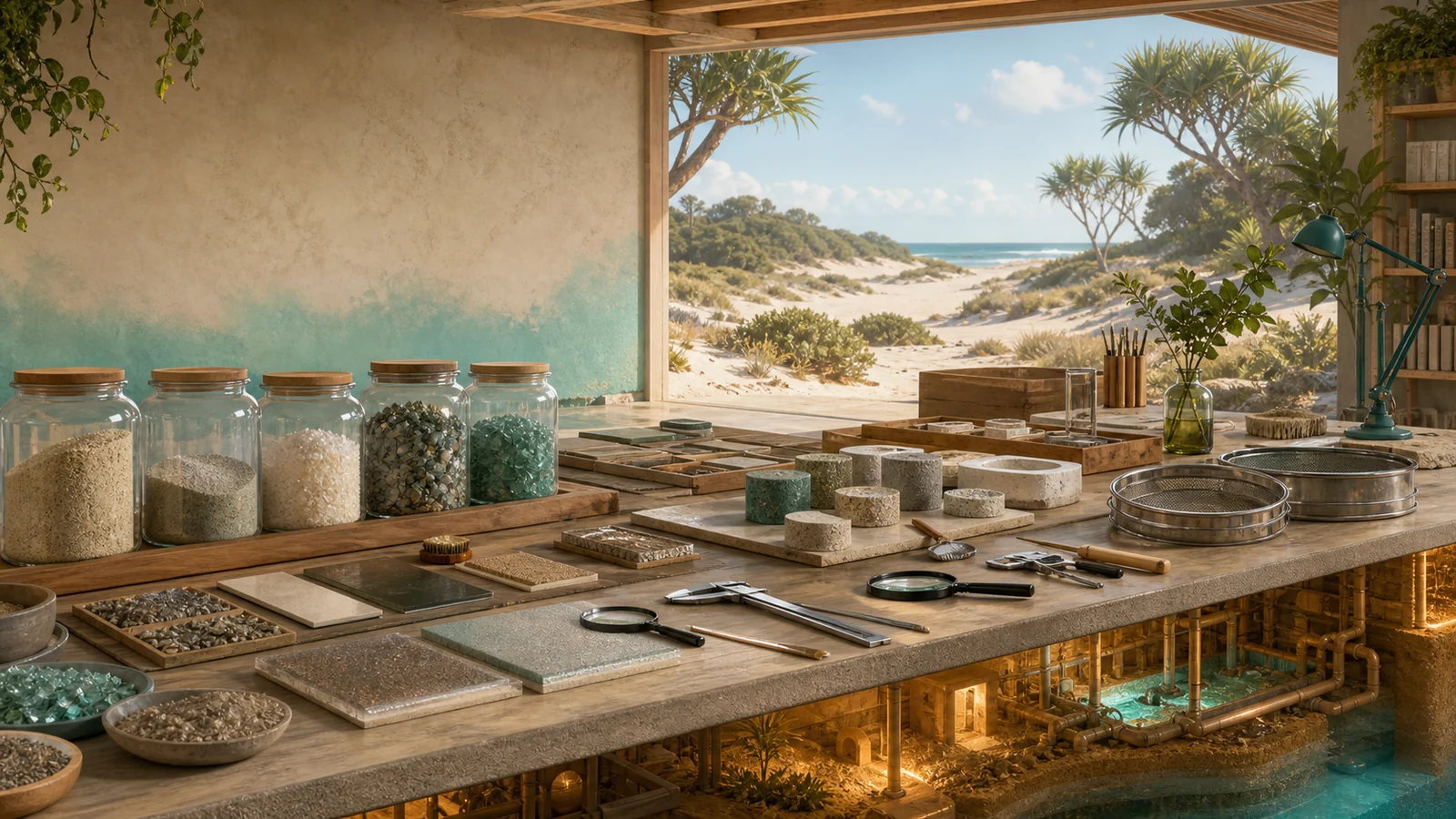
OpenThe new Straddie Maker-Space Lab turns the material map into a public learning bench: not a mine, not a factory, but a place to compare, label, repair, prototype and record.
Jars, lenses, grains, glass tests, ceramics, geopolymers and plain-language tags that make the material story touchable.
Open sand pageSieves, scales, moulds, sample jars, hand lenses, kiln partnerships, glass tests and mineral-sand education.
Tool shelfTiny labelled non-structural samples from clean lawful inputs: sand, recycled glass, clean rubble, crushed brick, ash and safe binders.
Geopolymer pageShow source, use, risk, recipe, result, failure and next experiment before anything scales.
Kitchen tools, ceramic parts, glass filters, modular appliance pieces and water/food-loop fittings, only after safe lawful pathways exist.
Every object or sample carries what it is, where it came from, what not to do with it, how to repair it and where it returns.
OpenThe safest starting point is not dramatic extraction. It is clean, reviewed, consent-based loops around materials that are already in circulation.
Tools, bikes, furniture, electronics and household items that can be fixed before replaced.
OpenNon-structural learning samples only after safety, dust and permission checks.
Embodied energy made visible through sorting, safe storage and lawful reuse.
Compost, mulch, mycelium experiments and food-loop learning with hygiene review.
Maps, photos, dates, public records and source trails as reusable civic material.
OpenKnowledge is also a resource: repairing, caring, translating, testing and teaching.
This is not a mining proposal. Start with lawful, safe, low-risk, reviewed and consent-based resource loops.