Concept visualisation showing an evening foreshore walk with warm lighting, stone seating and cliff illumination

Show the idea, credit the maker, keep the label honest.

This page collects contributed concept images and design visualisations for the DGFTU discussion. Some may use AI as part of the workflow; Rodney Surawski's set is not purely AI-generated. They are useful because they give people something visible to respond to, talk about, improve, reject or remake.

Hero image: concept visualisation by Rodney Surawski, shared for community discussion.

Community concept image. Read these as visual conversation starters with real design work behind them. The next useful step is to notice what they make people feel, imagine and ask for.

Rodney Surawski's DGFTU concept visualisations.

Credit: Rodney Surawski. Shared into the DGFTU discussion as concept material from a broader design process.

Process context from Rodney

Rodney clarified that AI is one of many tools used in the visualisation workflow, not the whole design process. The work also draws on concept sketches, hand drawing, cultural narratives, site analysis, stakeholder consultation, research, Photoshop, Illustrator, CAD drafting, material selection, accessibility requirements and construction considerations.

He noted that the paths, lookouts, signs, seating areas and sculptures were individually considered in response to the site, the project objectives, and Belinda Close's cultural artwork and concepts. The images help communicate design thinking; they should not be read as push-button AI outputs.

Formal project, client or cultural credits can be added here when they are confirmed clearly.
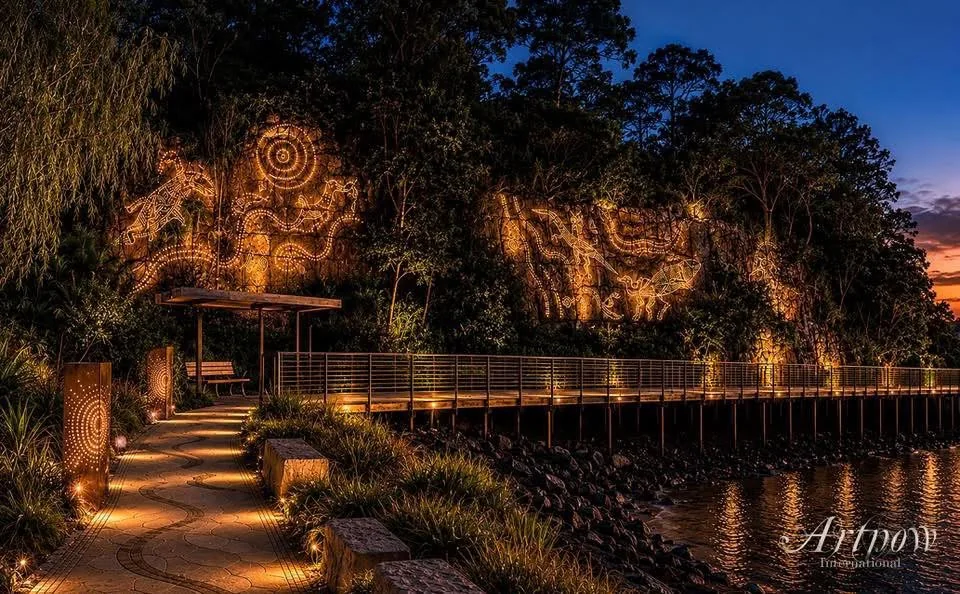
Night-time concept visualisation with cliff lighting, boardwalk, foreshore planting, shelter and seating beside the water
Rodney Surawski, concept visualisation from a broader design workflow.
Discussion image

Cliff lighting and boardwalk arrival

A night-time arrival idea with warm cliff illumination, a foreshore boardwalk, planting, low seating and a sheltered rest point.

Simple prompt: What does this image make you feel about arriving at Gumpi after dark?

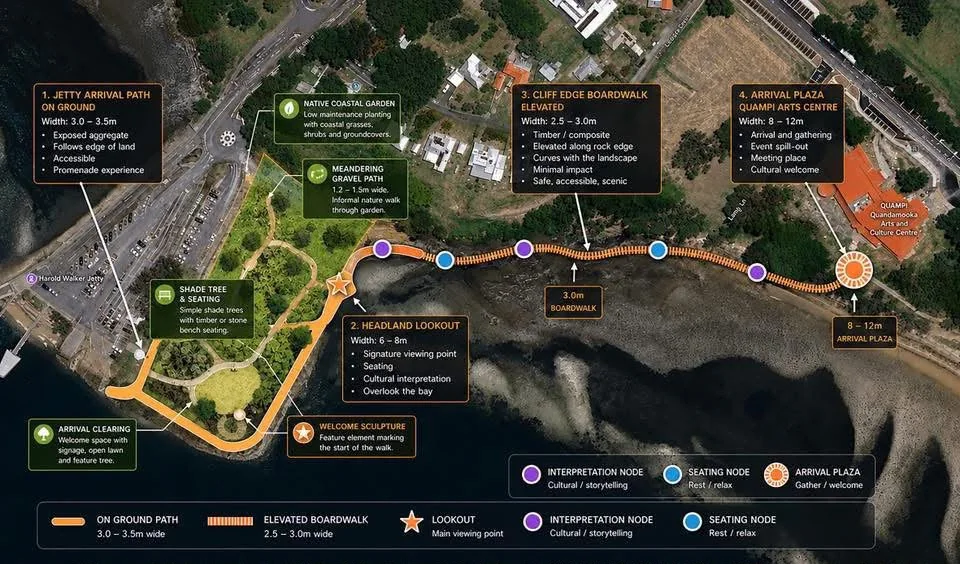
Plan-style concept map for a foreshore route with arrival clearing, native coastal garden, lookout, boardwalk nodes and arrival plaza
Rodney Surawski, concept visualisation from a broader design workflow.
Plan-style prompt

Foreshore route plan

A map-like concept that strings together arrival paths, a coastal garden, lookout, boardwalk nodes and a plaza-style welcome point.

Simple prompt: What kind of walk, pause or welcome does this map make you imagine?

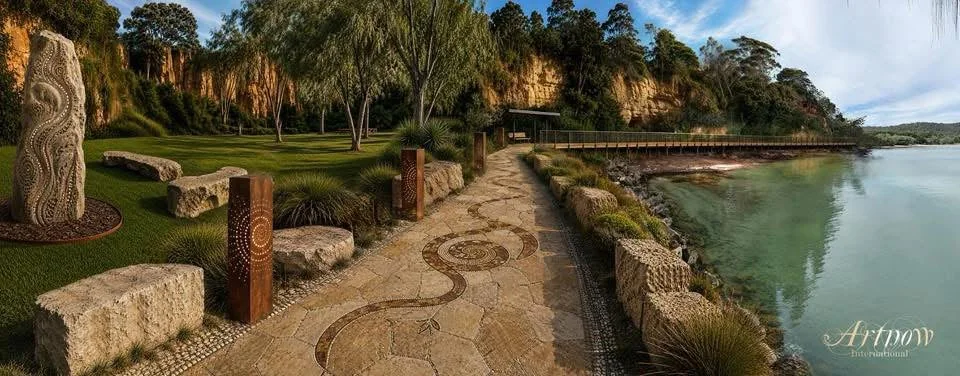
Daytime concept visualisation of a foreshore promenade with engraved paving, stone seating, native planting and a boardwalk along the seawall
Rodney Surawski, concept visualisation from a broader design workflow.
Day view

Daytime foreshore promenade

A calmer daytime version of the edge: stone seating, planting, a patterned path, low barriers and a boardwalk along the water.

Simple prompt: Could you picture yourself waiting, walking or sitting here?

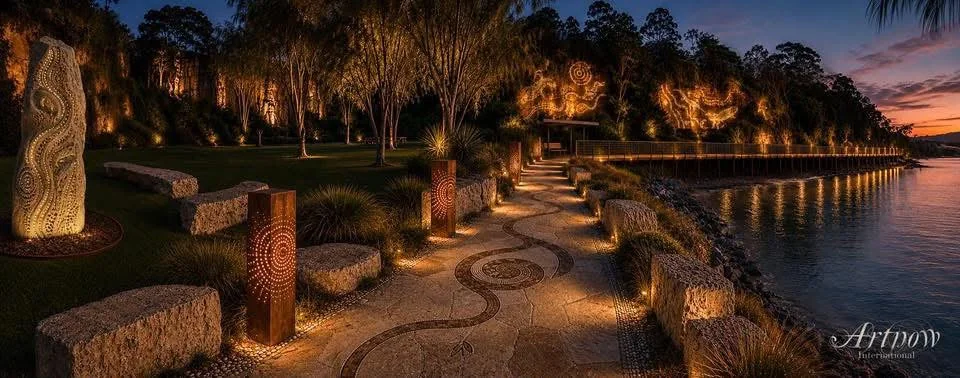
Evening concept visualisation of a lit foreshore promenade with stone seating, planting, cliff illumination and water reflections
Rodney Surawski, concept visualisation from a broader design workflow.
Evening view

Evening cultural-lighting promenade

A more atmospheric version of the foreshore walk, using lighting, stone edges and cliff textures to make the ferry-gateway feel cared for after dark.

Simple prompt: Does this feel calm, welcoming, too much, or just right for the ferry gateway?

Community images can be added through the public channels.

This is a curated static site, so visitors cannot upload straight onto the page. To suggest an image for this gallery, email the image to sbt4183@gmail.com, or upload it to the DGFTU Facebook thread with the credit name and short idea note.

Include the source

Name the photo, map point or view you started from. If the image is invented without a source view, say that clearly.

Choose a channel

Email attachments work best for direct submissions. Facebook works best when the image is already uploaded there and ready for public discussion.

Credit the maker

Say exactly how the contributor should be credited, and whether a profile link, group mention or plain name is OK to display.

Label the idea

Say what the image is trying to express, and what response you hope it starts from locals, visitors, designers or decision-makers.

Useful label: "Community concept image or design visualisation for discussion."