
A local project with serious equipment
A resident wants to help a community garden plan its water use. Their personal notes include a calendar, the people they have spoken with and a few ideas they are still unsure about. The project also needs weather records, soil measurements and a model of the water system. That heavier work could use shared equipment without requiring everyone involved to buy an expensive computer or hand over their whole personal history. The paper’s illustrative garden project
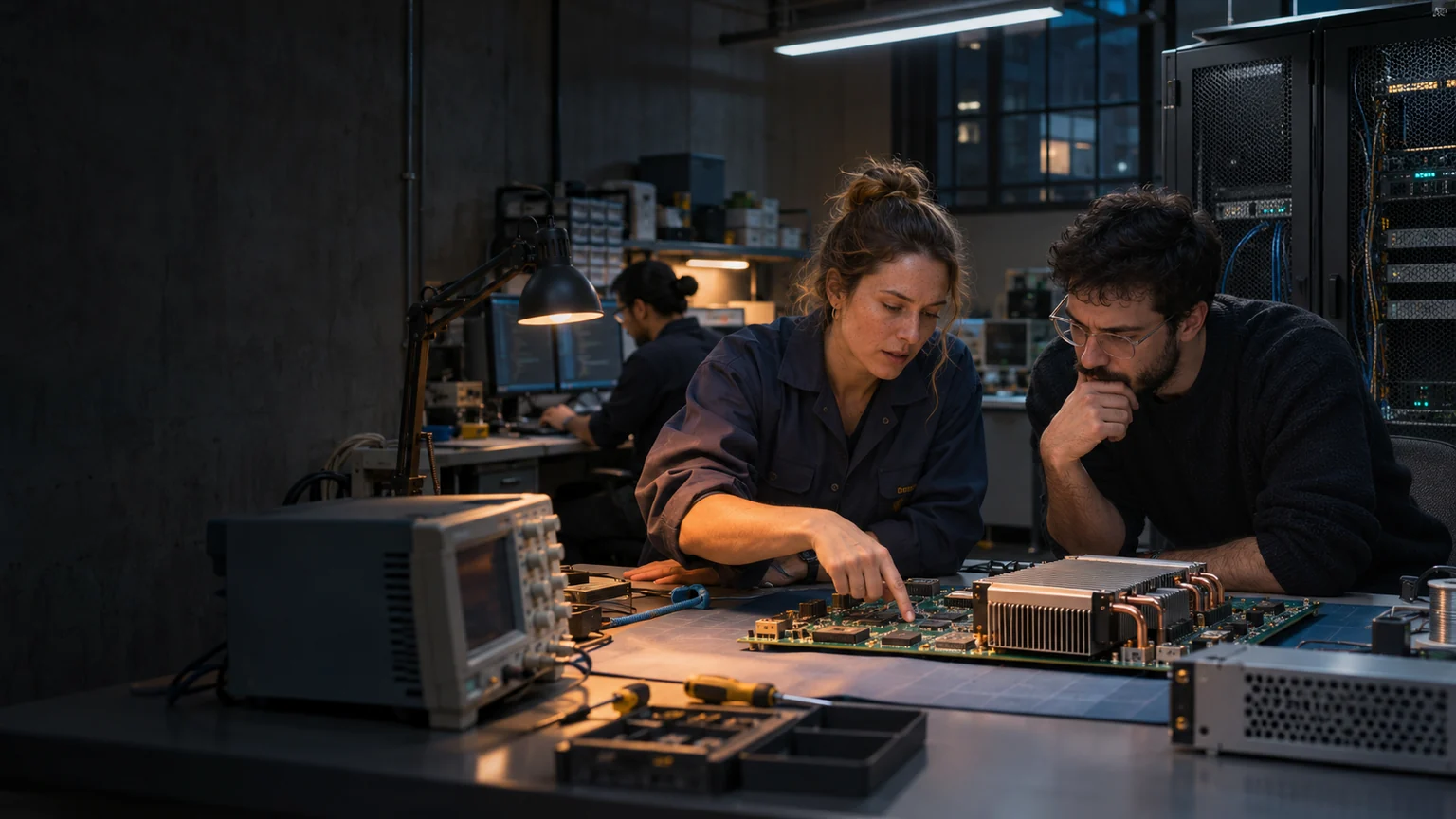
The reviewed paper uses this illustrative garden project to explain the missing middle. A phone or household computer serves one level of need. A distant data centre serves another. Shared local equipment can supply serious computing between them, with trained people, useful services and rules the community can examine. The facility can connect to larger systems when that is useful and keep selected local functions available when an outside connection fails. The missing middle · Shared equipment and practical assistance
The supplied compute proposal used A$6 million per location as a planning allowance for equipment and supporting facilities. At that allowance, 100 locations amount to A$600 million and 1,000 to A$6 billion. The worldwide thought experiment of 44,000 locations comes to A$264 billion. These figures express the scale of the proposal. A working deployment also needs site-specific costs, electricity, cooling, communications, maintenance, future replacement and people who can make the equipment useful. The A$6 million allowance and worldwide comparison
Ownership people can exercise
Ownership is expressed through those arrangements. A community needs to know who may administer its equipment, who can approve a sensitive change and what happens when it chooses a different service. It needs a way to resolve disputes and pay for the next hardware generation. Owning the cabinet while losing access to its data, maintenance or essential software would leave major decisions elsewhere. Practical sovereignty joins the asset with the skills, permissions and options needed to use it. Operating needs and dependencies · Local ownership and administration
An individual Aura would help its owner work with that capacity. In the garden example, it could organise questions and bring back the reasons for earlier choices. The person decides what it may retain, retrieve or use in further model training. Heavier processing can run on a local rack using only the information authorised for that job. Software people can inspect and models they can use under appropriate licences give the ownership promise practical meaning. Individual Auras and licence requirements · The owner’s authorised assistant · Recall training and export · The garden’s heavier simulation · Aura of Intelligence · Personal Aura introduction
Connecting observations with civic decisions
The proposed Web3 sensorium connects observations, models and systems operated by different people. Here, Web3 concerns distributed control and verifiable cooperation. A soil reading can retain its source, time and permission while being compared with a weather forecast. If a model result is published, other people should be able to inspect its assumptions. Participation in the proposed network does not require buying cryptocurrency. Agreements still need to explain what happens to a copy once it has been released. What Web3 sensorium means here · The proposed intermediary layer · The shared soil and water example · What disclosure and consent require · Web3 Sensorium project
A public question may then emerge. The water plan could depend on a planning rule or an infrastructure decision. P4A, the Purple Party for Australia, is the proposed civic workbench for following that chain. Participants can identify the responsible authority, examine alternatives, listen to objections and prepare a proposal for the relevant process. A simulation helps people understand consequences. Formal legal and democratic procedures determine how a change is enacted. P4A’s proposed civic role · Following the responsible authority · Formal democratic requirements · The garden’s civic decision · P4A civic workbench
Reasons to keep participating
People also need reasons and opportunities to keep participating. A C-Hour records one verified hour of voluntary contribution. Communities choose what recognition or reciprocal opportunities to offer, with no fixed dollar conversion. Paid work, investment and equipment expenses retain their own accounts. A garden project can therefore recognise someone's time while also showing what it cost and what changed. C-Hours and the braided economy · Locally chosen reciprocity · C-Hour introduction
GAJRA Earth, the proposed Global Association for Joyful Responsible Abundance on Earth, connects this local capability to relationships across borders. People define worthwhile lives in their own contexts, share learning and choose work they can do together. Joy gives participation a purpose, responsibility carries the consequences, and abundance asks whether useful capability becomes more widely available. GAJRA Earth and the three values · Culture and independently controlled worlds · GAJRA Earth
Demonstrating the freedom to choose
The reviewed paper recommends demonstrating these freedoms in practice. A person moves an Aura and usable records to another system. A community chooses its maintainer and survives an outside outage. An independent reviewer checks privileged access. National sovereignty becomes more tangible when people can exercise those choices in ordinary life. The paper’s practical demonstration recommendations · Ownership and operational authority · Connected sources of sovereignty · People gaining capability