Economy layer / Contribution and care
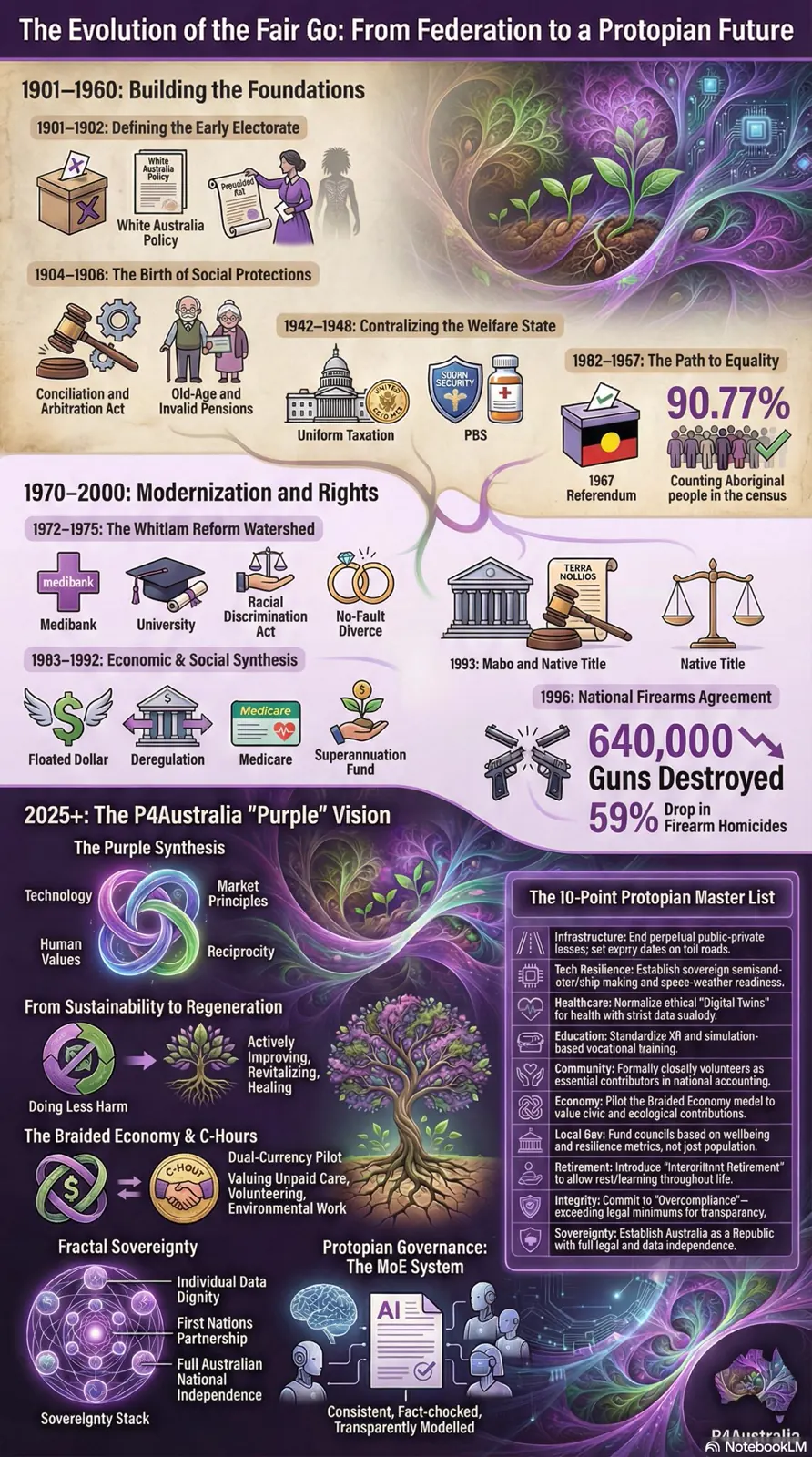
The Braided Economy
A practical frame for valuing care, volunteering, disaster readiness and ecological repair alongside ordinary money.
What this page does
The Braided Economy
The core idea is simple enough for a market stall: money is not the only economy. A country that cannot count care, food resilience and community repair will keep underfunding the work that keeps it alive.
This page turns the weirdness into household-level common sense for Australia and our Oceania friends: keep normal money, then add a second ledger for verified public-good work.
Core modules
Food security layer
When fuel prices rise or shipping gets shaky, supermarket food gets expensive fast. P4A's practical answer starts with an old Australian memory: during the Second World War, households were urged to grow vegetables through the Dig for Victory campaign. The modern version is not nostalgia. It is national resilience: home gardens, shared tables, food rescue, community co-ops, indoor growing where useful, and farmers supported instead of replaced.
Risk and mutual care
How it works
The Braided Economy keeps normal money for normal trade, then braids it with a Reciprocity Economy for foundational work. Communities can measure the labour that keeps places healthy, and people can be rewarded for building resilience before crisis arrives.