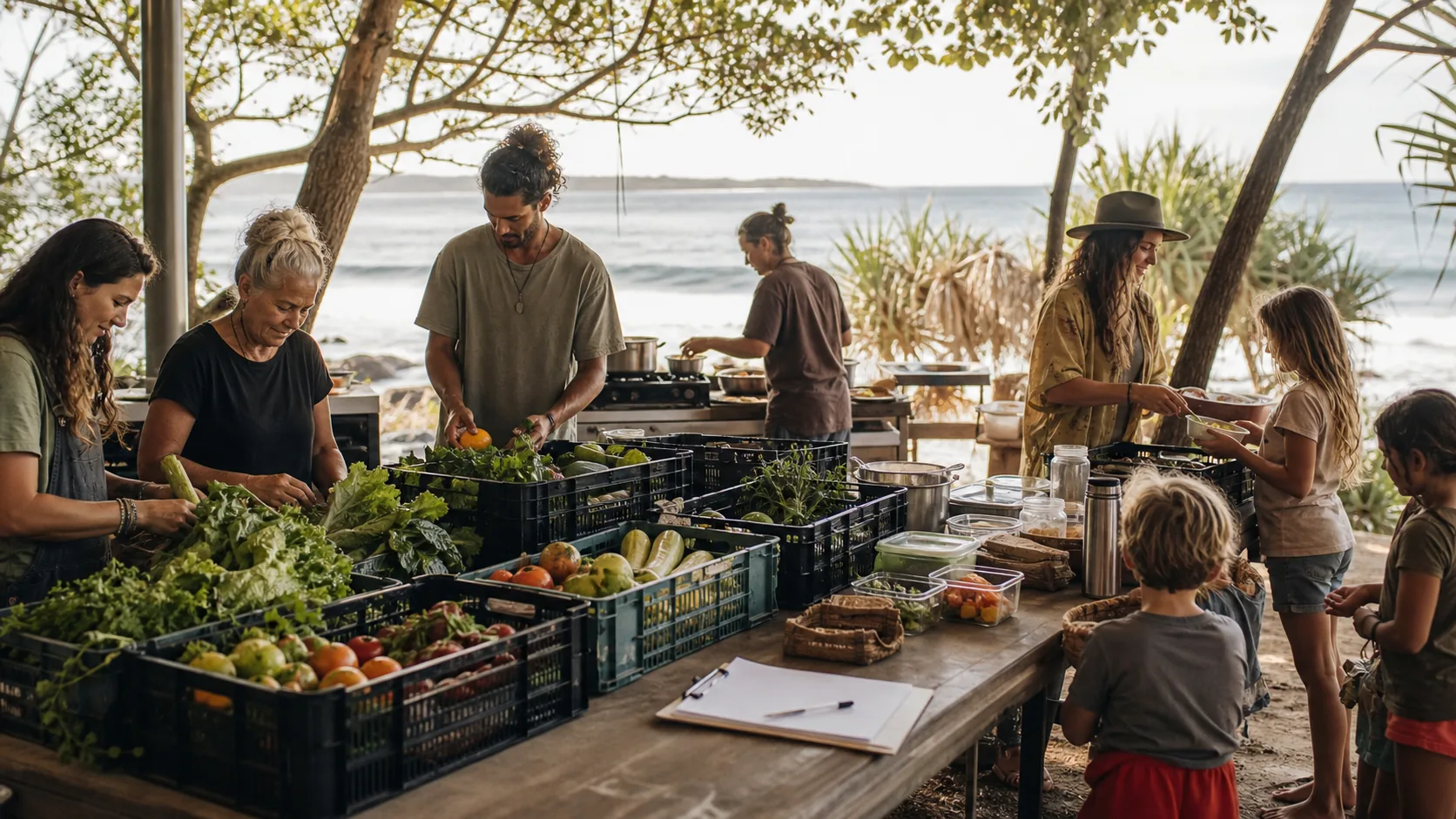
A modern Dig for Australia, Straddie style.
Fuel shocks become food shocks. Shared Table turns gardens, pantries, freezers and kitchen benches into a local food buffer before freight, ferries or prices bite harder.
Why a table matters when fuel bites.
Minjerribah lives with a mainland tether. Food, fuel, fertiliser, freight and visitors all move through narrow pathways. When global pressure rises, the island feels it quickly. A shared table is a practical way to build local food capacity before the hard day.
Grow what can be grown
Backyards, balconies, school gardens, club gardens, native foods and indoor systems all count where they are safe and appropriate.
2Rescue what will be wasted
Move surplus through trusted groups before it spoils: fruit, herbs, pantry staples, leftovers, containers and freezer space.
3Plan with AI, decide as people
Use Kitchen Mate prompts for pantry audits, garden harvests, flexible meals, preserving and safe leftover plans.
4Protect trust and Country
Respect cultural permission, food safety, local producers, privacy and the different rhythms of real households.
The food buffer is layered.
The old wartime memory was simple: grow more food close to home because supply lines can fail. The modern version is broader and calmer. It is Garden Mate for practical growing, Kitchen Mate for food planning, Indigenous food knowledge with permission, farmers and fishers supported rather than replaced, food rescue, preserving, shared kitchens, local media and private coordination.
Shared Table is the social layer that helps those pieces meet. It asks: what is growing, what is stored, what is about to spoil, who can cook, who needs food quietly, and what should never be made public?
Practise before the emergency.
The disaster kiosk research makes the point plainly: emergency tools work best when people already use them in normal life. Shared Table does that with food. It gives people a reason to practise coordination, trust, rosters, transport, local notices and resource sharing before the mainland tether is stressed.
That is the quiet power here: neighbours knowing who has a garden, who has a freezer, who can drive, who can cook, who needs help, and how to ask without shame.