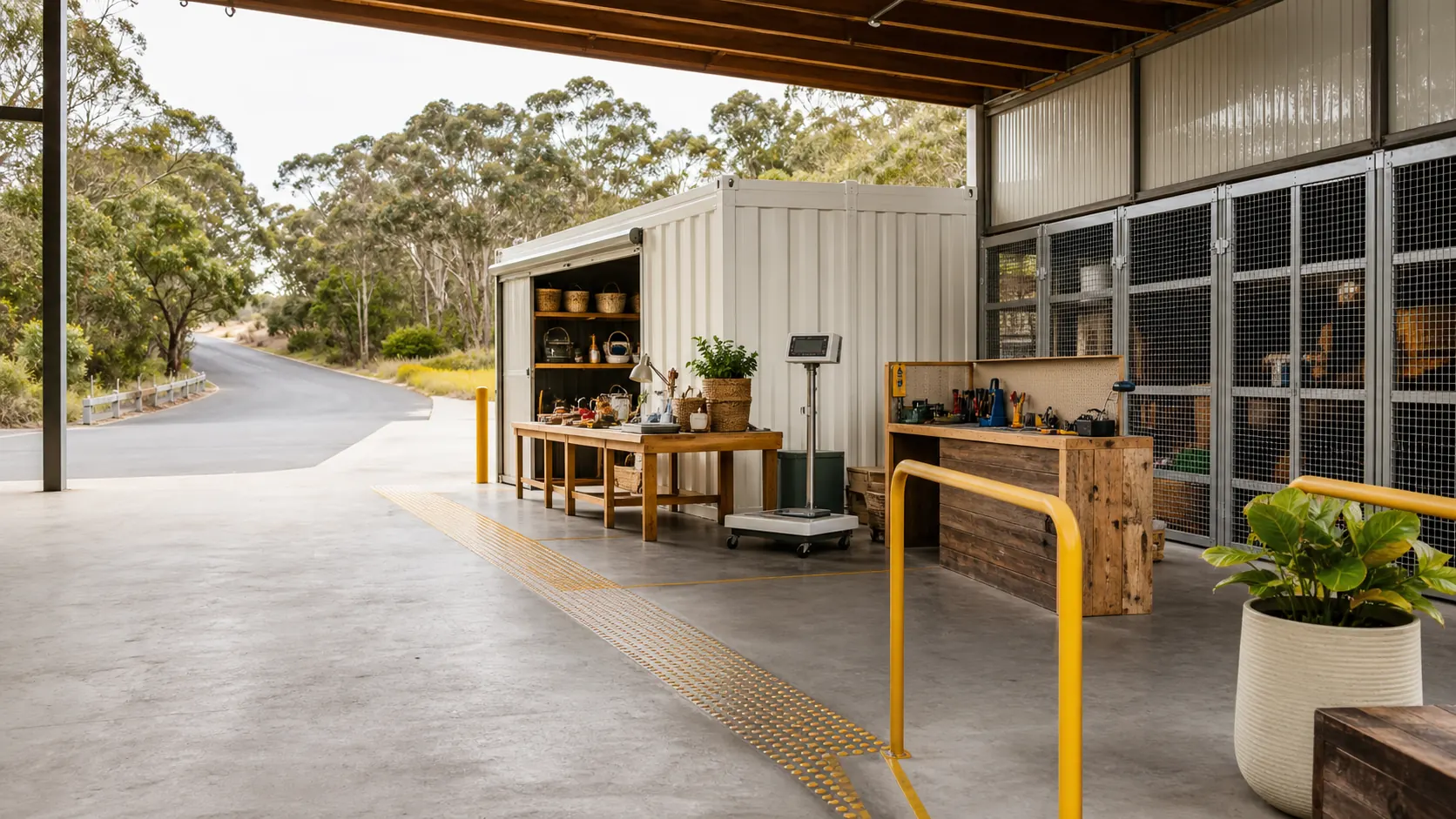
Offer point
A public form, collection day, business pickup or supervised drop-off could capture items before they enter the waste stream.
The loop starts with permission, supervision and clear choice paths, not with scavenging by default.
The strongest first model is a lawful pre-tip or partner-approved handover loop where people can offer useful items before disposal, then explore what belongs in repair, parts, material stock, bench learning, specialist processing or a later decision.
A public form, collection day, business pickup or supervised drop-off could capture items before they enter the waste stream.
The first check could ask what the item is, what it can teach, who owns the data, what energy or chemistry it holds, and what skills are needed.
Lockable containers, cages and sign-out rules can turn curiosity into consentful access instead of chaotic rummaging.
Every item can leave a small record: repaired, reused, studied, parts recovered, material tested, returned, processed or paused for deeper review.
A good loop can be generous without being vague. It can welcome useful offers while giving people the reasons: chemistry, heat, stored energy, personal data, access rights, contamination, road movement, tool skill and local authority.
That turns caution into literacy. People can make better sovereign choices when they can see the reason behind the pause, the pathway or the invitation.
The exploration starts from consentful handover, clear stewardship, owner-controlled data choices, battery chemistry literacy and a public record of what people chose to do.
This page keeps the operating model plain. Each piece can be tested separately before anyone tries to scale it.
Public offer. A person records an item, stream or repair candidate through the builder or a stewarded intake day.
Human read. A reviewer and owner look at permission, location, handling, data sovereignty, stored energy, chemistry and available space.
Pathway choice. The item is marked repair, reuse, parts, material stock, battery learning, chip learning, partner processing, normal disposal or pause-for-research.
Local work. Suitable items become workshops, repair nights, student projects, microfactory tests or community-use gear.
Evidence return. The outcome returns to the public record so the next funding or Council conversation has proof.
The point of careful questioning is not to shrink the idea. It is to make the first yes easier for people who carry responsibility and for people who want to learn why the risk exists.
Where could vehicles stop, unload and turn around without mixing public curiosity with waste-centre traffic?
What inductions, supervision, age ranges, tool boundaries, prevention work and mutual-care models would make the risk legible?
Open mutual care indexCould the operator flag recoverable items only inside an authorised process, not through informal taking?
Could Council support a small evidence pilot without promising a permanent service?
How can owners choose repair, wipe, harvest, archive or destroy pathways without surrendering right-to-repair value?
How can lithium, swollen, unknown and damaged packs teach chemistry, fire behaviour, energy storage and careful stewardship?
What local protocol, place naming, cultural respect and land-use care needs to shape the conversation?
How can signs and posts invite lawful offers, explain the reasons, and keep curiosity inside consentful pathways?