Autonomous vehicles
Robotaxis, self-driving trucks, assisted driving and off-road autonomy. Ask whether it is fully driverless, supervised, geofenced or still a driver-assistance system.
Physical AI is different from a chatbot. If a model steers, flies, lifts, maps, watches or acts, the trust question includes safety, liability, sensors, cybersecurity and who is allowed to deploy it.
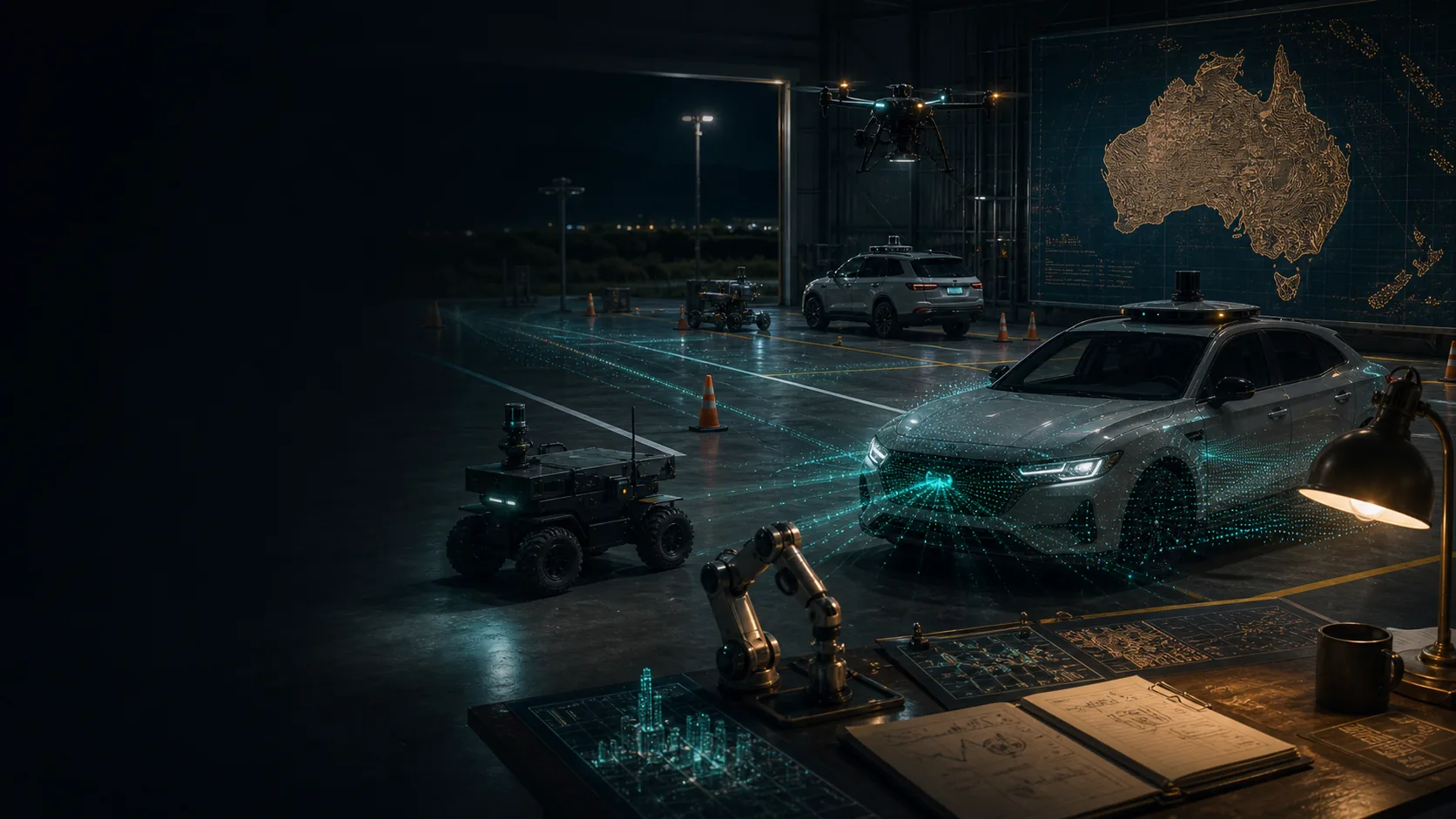
A polished clip can hide remote control, careful editing, safety drivers, private test tracks, hand-picked routes or lab-only conditions. For real trust, look for where the system is allowed to operate, who supervises it, what happens when it fails and who is liable.
Robotaxis, self-driving trucks, assisted driving and off-road autonomy. Ask whether it is fully driverless, supervised, geofenced or still a driver-assistance system.
Humanoids, warehouse robots, mining robots, inspection drones and defence-adjacent systems. Ask what they can do without a human and what sensors they collect.
World models, simulation systems and robotics foundation models that help machines predict movement, space and cause-and-effect before acting.
This page is a starting map, not a certification list. Treat every deployment claim as dated.
Waymo is the clearest public robotaxi reference. Tesla's Full Self-Driving is still framed as supervised. The key beginner distinction is fully autonomous service versus driver-assistance that still needs human attention.
Humanoid robots make big claims because they look familiar. The trust test is boring but important: what job can they repeat safely, with what failure mode, in what environment, under whose supervision?
These systems help robots learn in simulation before deployment. That can reduce risk, but it also centralises power in model, chip and simulation platforms.
Australia has serious autonomy work in navigation, mining, drones, mapping, defence and research. For locals, the question is not only "Is it clever?" but "Where is it deployed and under whose rules?"
Use these before believing a deployment claim, investing in a company, approving a workplace rollout or sharing a video as proof.
Where is it allowed to operate: city, mine, warehouse, road, hospital, school, home, factory or battlefield?
Is a person driving, supervising, teleoperating, approving actions or only watching after the fact?
What cameras, microphones, lidar, radar, location data or biometric signals are collected and stored?
Can it be hacked, spoofed, jammed or updated remotely, and who controls emergency shutdown?
If it hurts someone or damages property, who pays: owner, operator, software maker, insurer or government?
Look for public trials, regulator notices, incident reports and independent testing, not only polished launch videos.
For cars, drones and robots, wording matters. "AI-powered", "autopilot", "supervised", "remote operation", "driverless", "robotaxi" and "fully autonomous" are different claims. The safest habit is to ask what a human must still do when the system gets confused.