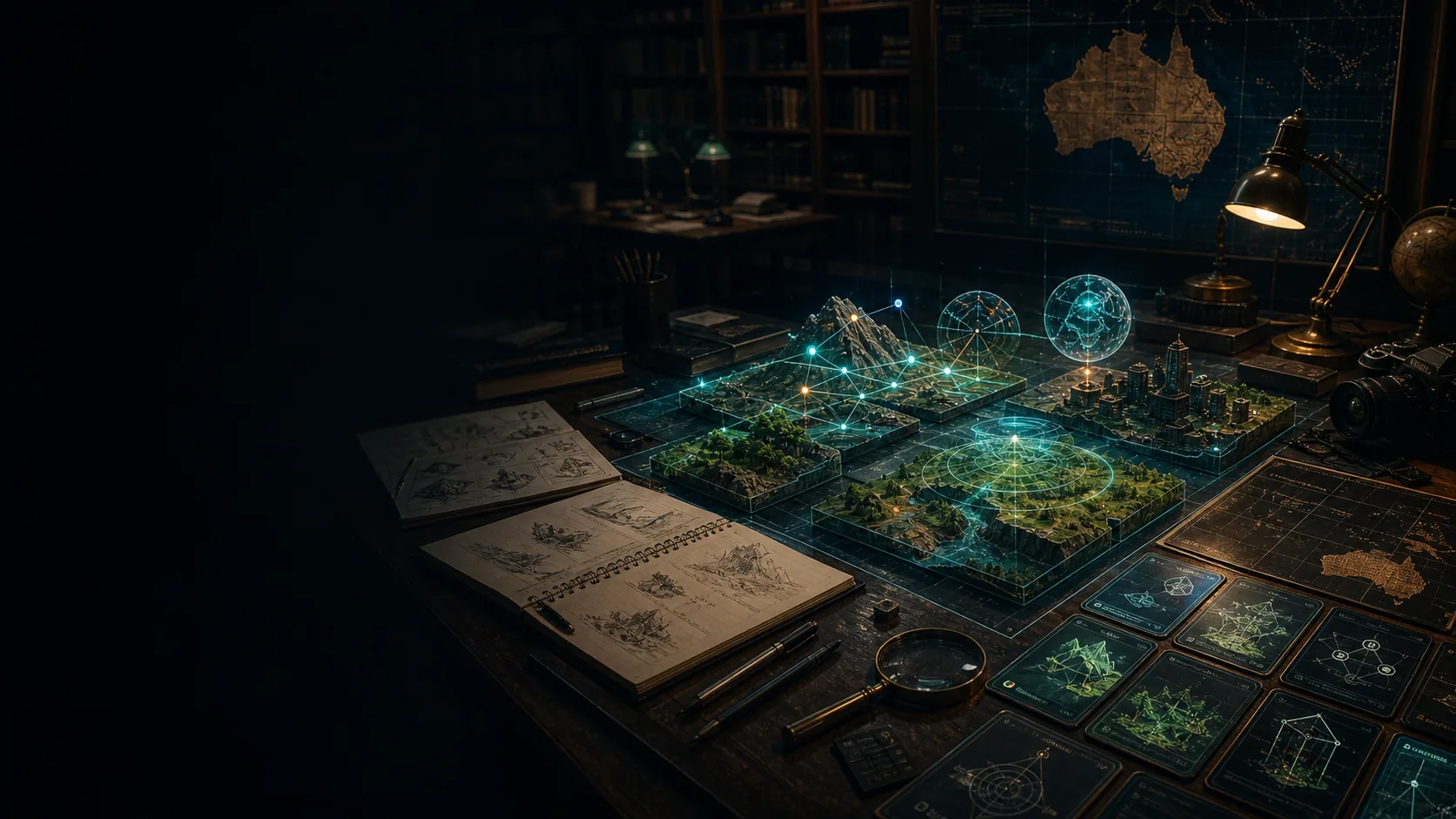
When AI makes places.

This is the new shelf for world models, spatial AI, generated 3D scenes and interactive environments. It is exciting, but most of it is still early-stage.

A dark research desk where sketches turn into small glowing interactive 3D worlds

A world builder is not just video.

Video is a clip you watch. A world builder tries to make a place you can move through, edit, inspect or use as a simulation. This matters for games, training, education, robotics, architecture, film pre-visualisation and future immersive worlds.

Google DeepMind Genie

Research world models
Watch

Google DeepMind's Genie work points toward generated interactive worlds, including models that can create playable or navigable environments from images or prompts. This is more research frontier than simple beginner app.

Beginner meaningDo not expect it to be like Canva for games yet. Think "future engine idea" more than finished consumer product.
Trust questionsWho owns generated worlds? How are training worlds sourced? How are unsafe simulations blocked?
World Labs

Spatial intelligence and generated worlds
64

World Labs is building spatial intelligence systems, including world generation tools. The important beginner point is that this category is about place, depth, camera movement and interaction.

Beginner meaningThis could help people build scenes, training spaces, prototypes and story environments without a full 3D team.
Trust questionsGenerated-world rights, private uploads, commercial use, safety rules and export limits need close reading.

Game and simulation tools

Adjacent lane
Mixed

Unity, Unreal, NVIDIA Omniverse, Roblox, modding tools and AI-assisted asset systems are adjacent because they already handle worlds, but they are not all "text-to-world" products.

Beginner meaningExpect toolchains, not one magic button.
Trust questionsLicences, asset rights, data capture, age safety and platform fees matter.

Open-source world models

Watch list
Early

Open work will likely arrive through model cards, GitHub repos, Hugging Face demos and game-dev experiments. The openness will vary: code, weights, datasets and generated assets are different things.

Beginner meaningOpen does not automatically mean safe, legal or easy.
Trust questionsCheck licence, training data, age limits, generated asset rights and hardware requirements.

Before you build a world, ask what is inside it.

Generated worlds can carry hidden risks because they mix images, motion, game logic, physics, likeness, location, training data and user behaviour.

1 Source worlds

What worlds, videos, games or scans trained the system?

2 Ownership

Can you use the generated space commercially, or only view it inside the platform?

3 Safety

Can it generate unsafe environments, deceptive training scenarios or copied game-like places?

4 Export

Can you download assets, or are you locked into one service?

Treat world builders as prototypes for now.

For most Australians new to AI, world builders are not the first tool to pay for. Watch them, learn the language, and try public demos when available. If you are a teacher, game maker, artist, tourism builder, architect or community storyteller, this shelf may become important very quickly.