
 GenAI concept artwork
Aura Genesis: growing a digital aura and avatar
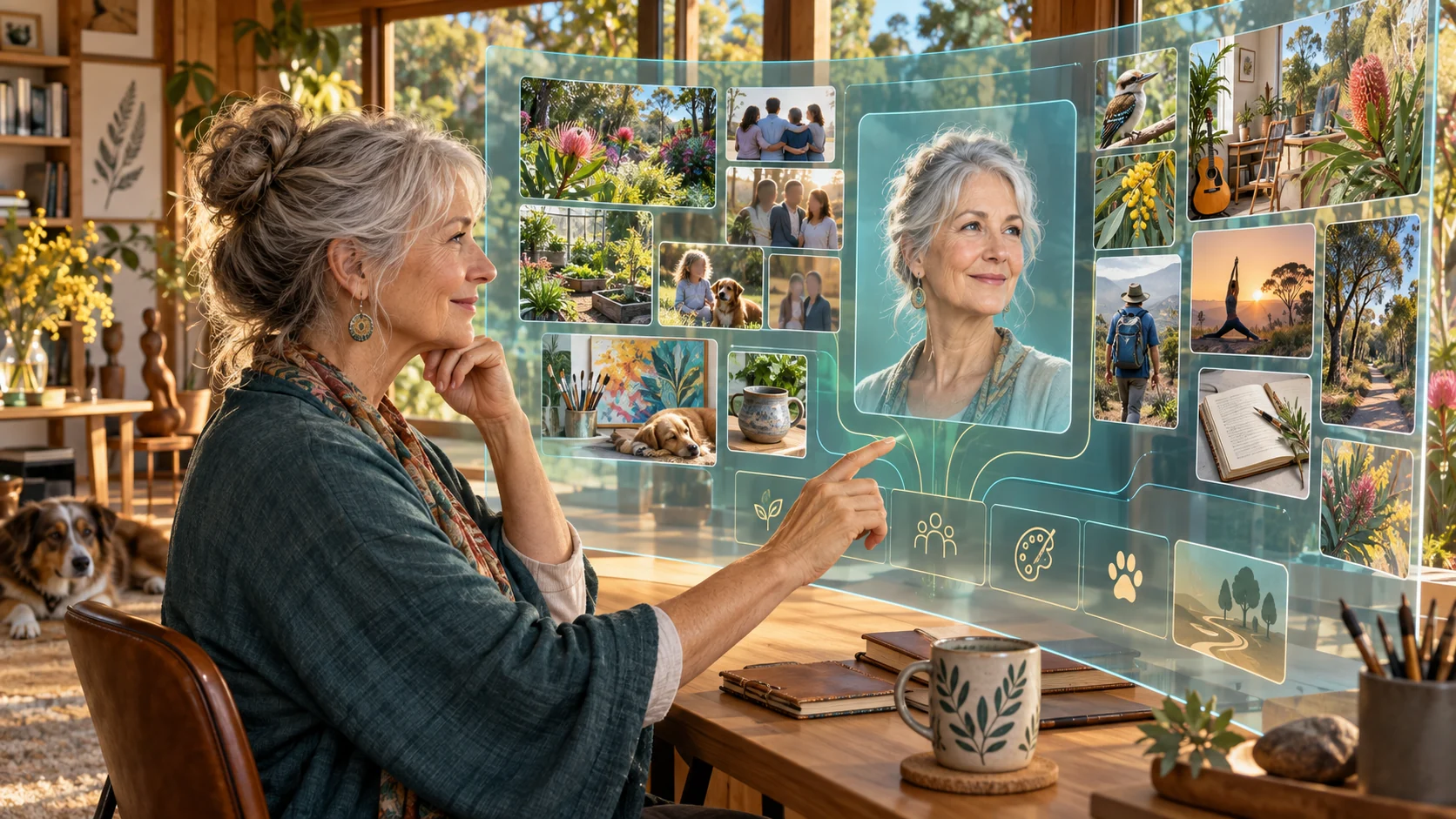
Aura of Intelligence is a proposed personal AI system built around a digital aura: an evolving, understandable model of a person's life and personality that computers can work with. It connects memories, relationships, values, skills, habits, aspirations and health observations. The aura is deliberately designed and grown through experience, conversation and reflection. [5]
An accompanying avatar gives the person a visual, expressive representation through which to interact, communicate and explore simulated situations. Together, the aura and avatar form a developing digital twin: a model that can draw on personal context when helping someone understand their past, navigate the present and consider possible futures.
Genesis is the process of growing that understanding
Aura Genesis is the proposed programme through which a person and their AI learn about one another. Life stories, photographs, meaningful places, creative activities and guided experiences provide starting points. The person can connect events with feelings, explain why a choice mattered and show how their priorities have changed.
The AI could organise these connections, ask useful follow-up questions and offer interpretations for the person to refine. Repeated encounters add context and depth. The process also explores the relationship itself: when the person wants practical assistance, a reflective conversation, a challenge to their thinking or space to decide independently.
The Geode-to-Macro concept sketches 60 two-hour sessions moving through discovery, personalised exploration and evaluation. That offers a substantial development pathway; partners and participants could adapt its length, pace and settings to different needs, including dementia and aged care.
An avatar for exploring choices
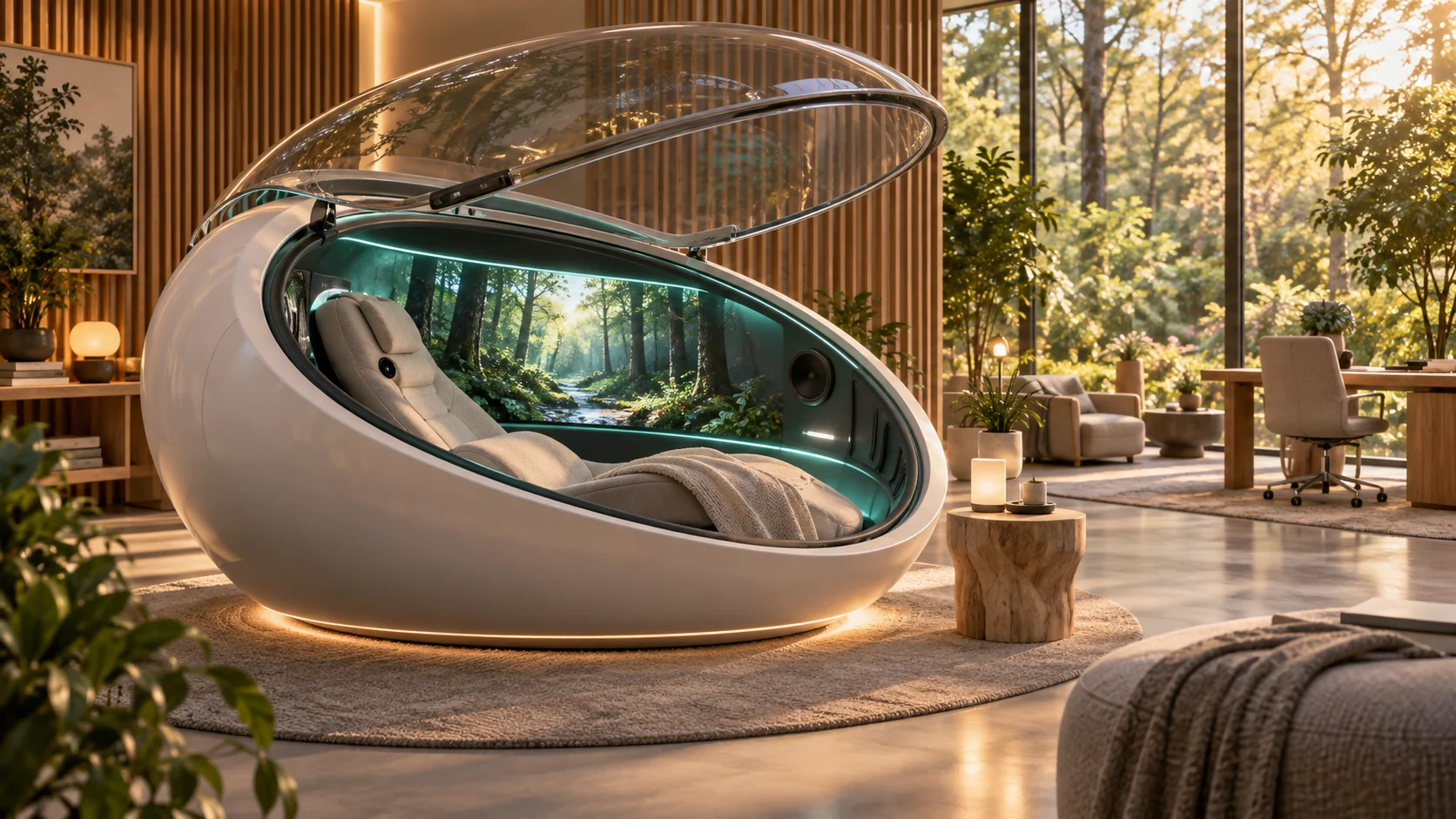
The proposed avatar could combine a chosen appearance, movement, expression and voice with the personal understanding held in the aura. Its uses could span health, work, learning and life planning.
A person might rehearse a conversation, explore a work role or compare future living arrangements. Someone approaching retirement could examine choices involving family, health and contribution. These are explorations of possibilities, with visible assumptions and outcomes to test in real life.
Memory palaces through a change of home
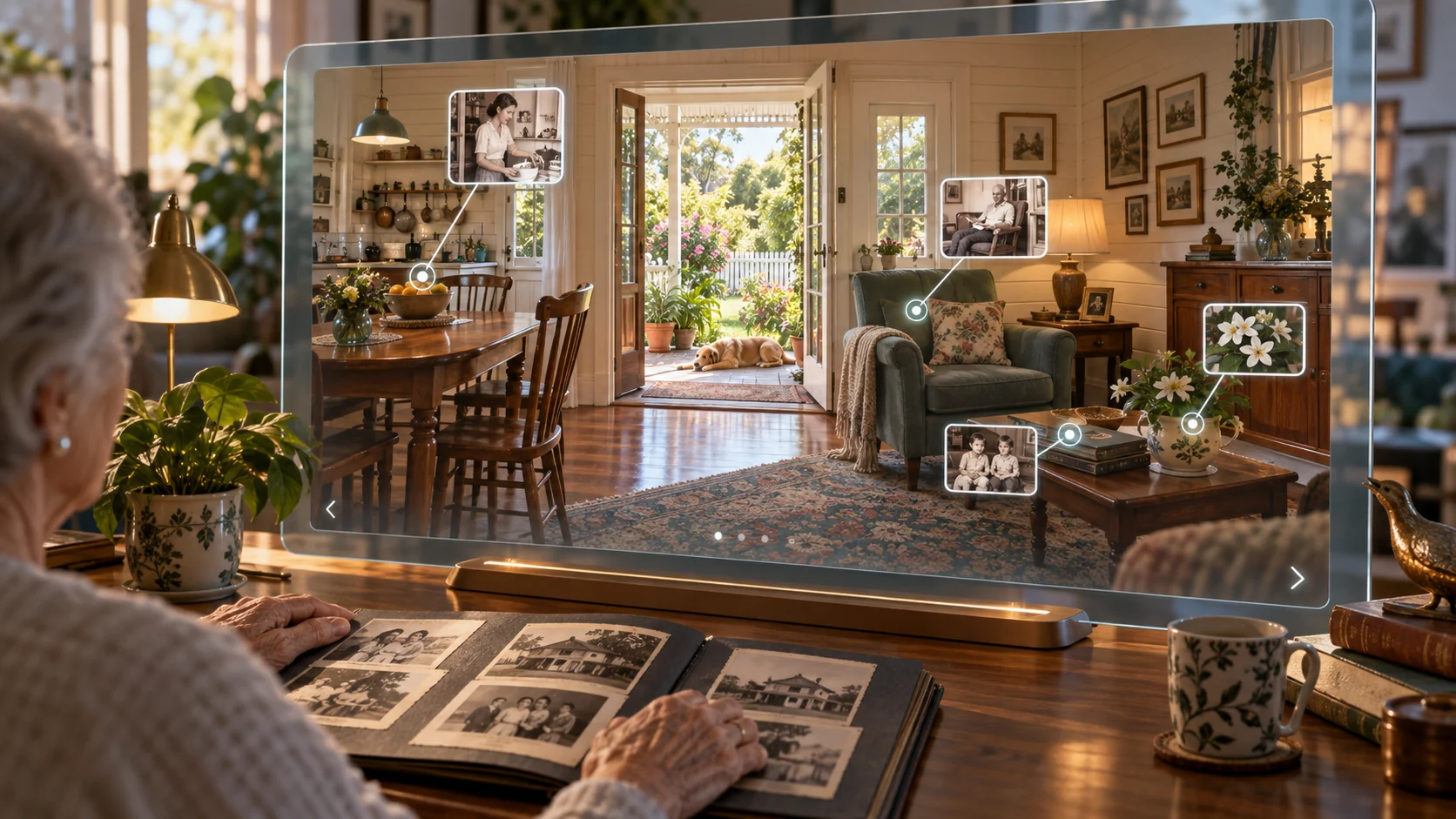
Memory palaces are navigable digital spaces linking memories to familiar locations. Before a move, photographs, video and personal accounts could recreate meaningful rooms, furniture and objects from the person's home. A kitchen table might open family stories; a garden path might recall favourite routines. These associations would become part of the person's digital aura. [5]
During and after moving house or entering aged care, the person could revisit these spaces on a screen or through an immersive experience, independently or with support. The aim is to maintain access to location-based memories while building familiarity with the new home. Families and care partners could help test whether this supports recall, comfort and continuity through the transition.