
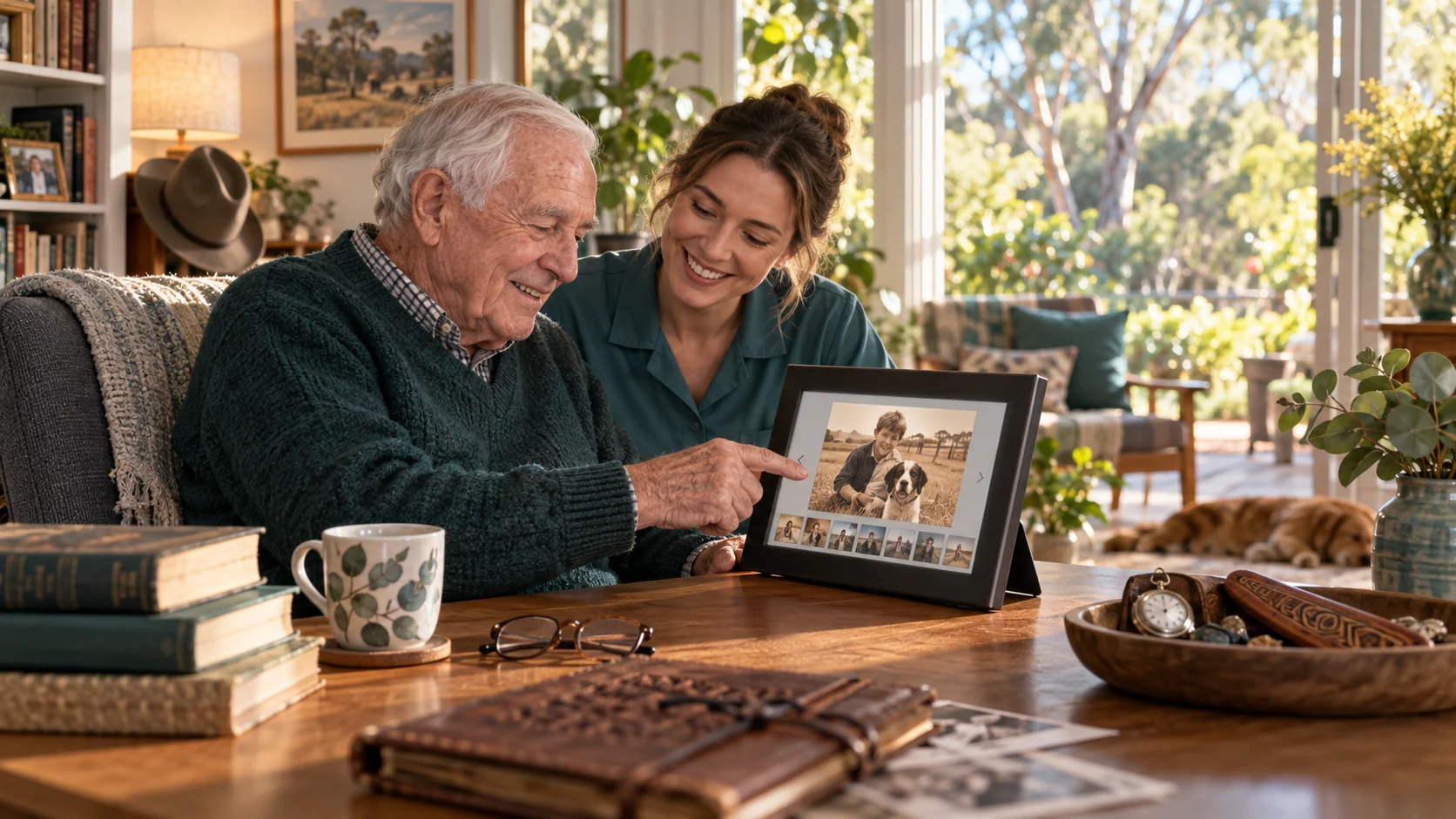
 GenAI concept artwork
Dementia care informed by the whole person
For someone living with dementia, the digital aura could carry their life story, personality and preferences into everyday support. The dementia plans propose four connected functions to support independence, communication and relationships as needs change. [5]
Personal understanding put to work
Persona mapping connects life events, values, relationships, skills and preferences. A person and their chosen supporters could build this understanding through stories, photographs and conversation, then use it to personalise activities, reminders and communication.
Behaviour modelling looks for patterns across routines, surroundings, health observations and distress. Repeated notes might suggest a connection between noisy afternoons and restlessness. The system could flag that pattern and familiar activities the person enjoys, helping a carer consider a response.
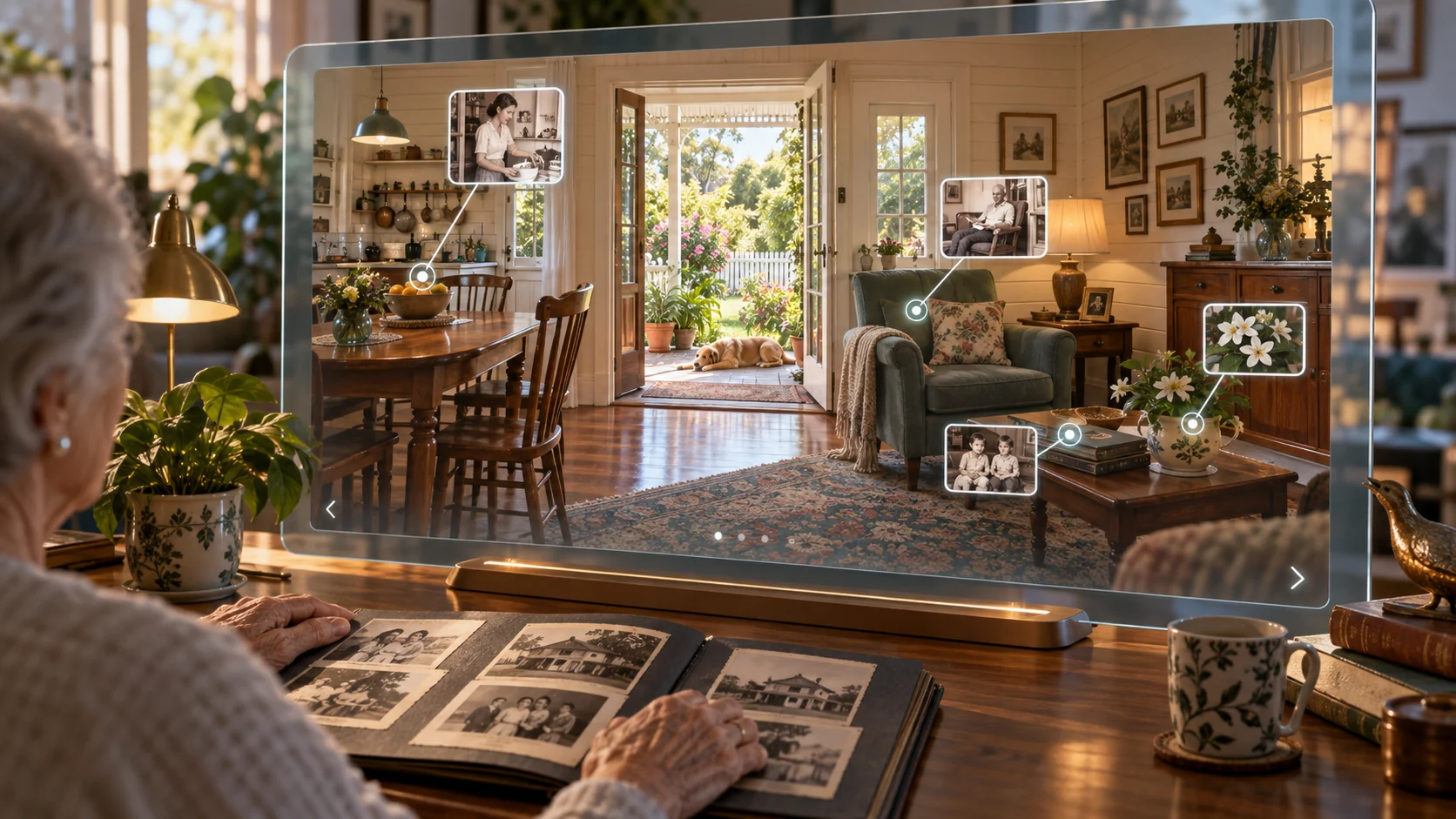
Social connection could make it easier to share meaningful moments, arrange contact with family and friends, and join community activities. An interactive life-story collection could bring familiar people and experiences within easier reach.
Planning for changing needs connects present wishes with future support. The person, family and care team could explore routines and living arrangements through the aura and avatar. Memory palaces, described on page 6, could support continuity during and after moving into aged care.
Useful information for carers and clinicians
With permission, personal accounts, carer observations and selected device measurements could inform draft notes and summaries. Care teams could review the underlying observations, track changes and prepare appointments with less repeated storytelling.
Clinical partners could compare the usefulness and accuracy of these summaries with established assessments of cognition, everyday function, distress, quality of life and carer wellbeing. The research question is whether this richer personal context leads to better support in practice. [5, 6]
Participants, carers and researchers could begin by shaping usable tools, then undertake pilot studies and controlled comparisons across care settings. That offers a pathway for university teams, developers and students to contribute, with clinical expertise guiding the evaluation of care applications.
A wider programme for healthy longevity
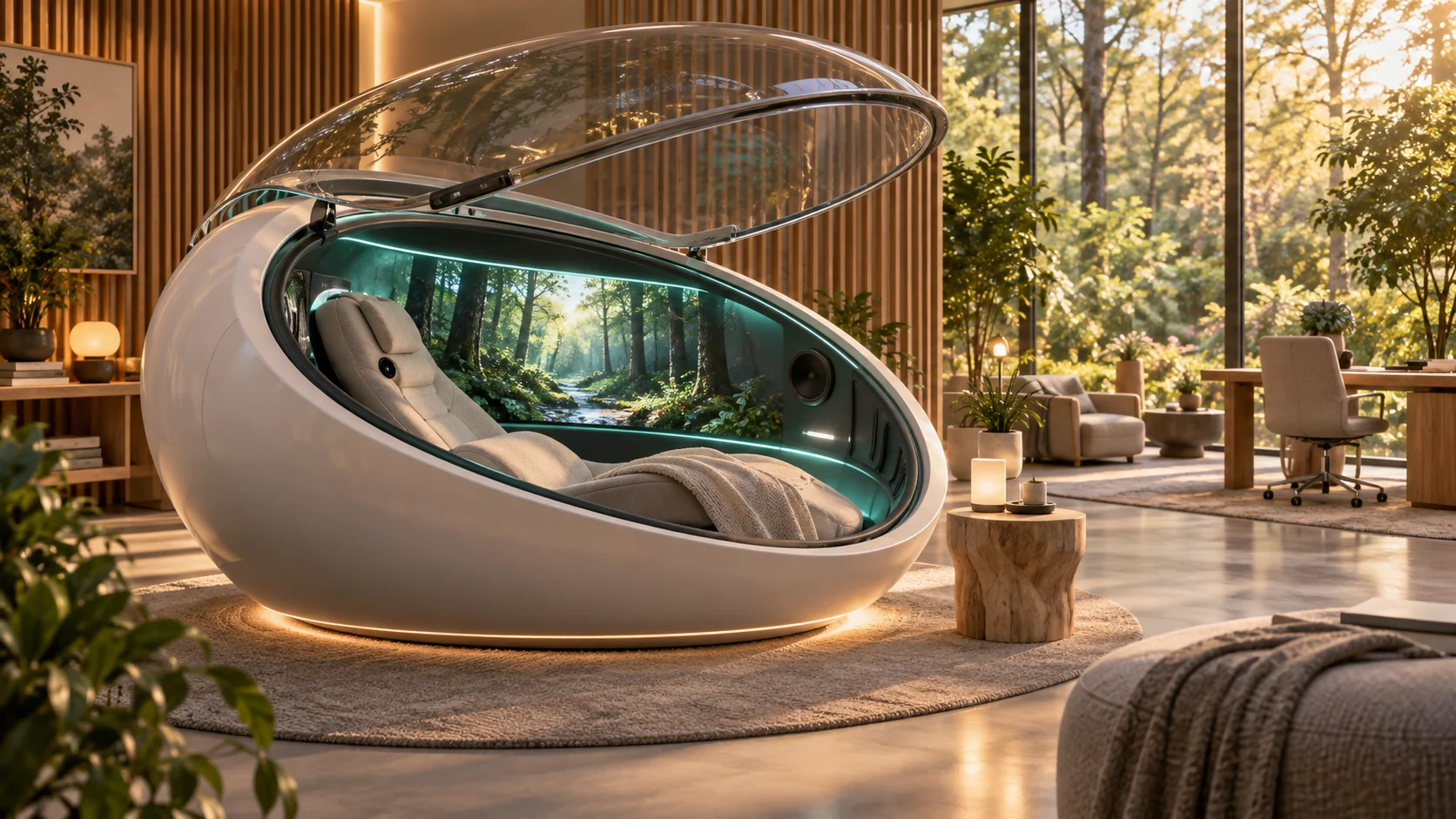
The Geode adds questions about sensory experience, physiology and personalisation. Specialist hyperbaric studies would examine defined questions under clinical supervision; benefits for dementia and healthy longevity remain under investigation. [6]
The ambition is more healthy, meaningful years of life. I welcome partners to investigate activity, sleep, cognition and participation, with supported consent, independent ethics review and findings that other communities can use.