Capability growth
What skills, tools, data, workshops and learning loops would make ordinary life stronger?
The subterranean city is not a promise to dig. It is a story engine for asking what would need to be true before deep infrastructure could ever be safe, lawful, useful and consent-based.
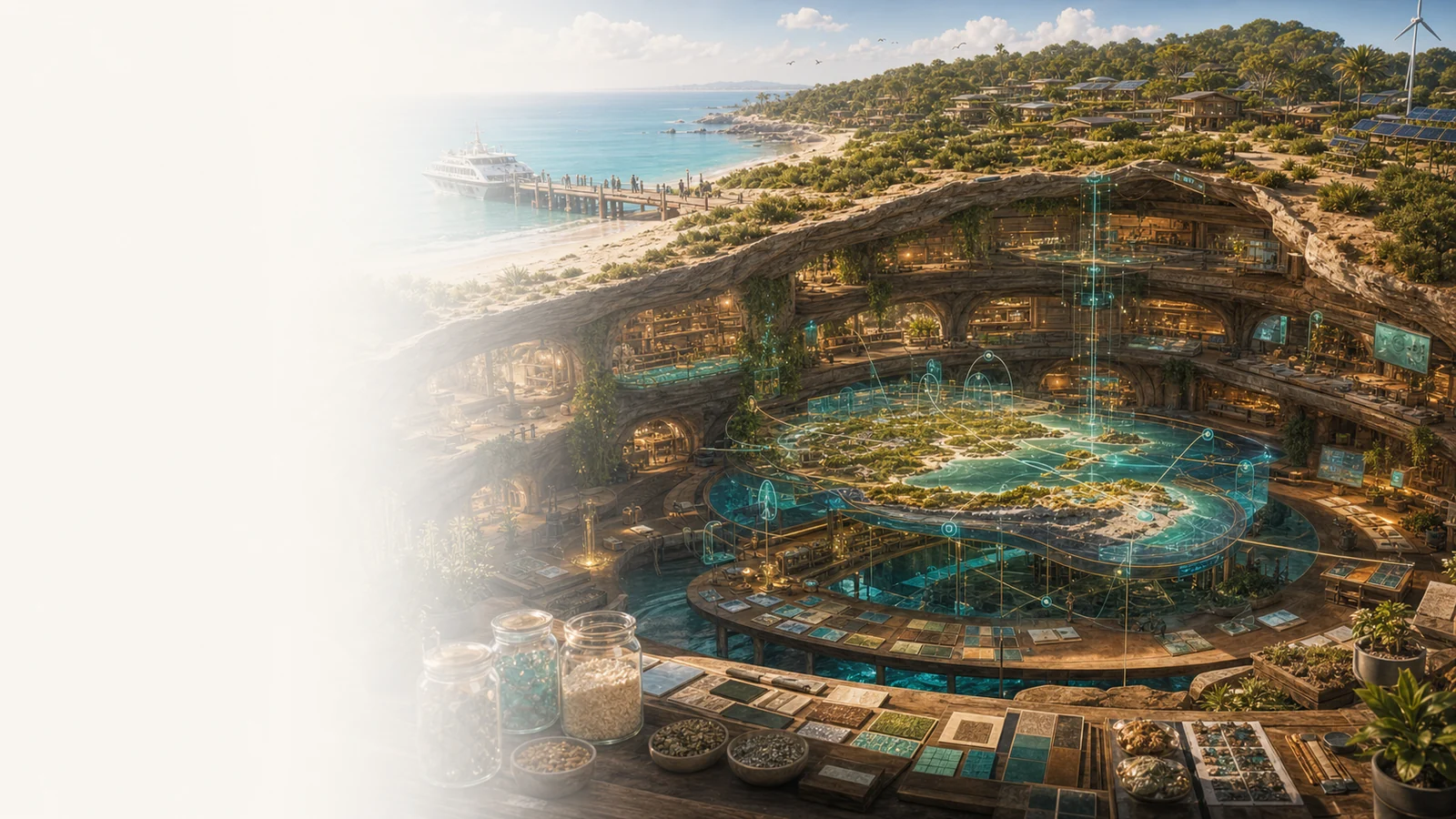
A public simulation can hold big questions without forcing quick answers. It can ask what people would need during shocks, what can be learned from local material loops, and what should stay in community control.
What skills, tools, data, workshops and learning loops would make ordinary life stronger?
What happens if heat, flood, logistics, energy, information or social trust systems fail at once?
OpenWhat can sand, glass, rubble, metals, organics, sunlight and open data teach before anyone touches risky materials?
OpenWhere must AI, robotics and simulation stay answerable to people, safety and consent?
OpenEvery deeper layer should pass through cultural, ecological, legal, engineering, safety, cost, maintenance and community-benefit questions. A simulation that cannot accept a no is not a useful simulation.
Cosmic Nexus adds a useful boundary pattern for the strange-and-true edge of the story: keep myth, history, UAP questions, underwater scenarios, film worlds, travel quests and governance simulations clearly labelled instead of mixing them into one claim.
Let the mystery stay playable through scenes, quests, festivals and worldbuilding.
Open Cosmic NexusDates, source trails, confidence labels and review status travel with any claim.
Extra Chair style review keeps affected voices, legal memory, public/private boundaries and cultural care in the room.
Open governance