Wellbeing movement
People returning, feeling safer, moving more, helping each other and bringing family or friends is the first signal worth protecting.
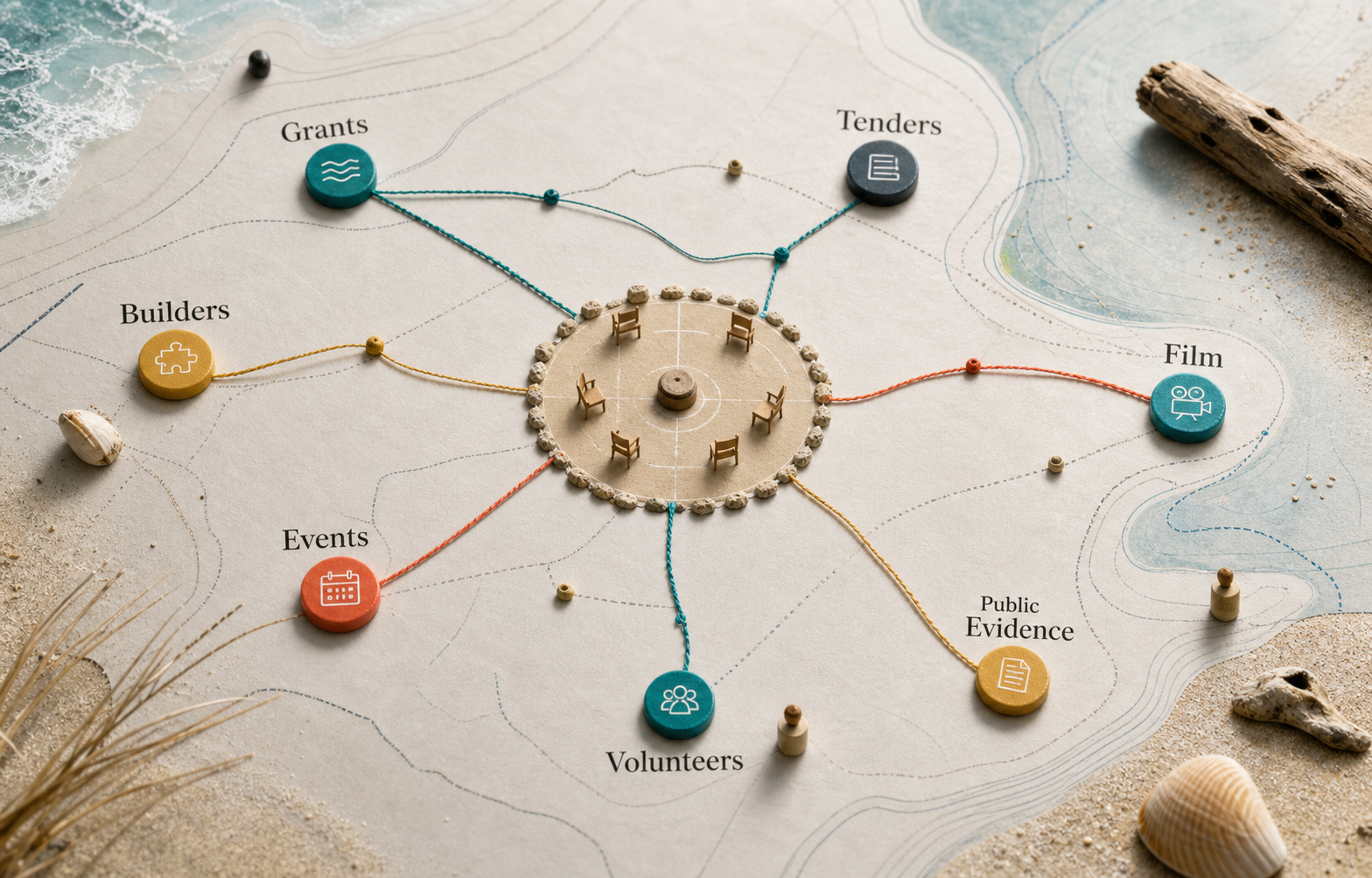
The opportunity starts with care, wellbeing, movement, belonging and trust becoming visible enough that funding, permissions and partners can support the work without taking it over.
The linked map lives on the ecosystem page. This page asks a different question: what kind of pressure is present, what proof would make it real, and would acting on it improve wellbeing, safety, participation and trust?
People returning, feeling safer, moving more, helping each other and bringing family or friends is the first signal worth protecting.
Attendance, questions, objections, school/family interest and repeat volunteers show what the community is actually ready to carry.
Ferry-terminal change, beach trials, the Dunwich/Gumpi facility horizon, Ballow Road context and Point Lookout showcase potential stay separate from approval, ownership and permission.
Maker-space, Sandworm, co-op and practical partners can sharpen gear, storage, shade, logistics and maintenance questions.
Film, noticeboards and hyperlocal updates can make the learning visible without turning people into campaign material.
Grant rounds, Olympic-era investment, local sponsorship and philanthropy are support signals to watch, not the purpose of the club.
Tenders become relevant when delivery scope, insurance, partners, price, risk and records are already credible.
Grants and tenders may ask for dates, but readiness comes from evidence. A responsible club can move quickly when wellbeing proof, support, permissions and the decision trail are already clean.
What is real now: people, sites, rules, partners, risks, money, appetite and public mood.
Run the smallest honest activity, prototype, meeting, notice, budget or partner conversation that can teach the next thing.
Capture attendance, volunteer hours, safety results, quotes, photos with consent, feedback, questions and objections.
Committee chooses what becomes an application, what stays a hypothesis and what stops.
Attendance, return visits, inclusion, safety, volunteer hours, family confidence, feedback and signs of reduced isolation.
Public benefit, budget, partner support and clear records that show money would serve care rather than replace it.
Capability, delivery partners, insurance, governance, price, risk allocation and recordkeeping.
Visible local participation, school/family interest, respectful feedback, public updates and corrections.
Decision recorded, conflict checked, money path clear, human owner named and review date set.
Published rules, guidelines and grant conditions deserve serious treatment. If a program has discretion, exemption pathways or room for a staged approach, the responsible move is to ask openly, document the answer and get permission in writing.
Confirmed facts, current rules, written approvals, adopted minutes, live grant guidelines and verified site conditions.
A possible path worth testing, such as a facility idea, partnership angle, funding route or program model.
Agent-generated options, draft budgets, scenario maps, risk prompts and grant language stay draft until humans review them.
What people actually show up for, trust, question, resist, support, join, play or help carry.