
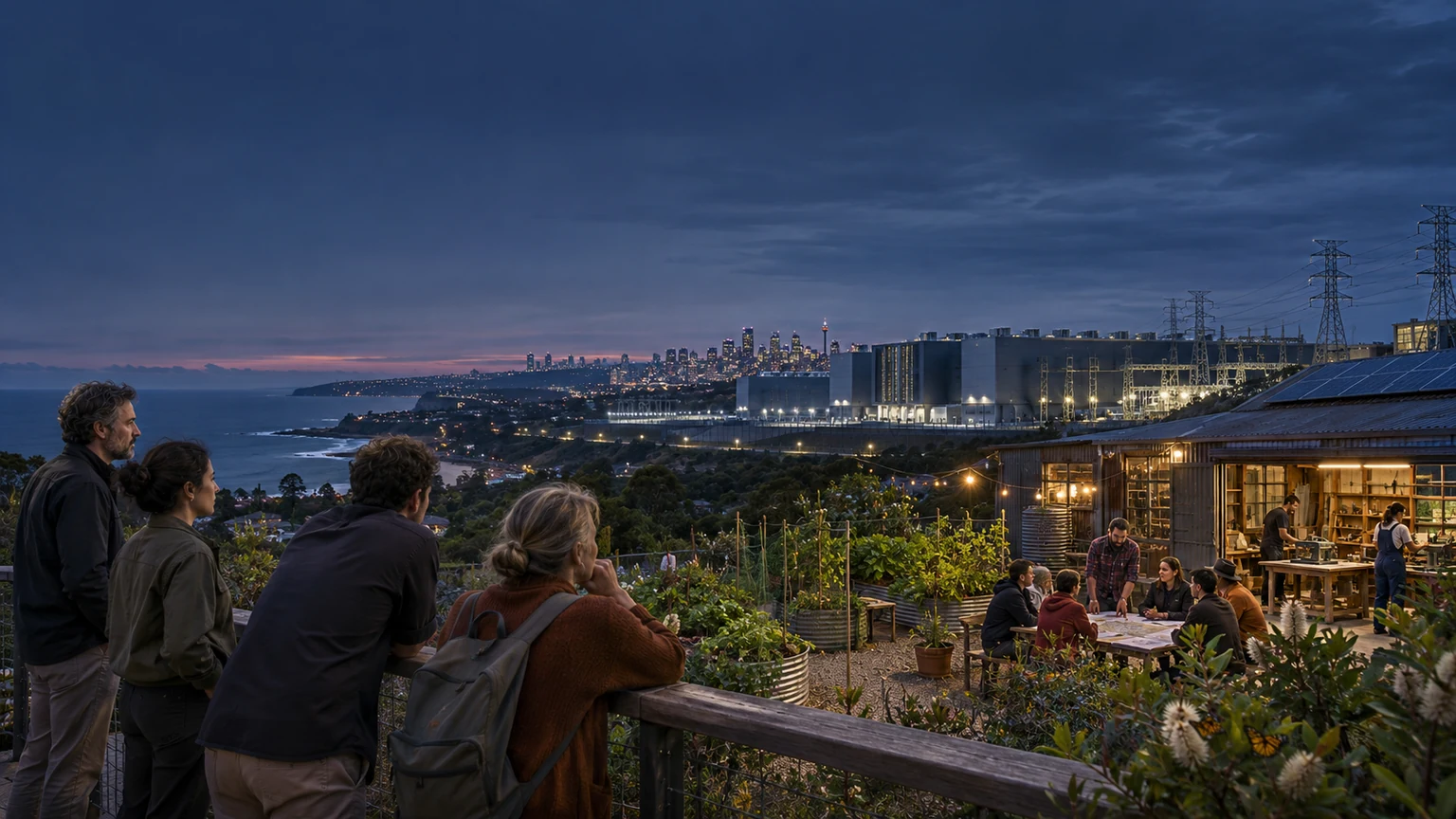
People look across an imagined Australian coastal city at blue hour, with a vast computing and power precinct beyond a warmly lit community workshop and garden.

Joyful Responsible Abundance · A whole-system proposal

Our future is
still a choice.

Powerful intelligence is being built into the world. The choices we make now can spread its benefits, deepen dependence, or open new ways to live.

Who owns it, who directs it and who has the means to take part will shape what comes next.

An imagined future, with choices still open. AI-generated concept image. Image credits

Between the world we inherit and the world we build

The balance takes work.

More powerful technology does not settle how we live together. Ownership, health, time and public decisions influence whether people gain room to act or find their choices narrowing.

The pressure of the status quo

Decisions made around us.

People can depend on systems they have little time, information or authority to question.

  • Essential tools and services can be controlled elsewhere, with little practical room to change provider or challenge the rules.
  • Poor health, confusing bills and financial strain can consume the time and energy needed to participate.
  • Claims can travel further than the evidence, while responsibility for a decision becomes difficult to trace.
Follow the questions of power and authority →

The alternative we can practise

People equipped to decide.

The proposal connects the conditions for a good life with the capacity to shape shared decisions.

  • Shared computing, local skills and locally made or appropriately licensed open-source AI models can give communities more options.
  • Health, learning, continuity of care and clearer household bills can make more room for people to act.
  • Inspectable evidence, public responsibility and records of correction can make decisions easier to understand and challenge.
Meet the components of the plan →

Joyful Responsible Abundance is a direction to choose and keep working towards. It takes institutions, infrastructure and everyday practice, with room to disagree, test an idea and change course.

Understand the forcesBuild shared capabilityPractise the choice

A wake-up call with somewhere to go

From everyday pressures to decisions on a world scale.

A confusing electricity bill is a small encounter with a much larger question: can you understand a system well enough to question how it treats you? Household Bill Check begins there. The wider plan connects personal learning, health, useful work, public evidence and shared computing.

The same question reaches into AI research, factories, public services and connected machines. Who can inspect them, correct them and direct what they do? Who shares in the gains when they become more productive?

This site brings together two papers by Luke Nathan Hayes. The whole-system preview introduces the capacities people need to build lives they can choose. The sovereignty paper follows the race to build powerful intelligence and the authority that comes with it. Together they connect personal agency with choices facing Australia and the world.

Follow the connections

Start close to home. Keep the whole world in view.

The sovereignty question

Australians need more than access to someone else’s intelligence.

Access is useful. Authority also matters. The sovereignty paper follows the connections between money, chips, electricity, manufacturing, software and decisions, asking which capabilities Australia can build, own and govern.

Understand the race

Two distinct planning scales

Australia: 3,000 locations.
A$18–19 billion.

The global comparison describes 44,000 locations at A$264 billion. These are separate planning scenarios for shared computing, with locally made and appropriately licensed open-source models among the choices it could support.

Change the number of installations or the allowance per site to see what drives the total.

Explore both scales in the calculator →

A place to begin

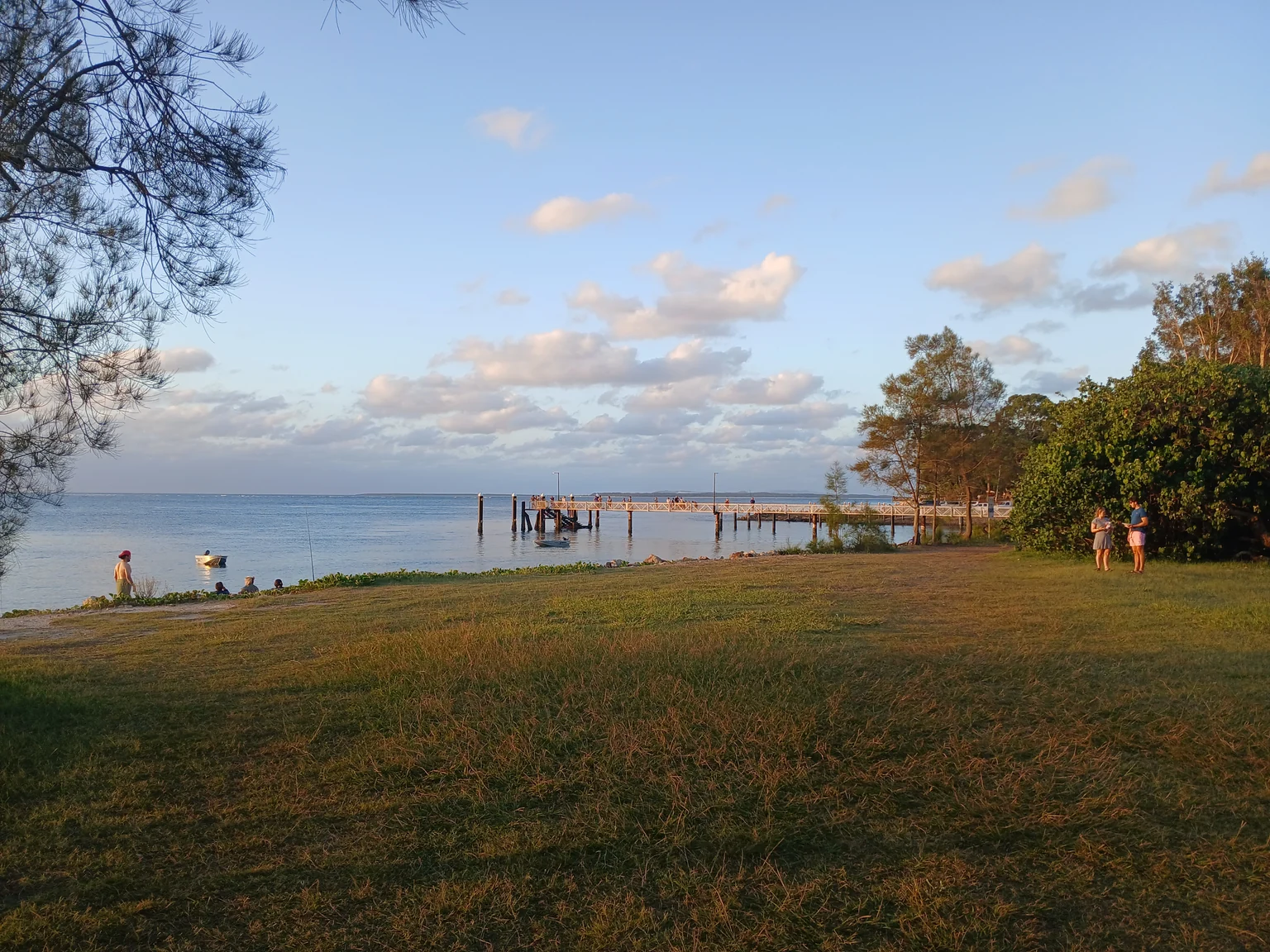
Rooted in Minjerribah. Open to the world.

A coastal community has its own seasons, meeting places, transport constraints and ways of sharing knowledge. The plan begins with that texture of ordinary life, then asks how communities can exchange what they learn while keeping authority over their own choices.

The photographs on this site show real places. The concept images imagine possible settings for the proposals.

Meet the work and its sources →
People on Amity Point jetty beneath a sunset on North Stradbroke Island.
Amity Point, Minjerribah. Photograph by Pacificwizard, CC0. Image credits.