
The invitation
G'day,
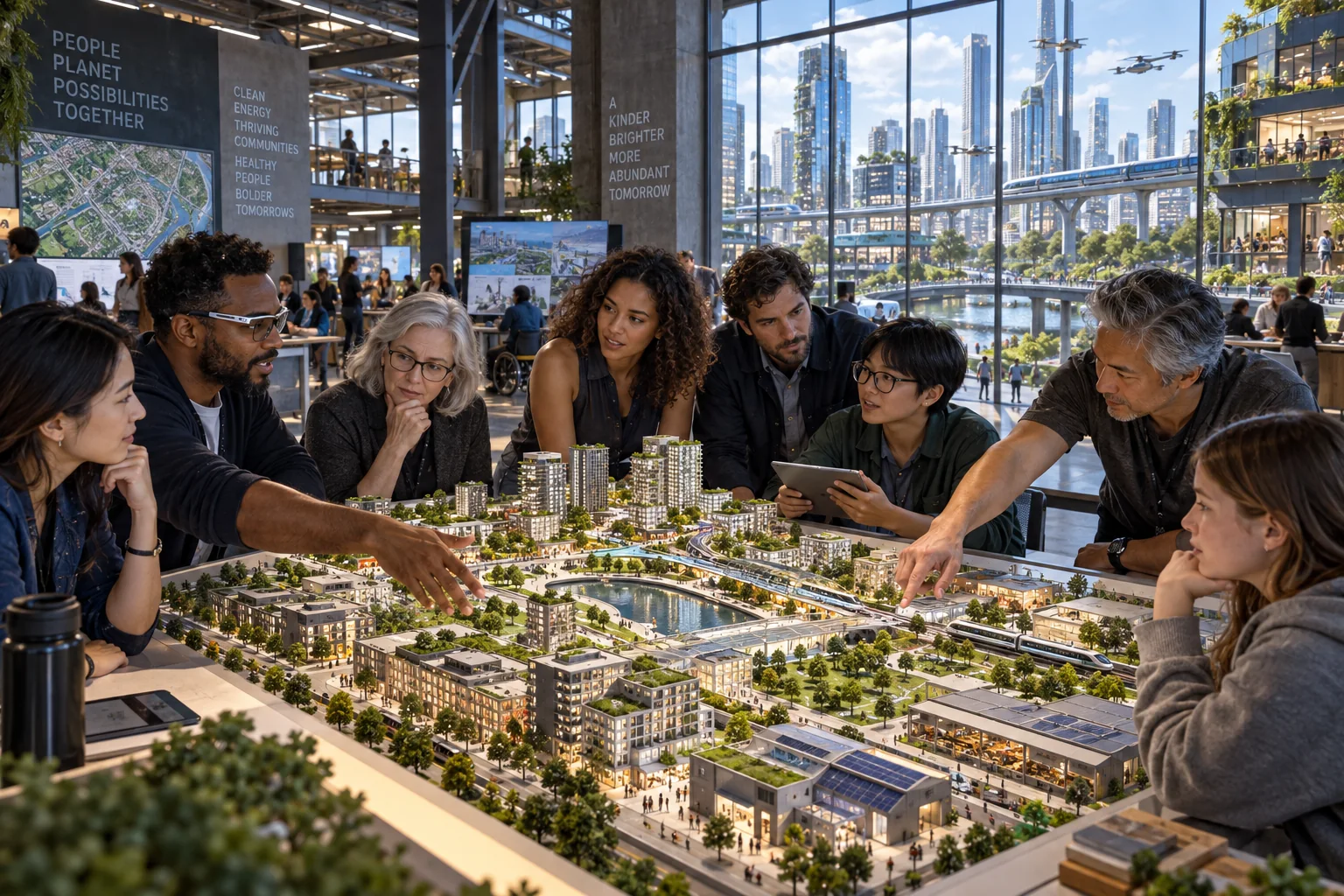
I invite people in every country to join in building the Global Association for Joyful Responsible Abundance on Earth, GAJRA Earth, and to co-register it through locally rooted associations across the world.
The proposal is not to export my worldview, establish another world government or compress humanity into one authorised definition of a good life. It is to create a connective layer through which people can richly define, test and improve the meanings of three ordinary but powerful words: joyful, responsible and abundance.
Their order matters, and so does their interplay.
Joyful Responsible Abundance asks what kinds of abundance can make life more worth living while remaining accountable for their consequences.
Responsible Abundance of Joy asks how joy itself can become plentiful without being manufactured through addiction, manipulation, exclusion or hidden harm.
Joyful Abundance of Responsibility asks whether care, stewardship and service can become sources of belonging and satisfaction rather than only burdens.
Responsible Joyful Abundance asks whether our productive capacity can be both life-giving and trustworthy.
Other languages, cultures, faiths and generations will reveal relationships among the words that English misses. The task is not merely to translate a slogan. It is to discover futures worth inhabiting.
GAJRA Earth would invite elders, children, scientists, artists, workers, carers, people of faith, people with none, people who love artificial intelligence and people who fear it to ask:
- What does joy mean here, and what has it meant across generations?
- Responsibility to whom, to what, and across what span of time?
- Which forms of abundance create freedom, resilience and generosity, and which merely relocate scarcity or harm?
- What should we carry forward, heal, stop inheriting or begin building?
- What would people born in 2035, 2050 or 2100 be glad we understood now?
This is simultaneously a human self-alignment process and an artificial intelligence alignment process. Before asking machines to align with "human values", humanity needs richer ways to examine what we actually value, where we differ, what we do rather than say, and what common ground is real. The result should not be one global values vector imposed by a corporation, government, ideology or founder. It should be a living, permissioned map of human difference and shared possibility.
A gajra is a flower garland. The flowers remain distinct when connected. In the same spirit, country-rooted GAJRA Earth associations could share learning and cooperate without surrendering their cultures, sovereignty or judgement. No country needs to become a copy of another. No centre needs veto power over the rest. Definitions can remain plural while practical work becomes connected.
Why trust is difficult
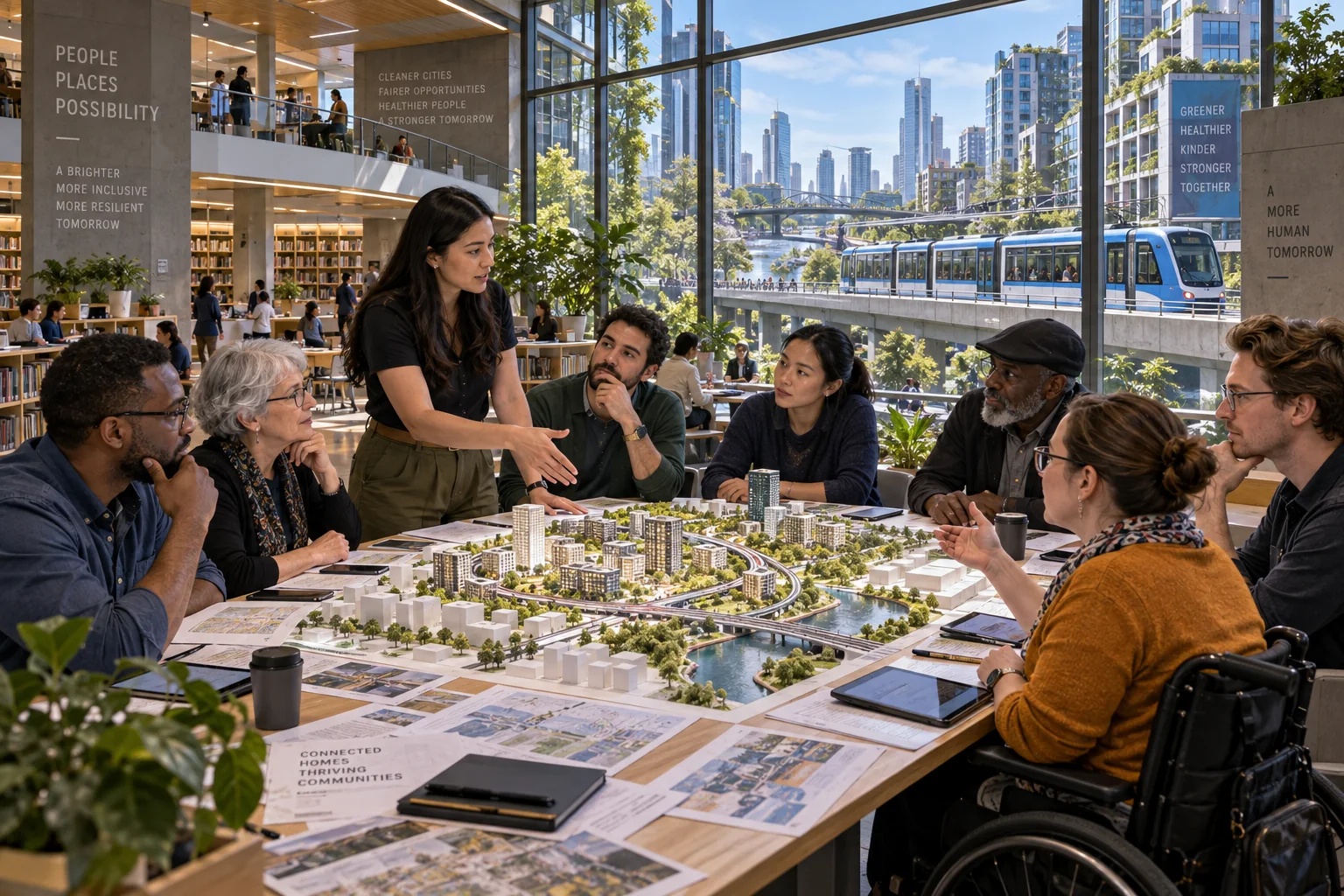
It is hard to ask people to trust the next transformation when they are still trying to find their feet after the last few.
Many people do most of what society asks. They work, pay bills, care for others and try to keep up, yet a secure home, a family, time to recover or a future they can confidently plan for remains out of reach. They hear that technology is making everything more productive, but cannot see where their share of that improvement went. Then they are told that artificial intelligence will change everything.
Will it change who gets a fair go, or mainly who owns the machinery?
Economic insecurity, inequality, declining trust and social fragmentation reinforce one another. These are not public relations problems. More than 720,000 people die by suicide each year according to the World Health Organization. Suicide has many social, psychological, biological and environmental causes, and must not be reduced to economics, but such loss should tell us that suffering cannot wait until it becomes dangerous before it matters.
The United Nations Population Fund reported in 2025 that financial limits had affected, or were expected to affect, the number of children people wanted for 39 per cent of respondents across 14 countries. Nearly one in five also cited fears about war, pandemics, climate change and environmental decline. This is not an argument that anyone should be pressured to have children. It is an argument that people should be able to build the lives they actually choose.
Work can provide purpose and stability, yet excessive workloads, inadequate pay, insecurity, low control, discrimination and poor conditions can grind people down. A person does not experience housing, income, health, family, technology and politics as separate departments. They experience one life.
My name is Luke Nathan Hayes. I am a sole trader from Minjerribah, North Stradbroke Island, in Queensland, Australia. My business is Strange but True: Tech, art and ideas that'll help. I research artificial intelligence and cognitive architectures, including ways of organising memory, knowledge, attention, values and decisions. Around that work I have developed public projects concerning ownership, livelihoods, health, democracy, resilience, art and long-term human possibilities.
I am not writing because I have risen above the mess. I am in it too. I am a soul who chose to try to design better systems than those that try to rule over me.
A three-part compass
Joyful means there is something worth being alive for: relationships, curiosity, belonging, creativity, music, travel, laughter, rest and time to enjoy them.
Responsible means attending to consequences: who pays, who benefits, what is hidden, what happens to other people and species, and what is passed to future generations.
Abundance means growing useful capability, food, energy, housing, knowledge, care, opportunity and productive capacity until avoidable shortage no longer organises everybody's life.
Joy without responsibility can become indulgence or manipulation. Responsibility without joy can become grim control. Abundance without responsibility can become extraction and inequality. Held together, the words ask: if humanity is becoming vastly more capable, what are we trying to make possible?
Three tests can be applied to any proposal:
- Did life become more worth living?
- Did we take responsibility for the consequences?
- Did useful capability become more abundant and more widely shared?
This is not a finished ideology. It is a compass for experiments, comparisons and corrections.
Protection must open into possibility
Trust has eroded partly because attention systems can profit from fear, anger and division even when users become more anxious, angry or exhausted. The same technology ecosystem is now moving from selecting the next post towards influencing how people work, learn, search, plan and decide. "Just trust me, bro" was never a sound governance model, especially when artificial intelligence sits between a person and increasing amounts of their world.
Australia's under-16 social-media restrictions are an important assertion that the conditions of childhood are not exclusively a commercial decision. Privacy, mistaken age determinations and young people's access to support still matter, and implementation should keep being examined. Yet protection is only half the task.
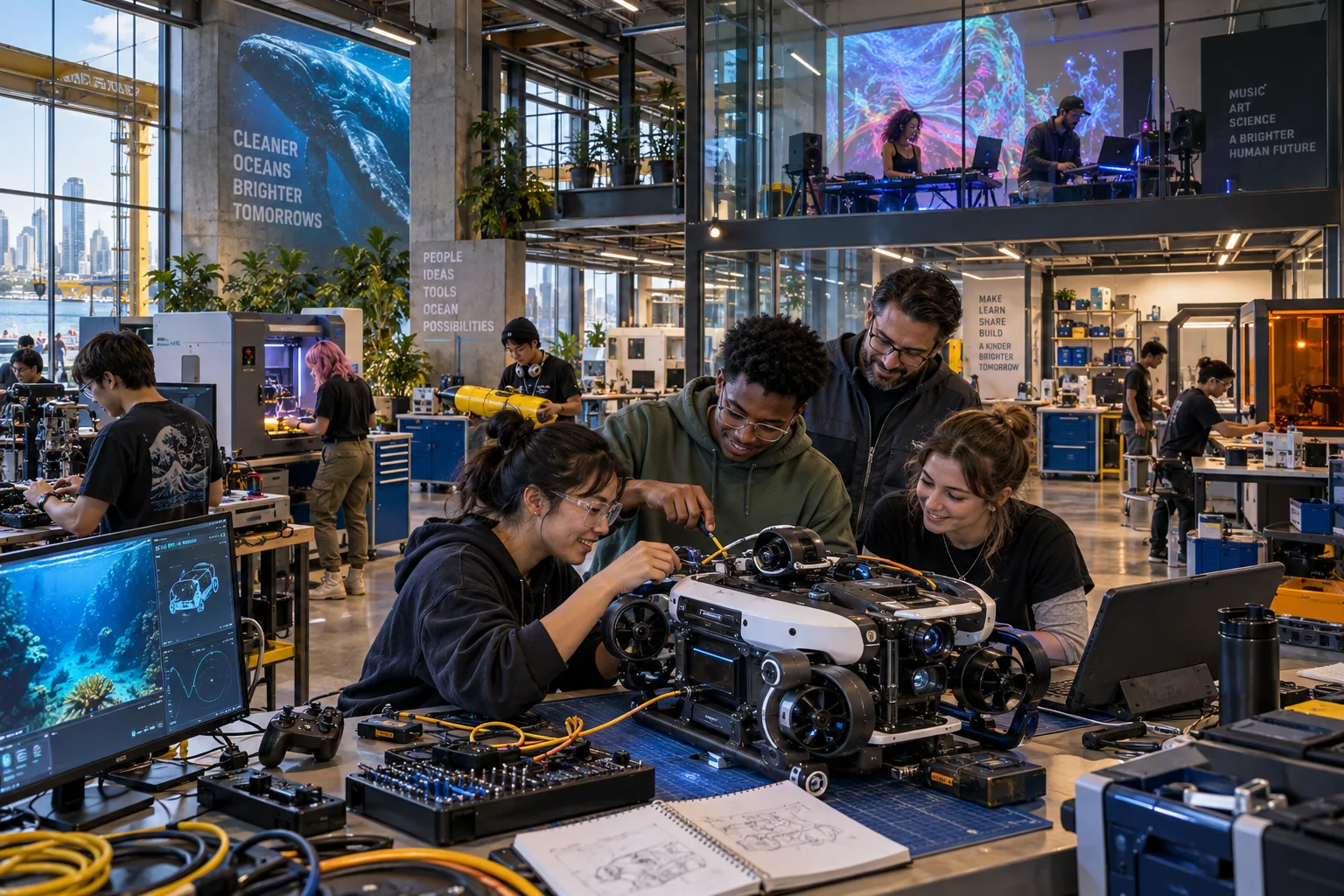
What do we offer instead? Places where young people can make films, learn how AI works, repair things, build robots, map wetlands, write music, grow food, explore trades, start enterprises and join communities. A fair go is not merely protection from something. It is access to worthwhile things to move towards. Joyful Responsible Abundance therefore cannot mean only reducing harm. It must increase the number of futures people might want.