Record the hour
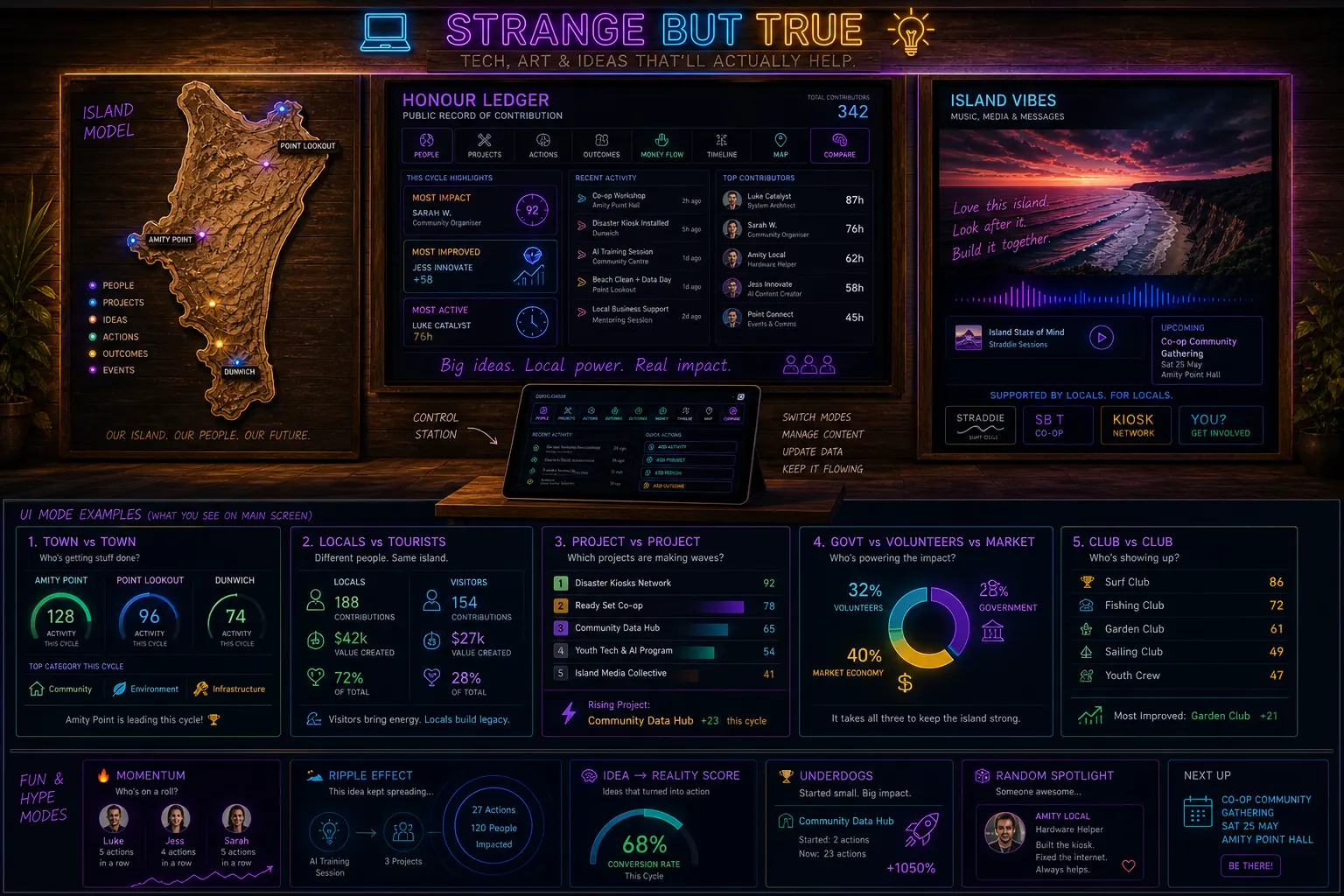
One verified contribution becomes a receipt: what happened, who checked it, what changed, and how the record can be corrected.
Regenerative asset shelf
A C-Hour is the civic receipt layer the incomplete ledger is missing: one verified hour of care, repair, mentoring, food rescue, ecological work, disaster readiness or public-good contribution.
Plain version
The source packet keeps returning to the same fracture: society runs on care and stewardship, then pretends those hours are background noise. C-Hours give the missing layer a public shape.
One verified contribution becomes a receipt: what happened, who checked it, what changed, and how the record can be corrected.
The point is a civic memory layer that helps communities see and resource the work that sustains them.
Private care, household labour and identity context stay under the person's control. Public recognition is chosen, scoped and reviewable.
A serious pilot runs through legal review, anti-fraud design, local authority, privacy controls and public governance so the receipt has integrity.
The source documents use the language of regenerative assets and carve-outs. The public translation is simpler: verified contribution needs a better receipt layer, and that layer can be designed around dignity, transparency, consent and community benefit.
Oceania has shared pressures: climate adaptation, care, disaster response, food waste, ocean stewardship and local resilience. A C-Hour-style receipt gives those pressures a common language while each place keeps control of its own data, law, recognition rules and cultural boundaries.