Energy everywhere · the drawing board
Imagination is the only limitation
Nobody has thought of every way to catch energy. Not the engineers, not the professors, not the AI. So this is for the next inventor: draw your machine, any machine, and we'll run the quick honest numbers together. How much power might it make? What would it cost in energy and materials to build? And if it holds up: one day the maker-space's printers and cutters could turn drawings into things. One rule only, and it's not negotiable: nothing that could hurt a living creature.
The loop
From pencil to prototype in six steps.
This is how a sketch becomes a real thing, and every step is something a kid, a class or a curious adult can actually do this week.
| Step | What happens | Who or what helps |
|---|---|---|
| 1. Draw it | Paper and pencil is perfect. Label what moves, what the energy pushes against, and where the power comes out. | You. Maybe a mate. |
| 2. Snap and describe | Photograph the drawing and fill in the design brief below: what it catches, where it sits, what it's made of. | The copyable brief on this page. |
| 3. Quick numbers | Paste the brief into an AI session (or ask at the bench). Minutes later: a power estimate, a materials list, and roughly how long the machine takes to pay back the energy used building it. | Any AI assistant + the ballpark helper below. |
| 4. Honest verdict | The design gets told how sure we can be about it: Known physics, Modelled, or Speculative. No design is laughed at; every design gets told the truth. | How sure we are. |
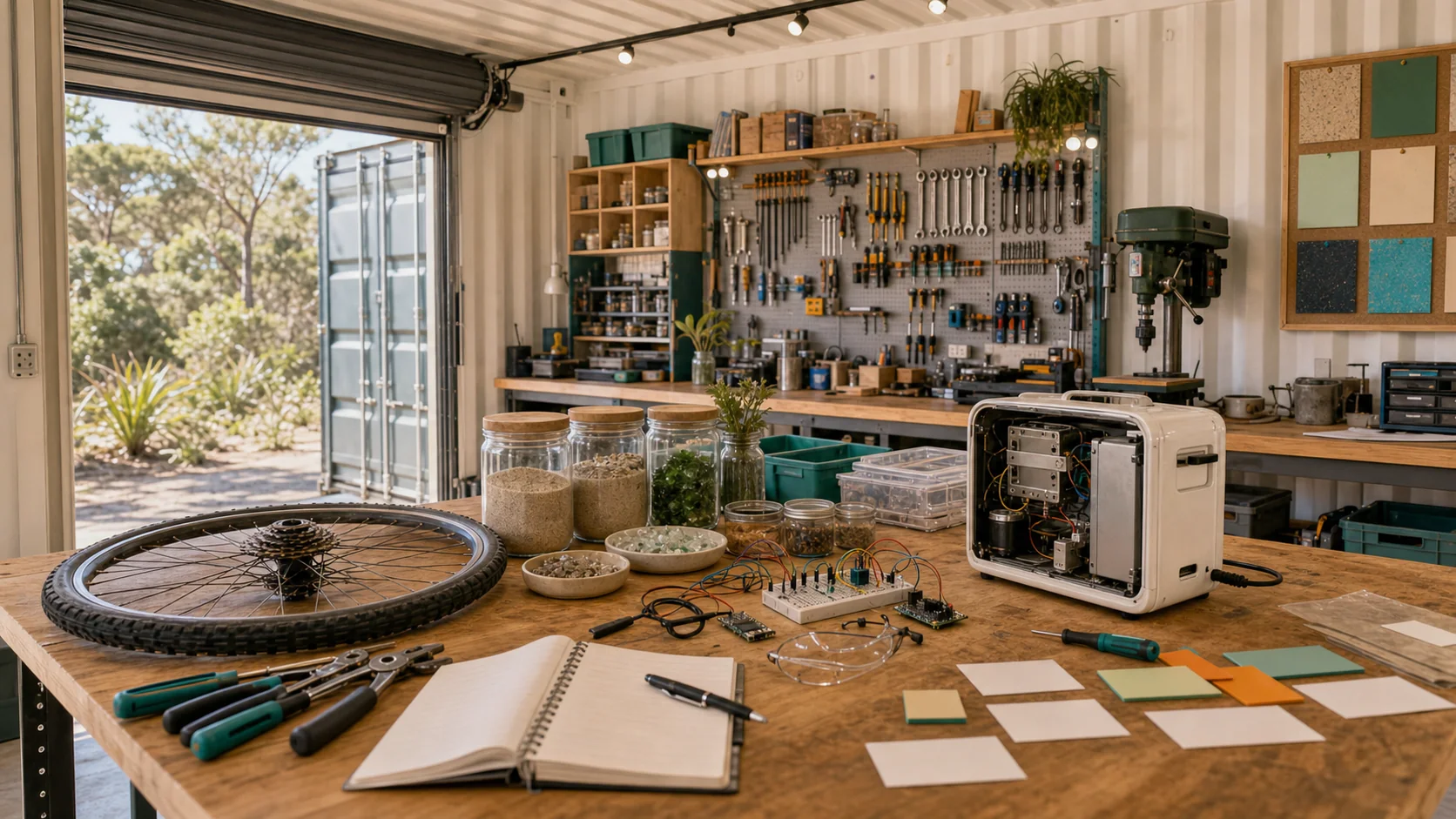
| 5. Build it small | Promising designs go to the maker-space bench: 3D printers and CNC cutters turn the drawing into a bathtub-scale prototype when the space comes online. | The bench page. |
| 6. Film it | Whatever happens, it's a story. Working or wonky, the test gets filmed, and the best ones could one day join an island cinema. | The Screen lane. |
The ballpark helper
How much power might it make?
Pick where your machine gets its energy, slide how big it is, and choose how hopeful to be. The helper shows the arithmetic openly, so you can check it: nature's supply, times your size, times how much your design actually catches. Real designs need the full AI check afterwards; this is the two-minute reality taste.
The design brief
Copy this, fill it in, hand it to any AI.
This is step two and three of the loop in one box. Fill in the blanks (rough answers are fine), copy it, and paste it into an AI session. It asks for the full honest workup: power, materials, energy payback, wildlife check, and a plain-language verdict.
Why this page exists
- Because not all designs have been thought of, and the next one might be yours.
- Because quick honest numbers beat polite silence: kids can handle "your machine makes three phone charges a day" and then make it better.
- Because when the maker-space stands up its printers and cutters, drawings on this island stop being hypothetical.