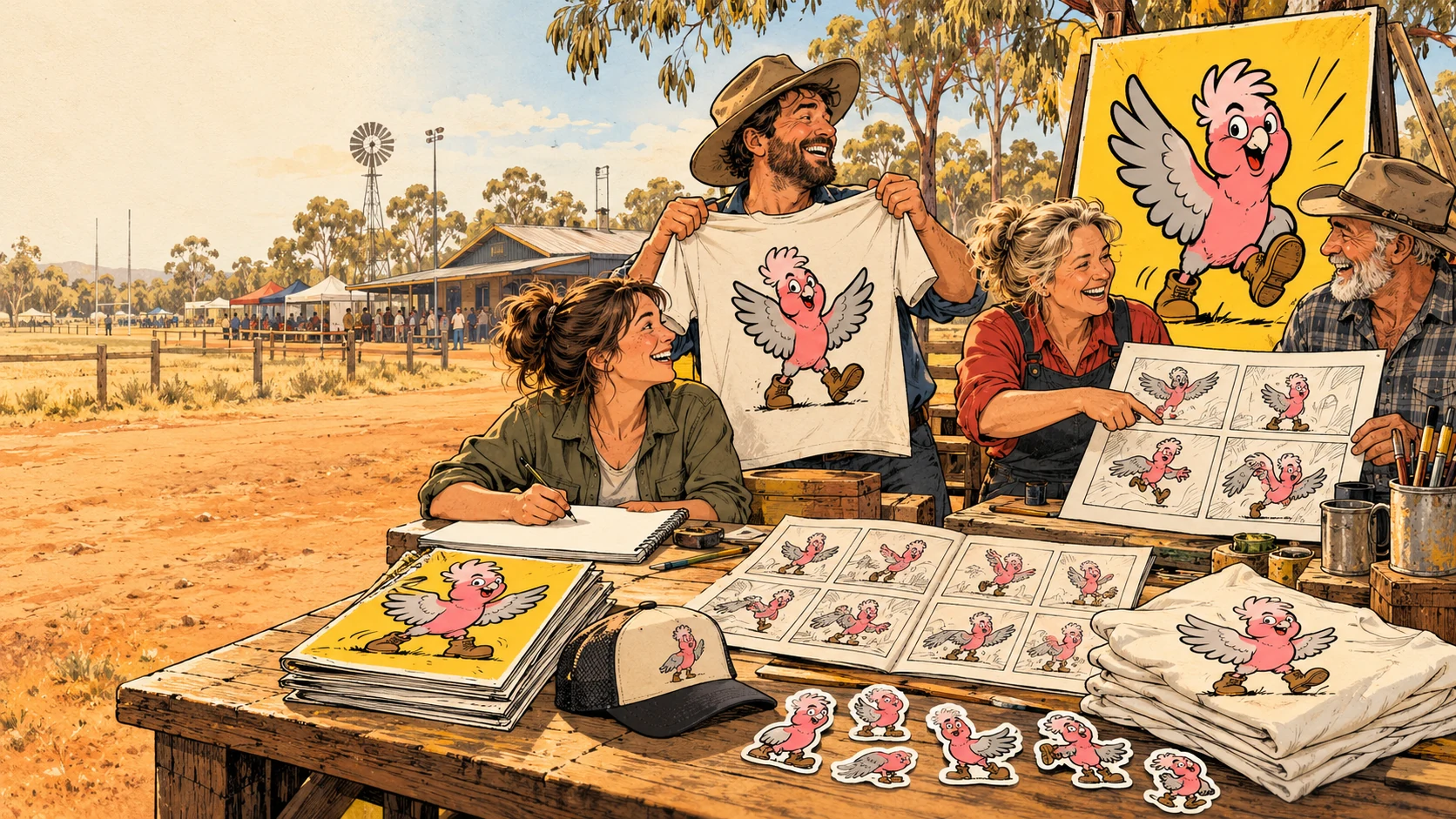
Open a format for a possible setting and an example of what we could make.
01Illustrated books and themed collections
The Book of Nearly Done
A character proudly opens the Ministry of Nearly Done: one washed plate, a returned drill case without its charger, a bag packed without tomorrow's clothes. Each chapter ends with the character finishing the handover properly. The grand office closes early because there is finally time to sit down together.
Premise, setting & sample
- The premise
- A person sincerely wants to help, but keeps handing over the unfinished part of the job.
- Possible setting
- Gifts between family, friends or co-workers; bookshops, club stalls and roadhouse shelves.
- Sample version
- Explore a linked chapter showing the excuse, the change and the shared payoff.
A way forward
Agree what a finished job includes, then complete your part and check the handover.
What it makes room for
Other people can rely on the help, and everyone gets more time back.
To ask readers: Can a reader describe what the character does differently, without feeling they are the joke?
02Pocket booklets, zines and fold-out guides
Feeding Yourself Includes the Kitchen
The cook lays out a magnificent sauce collection and asks which bottle counts as the vegetable. A mate helps them choose a meal, check the ingredients and follow the recipe. The last page shows them clearing up their own cooking mess, with tomorrow's meal no longer an archaeological question.
Premise, setting & sample
- The premise
- A new cook has enthusiasm, six sauces and no idea what dinner actually requires.
- Possible setting
- Leaving-home gifts, camp welcome packs, libraries and shared households.
- Sample version
- Develop the meal sequence with clear illustrations and checked food-handling guidance for its setting.
A way forward
Plan a meal you can make, follow its instructions, ask when unsure and clean up afterwards.
What it makes room for
More independence, a usable kitchen and less work quietly passed to someone else.
To ask readers: Does the guide help a learner work out what to do, rather than just point out inexperience?
03Posters and noticeboard series
The Walkway Would Like Its Job Back
A worker presents an absurdly elaborate route around their own stored gear. In the next scene, they move it to the designated place with the appropriate help and leave the access route clear. The final caption can take the mickey out of the unnecessary expedition, while the picture shows the change.
Premise, setting & sample
- The premise
- Materials creep into a shared access route until walking through becomes an obstacle course.
- Possible setting
- Workshops, camp facilities, club storerooms and site noticeboards.
- Sample version
- Adapt the drawing to the actual access route, storage arrangements and site review.
A way forward
Use designated storage and raise obstructions that you cannot safely resolve through the site's process.
What it makes room for
People can move and work without inheriting an avoidable obstacle.
To ask readers: Can workers identify the intended safe action, and does it match their actual site?
04Newsletter column and recurring email feature
The Crib Room Correspondent
The kettle submits a fictional resignation after its third empty shift. The cartoon then follows the last user checking the next person has what they need and leaving the bench ready. A later issue could show that same person thanking a mate who has done the handover for them.
Premise, setting & sample
- The premise
- A shared facility gets treated as though the next person is a free maintenance service.
- Possible setting
- Workplace, camp, club, association and community newsletters.
- Sample version
- Try a column and picture pairing a familiar shared-space frustration with a considerate handover.
A way forward
Leave shared equipment and spaces ready for the next user, following their instructions.
What it makes room for
Ordinary care gets passed along instead of ordinary resentment.
To ask readers: What act of consideration stays with a reader after the kettle gag?
05Magazine, seasonal annual or mini newspaper
Rough as Guts: The Good Sorts Issue
A fictional issue follows a family, a camp crew and a club through jobs they used to leave for someone else. Cartoons sit beside practical pages and a 'How I Stopped Doing That' yarn. The celebration is the repaired relationship, returned gear or enjoyable shared meal, with the old excuse available for a gentle callback.
Premise, setting & sample
- The premise
- Different people learn useful things from one another, with enough honesty to admit the messy beginning.
- Possible setting
- Club reading piles, local shops, ag-show stalls and community publications.
- Sample version
- Explore an issue around a shared theme, with each contribution showing its own useful change.
A way forward
Share a habit you changed, how you learned it and what helped you keep going.
What it makes room for
Learning becomes something people can contribute to and enjoy together.
To ask readers: Does the mix leave readers with usable ideas and people worth learning alongside?
06Single-panel newspaper cartoons and four-panel strips
Bush Telegraph: From Grumble to Report
A fictional pothole has a fan club, anniversary cake and an enormous comments section. A resident interrupts the ceremony to send a clear report through the responsible authority's actual channel. The strip ends with a reference number and a follow-up, leaving the joke on the endless commentary rather than promising an instant repair.
Premise, setting & sample
- The premise
- A local problem has collected plenty of opinions but nobody has passed on the information needed to act on it.
- Possible setting
- Country newspapers, community news sheets, town newsletters and local websites.
- Sample version
- Pair a fictional strip with the checked reporting information for the place using it.
A way forward
Report the problem clearly through the appropriate channel, without putting yourself at risk to collect details.
What it makes room for
A shared frustration becomes information someone can respond to.
To ask readers: Can a reader find the relevant reporting route, and is the cartoon fair to the people doing the work?
07Caption jokes, illustrated one-liners and share cards
The Last-Square Defence
Someone points proudly to a lonely corner of toilet paper: 'Didn't finish it.' The next picture gives them the much less dramatic role of fitting the new roll and checking the spare. Their self-important defence becomes a callback while the next person finds a bathroom that works.
Premise, setting & sample
- The premise
- A person puts more effort into avoiding a shared job than the job requires.
- Possible setting
- Household guides, camp amenities, club notices and newsletter cartoons.
- Sample version
- Compare a silent before-and-after version with a short exchange between the users.
A way forward
Replace shared supplies when you use them up, or tell the responsible person when stock is missing.
What it makes room for
The next person is looked after without needing to chase you.
To ask readers: Does the change get as much attention as the excuse?
08Comedy sketches, short scripts and performed video
A Quick Favour, Properly Asked
A mate asks for a ute and 'a couple of things', then reveals furniture for an entire house. Instead of turning the helper into a fool, the scene lets both pause, agree the actual load and time, and arrange the rest. The requester carries their share while the mate retires the imaginary removal-company uniform.
Premise, setting & sample
- The premise
- A vague request for help quietly grows into a job the helper never agreed to.
- Possible setting
- Club nights, short video series, hall entertainment and guide companions.
- Sample version
- Read different versions of the conversation, keeping the honest agreement and helpful ending visible.
A way forward
Say what help you need, ask what the other person can offer and respect their answer.
What it makes room for
People can help willingly without a favour becoming a hidden obligation.
To ask readers: Does the scene offer words someone could use without making generosity look foolish?
09Sticker sheets, labels, magnets and removable decals
Put It Where Future You Can Find It
A reusable label shows a character presenting an empty hook as 'the search headquarters'. A matching panel shows them putting their keys or club gear in the agreed place. The final image is a calm departure, with their former search party enjoying the morning off.
Premise, setting & sample
- The premise
- Tomorrow's missing item was left somewhere imaginative today.
- Possible setting
- Households, camp rooms, club storerooms, welcome packs and gift bundles.
- Sample version
- Explore a label and matching guide panel around a genuinely useful place to return an item.
A way forward
Choose an agreed home for the item and return it after use.
What it makes room for
Less searching, fewer interrupted people and more time for the day itself.
To ask readers: Does the label help the habit happen where the item is actually used?
10Task drawings and visual companions to reviewed safe work method statements
The Plan That Fits the Job
A discussion scene lets a worker question the mismatch instead of pretending to understand it. The responsible task team checks and corrects the material before it is used. Any light satire belongs in the familiar 'reckon it'll be right' excuse, while the reviewed drawings communicate the real job clearly.
Premise, setting & sample
- The premise
- A worker notices that the picture or written sequence does not match the task in front of the team.
- Possible setting
- Task-specific work documents and site communication, with the responsible organisation and reviewers.
- Sample version
- Develop drawings against the actual source document and retain the task team's review and revision notes.
Safe Work Australia: SWMS guidanceSafe Work Australia's guidance describes SWMS for high risk construction work. This proposal is illustration support tied to the specific work and its review process.
A way forward
Follow the approved method and raise unclear instructions or changed conditions with the responsible person before proceeding.
What it makes room for
Speaking up becomes part of looking after the crew and understanding the task.
To ask readers: Does the responsible task team confirm that the sequence, equipment and depicted controls match this job?
11Short animation, loops and recurring episodes
Dinner's Done. So Is the Washing-Up.
A proud reveal of one plate becomes a slow pan across every saucepan in the house. The cook sees the gap, shares a plan with the household and does their part of the clean-up. The closing shot puts them at the table with everyone else, rather than leaving another person in the kitchen.
Premise, setting & sample
- The premise
- The cook declares dinner finished while the cooking mess is still waiting for somebody else.
- Possible setting
- Short-video channels, club screens, camp displays and guide companions.
- Sample version
- Compare a quiet visual reveal with a short reply, keeping the clean-up and shared rest in both endings.
A way forward
Treat cooking, clearing and cleaning as a shared job with an agreed division of work.
What it makes room for
Feeding people also leaves them a usable kitchen and time to be together.
To ask readers: Can viewers see who changes what, and does the ending share the enjoyment as well as the work?
12Tea towels, mugs, aprons, shirts, calendars and shed prints
The Bags Made It to the Car
A reusable shopping bag shows an absurd ceremonial procession from the kitchen hook to the front door. A companion calendar picture finishes with the owner actually using the bag at the shops. The joke celebrates remembering, with room for the owner to laugh at the old empty-handed entrance.
Premise, setting & sample
- The premise
- An everyday object can remind someone of a habit they want to build.
- Possible setting
- Gift stalls, club fundraisers, roadhouses, small shops and direct-order bundles.
- Sample version
- Try the image on the object involved and compare whether it is a useful reminder or just decoration.
A way forward
Put the things you need with the belongings you already take when leaving.
What it makes room for
Preparation becomes easier to remember and less dependent on somebody else's reminders.
To ask readers: Would the owner welcome this reminder, and can they connect it to an action they want to take?
13Sports-club mascots, match-day cartoons and junior activity sheets
The Galah Who Gives a Hand
The galah arrives with a giant coaching board and discovers today's useful role is on the volunteer roster. It asks where it is needed, finishes that job and thanks the other helpers. Its next grand announcement is that everyone can enjoy the game because the set-up is actually done.
Premise, setting & sample
- The premise
- An enthusiastic club character has plenty to say and learns to make its help count.
- Possible setting
- Footy, cricket, bowls and other sports clubs, with a character developed for the individual club.
- Sample version
- Explore the character in a match-day strip, a practical club notice and a volunteer thank-you.
A way forward
Check the roster, ask where help is needed and follow through on the job you accept.
What it makes room for
The load is shared, new helpers belong and more people get to enjoy the club.
To ask readers: Would members see a character worth joining in with, rather than a mascot rewarded for avoiding work?
14Generic public-facing issue cartoons, campaign posters and explainer strips
The Great Not-My-Job Debate
A fictional Shed Parliament debates the untidy community hall until someone asks who can do what and which decision needs the responsible organisation. The group shares the work within its authority and follows the relevant public process for the rest. Satire of the grand speeches sits beside a checked explanation people can use.
Premise, setting & sample
- The premise
- A shared problem attracts speeches and blame while the practical responsibilities remain unclear.
- Possible setting
- Community papers, public exhibitions, civic information projects and general public issue campaigns.
- Sample version
- Explore a fictional cartoon alongside the verified process and responsibilities for the actual issue.
A way forward
Clarify the facts and responsibilities, take the part you can and use the appropriate public channel for the rest.
What it makes room for
People can participate and cooperate without being left with cynicism or an invented promise.
To ask readers: Is the factual explanation accurate, and does the satire leave readers a constructive way to participate?
15Serial comic panels and rotating community displays
The Gear Comes Home
A club bag issues an extravagant reunion invitation to its scattered contents. Across the instalments, borrowers check their cupboards, return the gear and tell the coordinator about missing or damaged items. The final panel shows the next group ready to play, with the former borrowers helping them pack.
Premise, setting & sample
- The premise
- Shared equipment cannot do its next job while it is spread across everybody's houses.
- Possible setting
- Camp noticeboards, halls, club foyers, libraries and community shops.
- Sample version
- Explore a serial that follows the return and handover, with local return details supplied by the club.
A way forward
Return shared gear to the agreed place and tell its coordinator about any problem.
What it makes room for
The next person gets a fair turn, and the coordinator does less chasing.
To ask readers: Can readers find where and how to return the real items, and is asking for help made easy?
16Illustrated readings, hall-night comedy and caption contests
The Picnic Expedition
A picture shows a ute packed as though the picnic might colonise another planet. The narrator discovers nobody has checked the meeting place or who is bringing lunch. A second image has the group agree the essentials and share the jobs, then spend the outing enjoying each other's company.
Premise, setting & sample
- The premise
- Preparing for a shared outing becomes an impressive display of equipment without an agreed plan.
- Possible setting
- Country halls, bowls clubs, show events, libraries and club entertainment.
- Sample version
- Read alternative explanations over both pictures and ask what the group changed between them.
A way forward
Agree the plan, check what is needed and share preparations with the people taking part.
What it makes room for
Preparation serves the shared experience instead of consuming it.
To ask readers: Does the second picture offer something useful beyond 'pack less' or 'stop being silly'?
17Short audio yarns, radio-ready sketches and narrated cartoons
The Conversation Gets a Second Person
A storyteller delivers the history of three cars and a disappointing gearbox before noticing their mate is still holding the first question. They stop, ask about the other person's day and listen. The old car story returns as a shared callback rather than taking over the whole conversation again.
Premise, setting & sample
- The premise
- A person is so busy telling a story that their companion has not had room to join in.
- Possible setting
- Community-radio submissions, club audio, podcasts and narrated guide editions.
- Sample version
- Try the exchange aloud with different pauses and responses, leaving room for both voices.
A way forward
Ask a question, listen to the answer and make room for the other person's story.
What it makes room for
People feel included, and the conversation has more to offer both of them.
To ask readers: Can listeners hear the change in attention, without one character being treated as beneath the other?
18Caption games, scenario cards and printable club activities
What Would Help Here?
A picture card shows a borrowed item returned incomplete or a shared kitchen left unusable. Players can supply an absurd excuse, then suggest a response that helps resolve it. A second picture lets the character put things right, with room to discuss which line would invite cooperation rather than start a fight.
Premise, setting & sample
- The premise
- A familiar mess can open a conversation about helping, responsibility and the way people speak to one another.
- Possible setting
- Club tables, family gatherings, camp recreation rooms and facilitated youth activities.
- Sample version
- Explore picture-and-response cards with intended participants, including how they would want a mate to raise the issue.
A way forward
Practise asking for a change clearly, listening and agreeing who will do what.
What it makes room for
A difficult subject can become a shared problem to solve with some warmth.
To ask readers: Does the activity make repair and respectful conversation easier, or turn into scoring points against someone?