You can learn a different way and still have a laugh.
Nobody arrives knowing every useful skill, and people get different chances to learn. Young Crew gives a young person a place in the change: notice what is happening, ask a question, try another habit and enjoy what it makes possible. The laugh belongs with them as they learn. A young person can choose a different way without carrying the job of fixing everyone around them.
A laugh with somewhere to go
Draft ideas to try with readers. Each shows a familiar habit, a different response and something worthwhile on the other side.
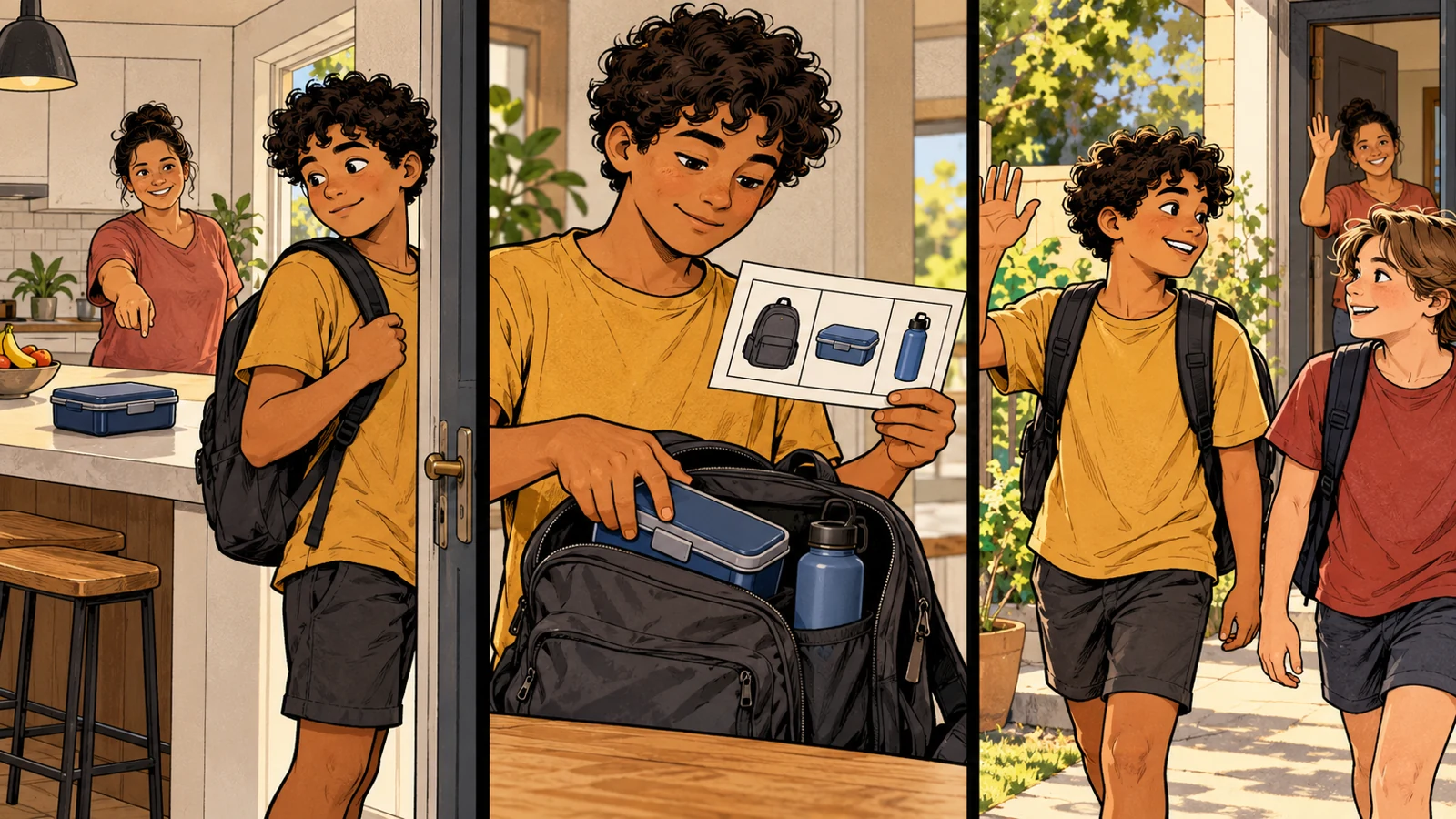
The Bag That Was Ready Yesterday Gets Checked Today
The bag is zipped, the shoes are on and the bus is coming. The lunch is still waiting on the bench.
Lunch would like to be included in the lunch plan.
A way forward
Check the essentials for the actual day before leaving and ask for help if something important is missing or you do not have what you need.
What it makes room for
Preparation becomes a repeatable habit, with support available rather than a joke at your expense.
Picture idea: A teenager points proudly to a packed bag while a lunchbox waves from the bench. They notice, check a suitable essentials list with a supportive person and add what is missing. The last panel shows them leaving with the lunch and their travel plan sorted.
Concept for discussion
02
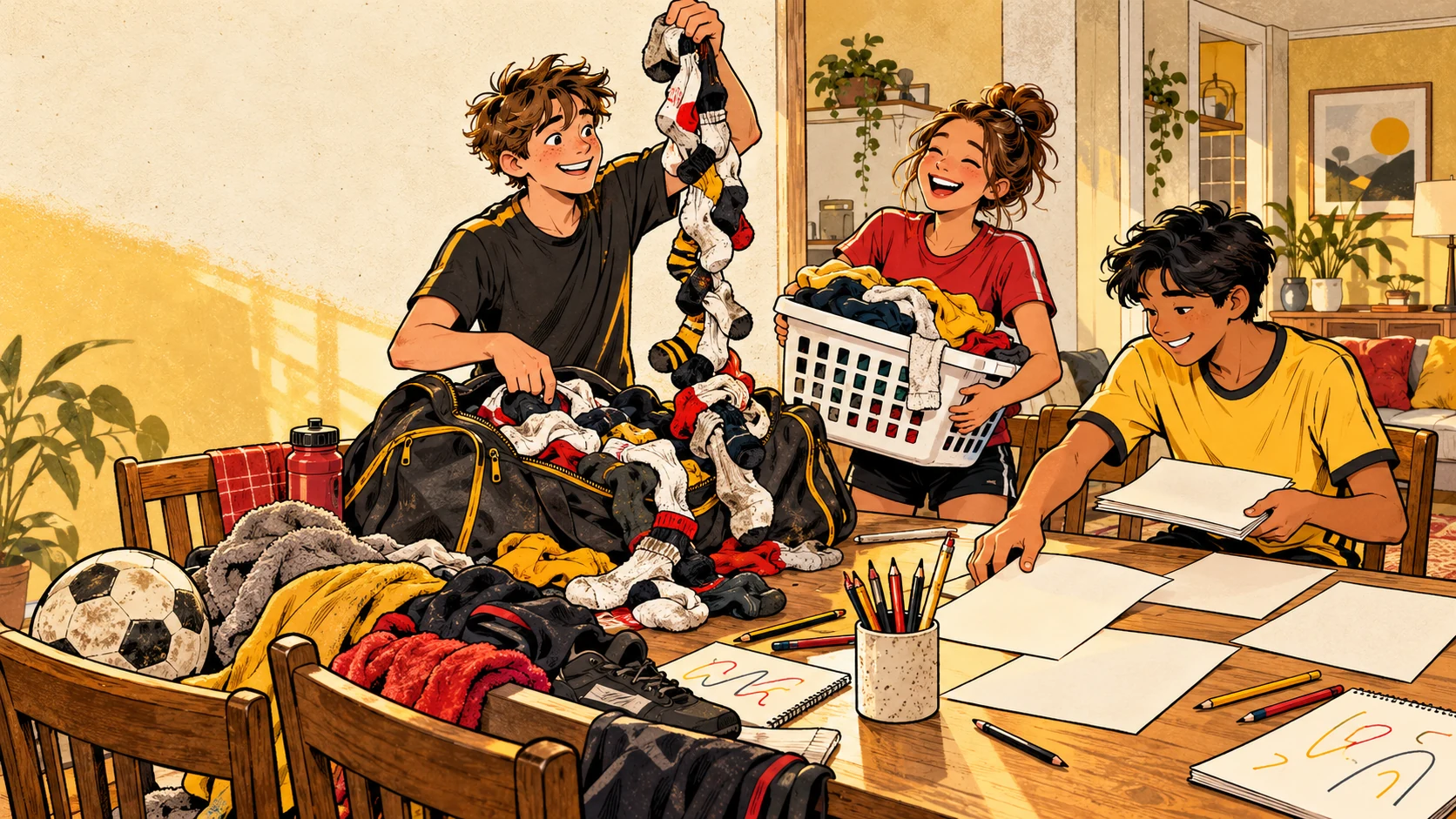
The Sports Bag Wildlife Reserve Closes for Cleaning
The bag has developed a smell with a surprisingly confident personality. Its owner and a mate recognise that it is time to deal with the gear.
The imaginary wildlife has been relocated. Training can resume.
A way forward
Unpack after the activity, follow the gear's cleaning and drying instructions and return it to the bag when ready. Ask someone to show you if you have not learned how.
What it makes room for
Equipment is easier to care for and share space with, and learning the routine supports independence without shame.
Picture idea: Two teenagers imagine a comic smell-creature emerging from a sports bag. The owner removes the used gear, follows its washing and drying instructions and cleans or airs the bag as appropriate. The final panel shows them ready to enjoy the next activity with their kit prepared.
Concept for discussion
03
The Furious Reply Gets a Second Draft
A teenager has written a message long enough to need its own interval. A friend asks, "What do you actually want them to understand?"
The capitals have left the meeting. The point has stayed.
A way forward
Pause before sending, check the facts and rewrite around the question or boundary you need to communicate. Get trusted support when the situation involves pressure, threats or harm.
What it makes room for
The response can protect your boundaries and reduce avoidable harm while leaving room for a real conversation.
Picture idea: An enormous angry message bubble shrinks into an unsent draft. After a pause and a conversation with a supportive friend, the teenager writes a clear question or boundary. The final panel shows them choosing whether and how to continue, with adult support available for a serious problem.
Concept for discussion
Borrow a Clue and Keep Your Dignity
A young person faces a task everybody else seems to understand. They nearly bluff their way through, then ask to be shown. The adult admits they once needed a demonstration too. The comic moment is the unnecessary performance of already knowing, followed by the relief of actually learning something.
"Can you show me?" is useful information, not a confession.
You can ask again when an explanation does not make sense.
A good demonstration has room for your questions.
A way forward
Ask someone suitable to show you, explain back what you understand and practise with the help the task needs. Say when something is unclear or feels unsafe.
What it makes room for
Asking for help becomes a skill you can use, and confidence grows from understanding rather than pretending.
Picture brief for this chapter
A teenager tries to look expert beside an unfamiliar everyday task. They ask a supportive adult to demonstrate, practise with guidance and complete it appropriately. The adult shares a harmless story about learning the same skill.
Give Tomorrow You a Fair Go
Yesterday You announced that the bag was ready. Today You has questions about the lunch, the clean top and how the bus works. The joke ends with the young person making a plan that fits their actual day, with help where needed. Tomorrow You can still be a bit sleepy without inheriting the entire scramble.
A zipped bag has made no promises about its contents.
Essentials work better when they are packed together.
A plan can include asking who can help with the missing bit.
A way forward
Check what the day needs, prepare what you can, keep essential items in a place you can find and ask for help with things you cannot arrange alone.
What it makes room for
Getting ready becomes more predictable and there is more attention left for learning, friends and enjoying the day.
Picture brief for this chapter
A teenager admires a zipped but incomplete bag. With a friend or trusted adult, they check the activity, gather suitable clothes and essentials, and confirm travel arrangements. The final panel shows a calmer departure and the lunch travelling with its owner.
Your Reply Can Wait for You
The message has capital letters, three dramatic endings and a sentence that would start a second argument. A friend asks whether it says what the sender actually wants. They leave it unsent, return when ready and write a clearer response. The phone can carry the conversation without being given the steering wheel.
The first draft does not have to become a group announcement.
Check what happened before writing the motive for everybody involved.
A boundary can be clear without an extra insult attached.
A way forward
Leave the angry draft unsent, return when you are ready and state what you mean clearly. Check uncertain details, respect boundaries and seek a trusted adult's help with threats, pressure or a problem you cannot handle alone.
What it makes room for
You get more choice about your response, fewer avoidable arguments and support when the problem is bigger than a message.
Picture brief for this chapter
A teenager's angry draft has become an absurdly large speech bubble. They put the phone down, talk through what they need with a supportive person and later send a brief, respectful boundary or question. A trusted adult is available if the situation includes threats or pressure.
Learning Is Allowed to Be Visible
At a club, on work experience or trying an activity, it can look as though everyone was issued the instructions at birth. They were not. This page gives the new person a question, a demonstration and a chance to practise. The supposed expert's first attempt can provide the laugh while the useful method stays clear.
The confident nod is optional. Understanding the task matters.
You can ask who is responsible for showing you.
Stopping to check can be part of doing a job properly.
A way forward
Find the responsible adult or supervisor, ask what you need to know and do only tasks you have been appropriately shown and authorised to do. Speak up about anything missing, confusing or unsafe.
What it makes room for
Learning and contributing can happen with suitable support, instead of confidence being mistaken for knowledge.
Picture brief for this chapter
A young person at work experience looks tempted to copy an unfamiliar task. They ask the responsible supervisor, receive the appropriate instruction and support, then contribute within what they have been shown and authorised to do.
You Get to Learn a Different Way
A familiar habit can pass around a household or group until everyone assumes it is just how things are. The young person in this story tries a fairer way of sharing a job and asks for support. Another character catches themselves copying the old excuse. The ending makes room for people to learn together and for the young person to keep their own boundaries.
A habit can be familiar and still be worth changing.
You can practise a useful skill without judging where you started.
Support can come from a trusted adult, teacher, coach, youth worker or someone else who treats you with care.
A way forward
Name the habit you want to handle differently, practise a workable alternative and ask a trusted person to support you. Share responsibilities fairly and keep adult responsibilities with the adults.
What it makes room for
Different choices can become part of your own life, with connection and support instead of blame or the pressure to repair everyone else.
Picture brief for this chapter
A shared activity ends with everybody assuming somebody else will clean up. A teenager asks how the work can be shared and a supportive adult backs the request. People complete agreed jobs together, then enjoy the space. The young person is not left to manage the adults.