Plastics
Precious Plastic-style sorting, shredding, sheet pressing and 3D-print filament experiments could start with clean, known polymers.
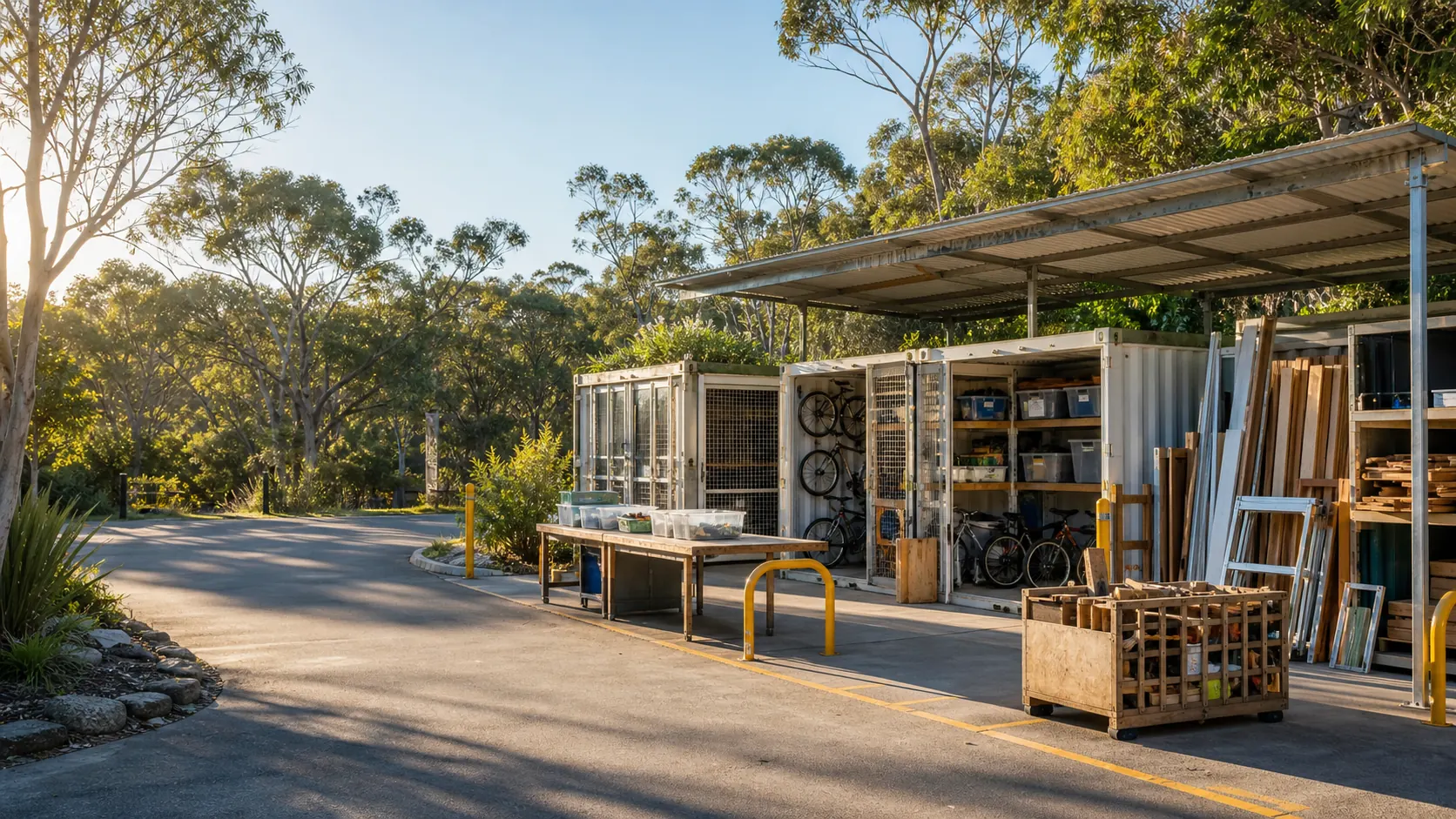
Could the island treat the dump as a capability question before useful things become waste?
The maker-space asks what the island could make, fix and learn. This sister site asks what could be intercepted, sorted, repaired, disassembled, documented, remade or sent to the right recycler before value disappears from local view.
Which plastic, metal, cardboard, cans, glass and e-waste streams could become teachable local stock?
Open the stream mapWhat would need to be true for pre-tip offers, supervised handover and clear storage to feel trustworthy?
Explore the loopHow might AI sorting, robotics, 3D printers and compact machines build skills instead of exporting every question?
See the tool stackWhat kind of evidence, rules and local-government pilot framing could remove avoidable caution from the path?
Read the pilot pathWhere does this connect to Sandworm, Civilisation of Sand, clean energy, grants, legal memory and civic contribution?
Follow the linksCould residents and partners draft public-review Markdown records before anything is promised or published?
Open the builderThe first version does not need to pretend the island can recycle every material tomorrow. It could start by making the invisible visible: what arrives, what still works, what has parts, what has clean material value, what needs deeper literacy, and what pathway people choose after understanding the trade-offs.
That turns the dump from a final stop into a learning boundary. The question becomes: what local capacity can be built before an item leaves the island?
This site does not suggest unauthorised taking from any waste centre. It explores lawful offer, donation, supervised diversion, approved recovery and partner-led recycling pathways.
A clear public loop can let people participate without needing to understand every policy, machine or material detail at once.
Offer. A resident, business or event steward notes something before it becomes waste.
Read. A trained person and the owner read the object together: usefulness, access, stored data, chemistry, energy, tools, value and permission.
Choose. The pathway can be repair, parts, local material stock, deeper bench learning, partner processing or an explicit pause while people learn more.
Teach. The process becomes a small learning moment: how to identify, dismantle, clean, test, repair, recover or make.
Prove. Weights, photos, repair notes and outcomes show what changed, what failed and what could be funded next.
The lab can begin with ordinary, visible streams that are easier to explain, clearer to sort, and useful for workshops.
Precious Plastic-style sorting, shredding, sheet pressing and 3D-print filament experiments could start with clean, known polymers.
Aluminium, steel, copper and useful brackets can become repair stock, teaching samples and future fabrication questions.
Clean fibre streams can support packaging, pulp tests, signage, compost-adjacent trials and low-cost prototyping.
Bottles and cullet can connect to glass art, aggregate, sand questions, geopolymer tests and careful crushing protocols.
Repairable devices, boards, motors, sensors, cables and chips can become a right-to-repair and component-literacy pathway before any downstream decision.
Bikes, furniture, tubs, tools, garden frames and event gear can often be repaired before they become material streams.