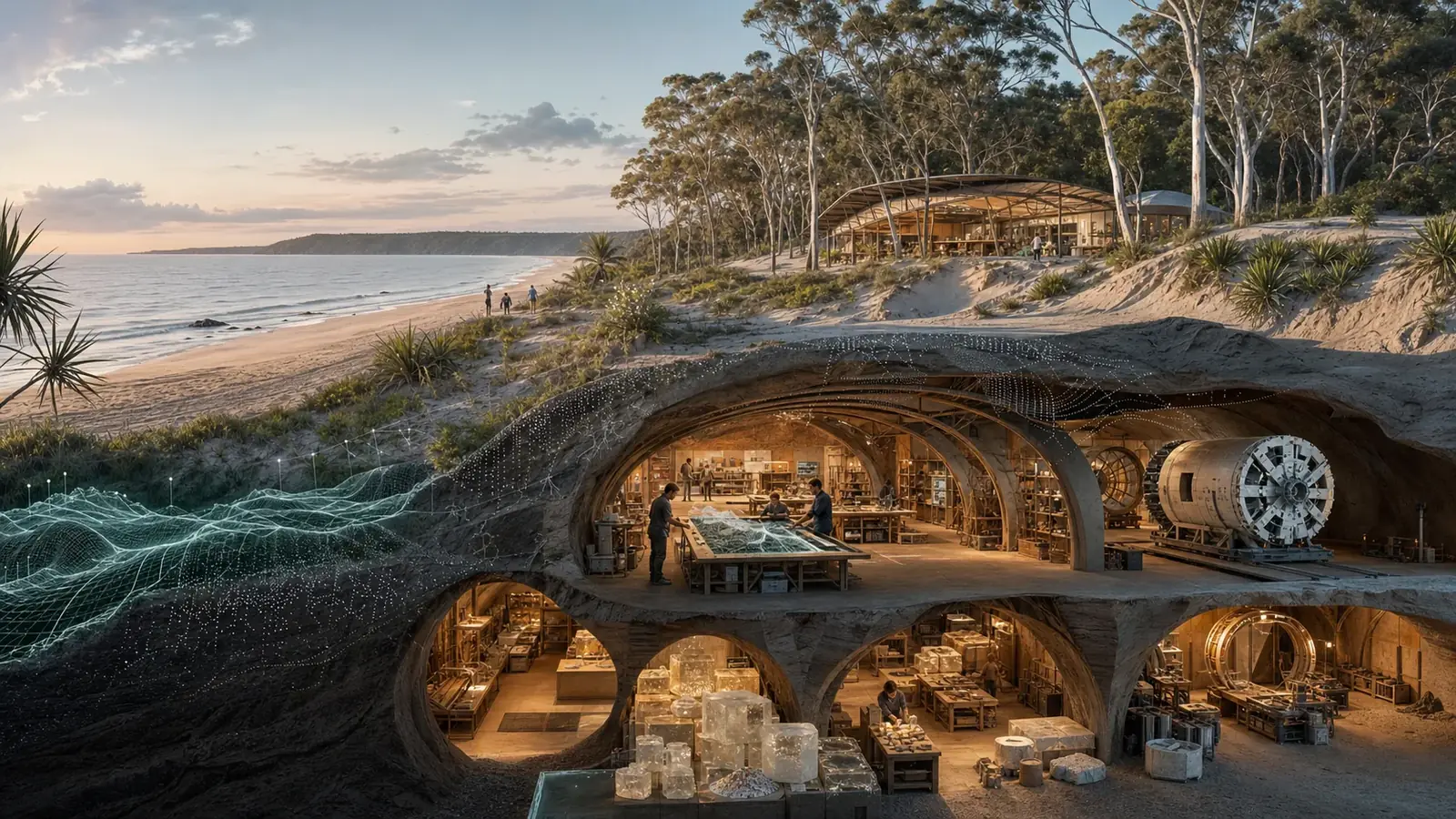
Building under the dunes · back to the tunnels

How you dig under a wet sand island

Everyone who has dug a hole at the beach knows what happens next. Go down past a certain depth and water seeps in, the sides slump, and the hole quietly fills itself. That is the whole problem of digging under a sand island. Here is how the same soaked ground is already dug through elsewhere in the world, and how the island might do it too.

The problem

Below the water table, sand behaves like soup.

Known

Under the dunes the sand is soaked. Below a certain line, called the water table, every gap between the grains is already full of water. Dig into that and two things happen at once: water pours in and fills the hole, and the soft wet walls slump inward, the same way the moat round a sandcastle keeps caving as the tide comes up. That one hard fact is what every method below has to beat.

What could be done

Three ways the world already gets through wet ground.

None of these is new. Each one is something crews already do under rivers, harbours and cities. The island would not invent a method, it would borrow a proven one and start at the smallest, gentlest end.

Boring machines

an apple-corer for the ground

Picture a machine like a giant apple-corer, or a mechanical earthworm, that pushes slowly forward underground. At its front face it holds the wet ground back with thick pressurised mud, so the soaked ground ahead doesn't slump into it, while it lines the tunnel behind itself as it creeps along. This is how subway and sewer tunnels are dug all over the world. The island version would start small: a narrow bore a couple of metres across, not a motorway tunnel.

  • Subway and sewer tunnels, worldwide
    Known

Freezing the ground first

turn the soup solid

You can freeze soaked ground rock-solid before you touch it, turning the soup into something firm you can carve. Then, once the tunnel lining is in place, you let it thaw again. It is like running an esky, or a freezer, through the dirt: pipes carry a very cold liquid through the sand until the water in it sets hard. A real technique, used to dig safely right next to water.

  • Digging safely right beside water
    Known

Pumping the water down

lower the line, gently

The simplest idea of the three: pump the groundwater down while you work, so the patch you are digging sits above the water table for a while. Real and standard on building sites everywhere. Next to a freshwater island, though, it has to be done very carefully, because the island's own drinking water sits in that same ground and must not be harmed.

  • Standard practice on building sites everywhere
    Known

The one that comes first

Before any machine turns, a model of the water.

Under a freshwater island, protecting the water matters more than any tunnel. The island's fresh water floats in a lens beneath the sand, and that lens is the whole reason people can live here. So the honest first step is not a dig at all. It is to build a computer model of the island's groundwater and test every one of these methods inside it first, over and over, until it is clear which one, if any, leaves the water untouched. Nothing is dug yet. The water lens comes before the tunnel, first and every time.

Keep going

Where this leads.

Back up to the tunnels page for the bigger picture. Once a dig is proven safe, the next question is what you do with the space: turning the dig into rooms. And every wall and lining down there is built from the island's own sand materials.