Lasting through anything · high water

When the sea comes up

This is an island: low, sandy, with water on every side. So of all the big troubles you could lie awake over, the ones that come by water are the ones most likely to actually turn up here. Not the scariest story, just the likeliest. That is reason enough to know them plainly, in a calm year, long before the day one of them arrives.

How the water arrives

Three ways the sea comes up.

Known

Picture three different visitors, not one. Two of them arrive fast and loud; the third takes years and barely makes a sound. Underneath their names, though, it comes down to one of two pictures: the sea sitting much further up the street than it should, or a wall of water turning up fast.

Storm surge

the cyclone's push

A big cyclone does not just blow; it shoves. The wind and the low pressure pile the sea up and drive it over the land, on top of whatever the tide is already doing. If you remember Cyclone Alfred crossing this coast in 2025, you remember the fresh version of this one.

A tsunami

the sudden surge

Something big moves underwater, an earthquake, an undersea landslide, or a volcano, and the ocean shifts to make room. That sends a fast surge of water at the shore. When the Hunga Tonga volcano erupted under the sea in 2022, it pushed waves clear across the Pacific. And back in 1958, a landslide into Lituya Bay in Alaska threw water hundreds of metres up the far hillside, higher than the tallest tower on the Gold Coast.

King tides and a rising sea

the slow creep

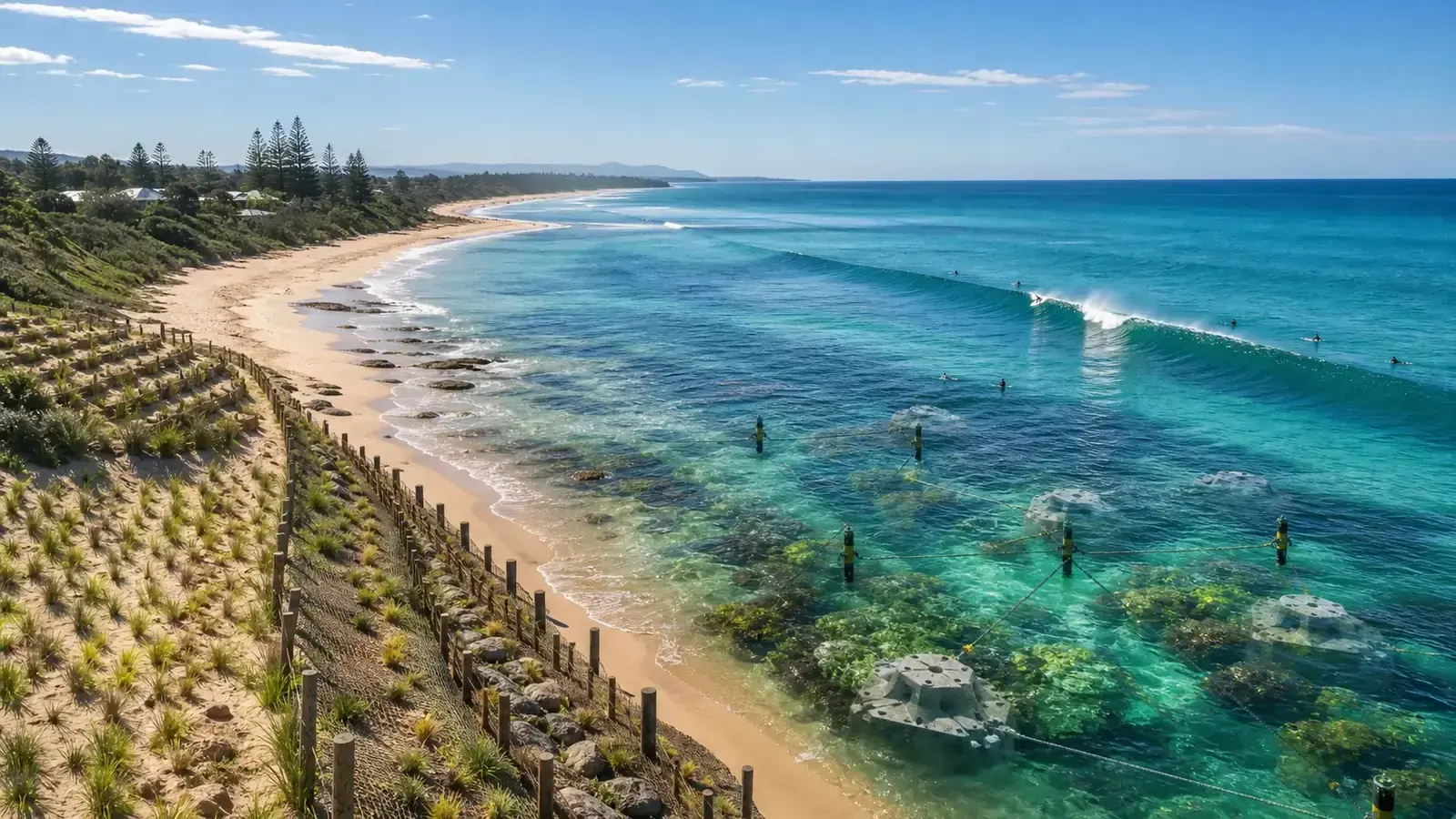
The quiet one. You already know a king tide: the day the water comes up further than usual and laps at places it normally leaves alone. Now picture that line creeping up a little more, year on year, as the sea slowly rises. No drama, no siren, just a bit further up the street each decade.

The good news first

This one usually knocks first.

Known

Here is the part worth holding onto. Australia runs a national tsunami warning centre, watching the sea around the clock, and a storm surge is forecast days out, the same way the cyclone itself is. So unlike a lot of dangers, the water tends to give notice before it arrives. The catch is small but real: a warning only helps if people are ready to hear it and move. That readiness is what the watchtower is about.

The island catch

You can't just drive inland.

On the mainland, a warning means get in the car and head for higher ground. Here, getting off the island in a hurry is hard: one barge queue, one road down to the water, and a lot of us wanting to move at the same moment. So the things that carry you are simpler and closer to hand: high ground you already know, a plan the household has talked through, and the ferry sorted before the weather turns. None of that is dramatic. That is exactly why it is worth settling calmly in the good years, not scrambling in the bad ones.

The oldest knowledge of these waters belongs to Quandamooka people, who have read this Country and its tides for thousands of years; any real plan for the island begins at that doorway, with Traditional Owners and QYAC.

What could be done

Build for the water, not around it.

Modelled

None of this is built yet, so hold it as a picture, not a promise. The moves are calm and ordinary, and each could start small: one building, one street, one season at a time.

Four calm moves

  • Put anything new up above the flood line by design, not by hope. The water numbers live on the walls page.
  • Make warnings and drills a normal habit, the way schools already run fire drills.
  • Keep shelter on high ground ready and easy to reach.
  • And in the far dream, safe rooms tucked deep underground, where a wave overhead would pass by without reaching them. That is the underland idea.

Where this sits

One trouble, the same kit.

High water is one of the threats on the threats page, and it earns its place by being likely, not loud. Here is the comforting part: the readiness that would carry you through a flood, a blackout or a cyclone is the same readiness that carries you through this. You don't have to prepare for the water on its own. See one kit for every trouble.