Sovereign Capacity LabAtoms to useful capability
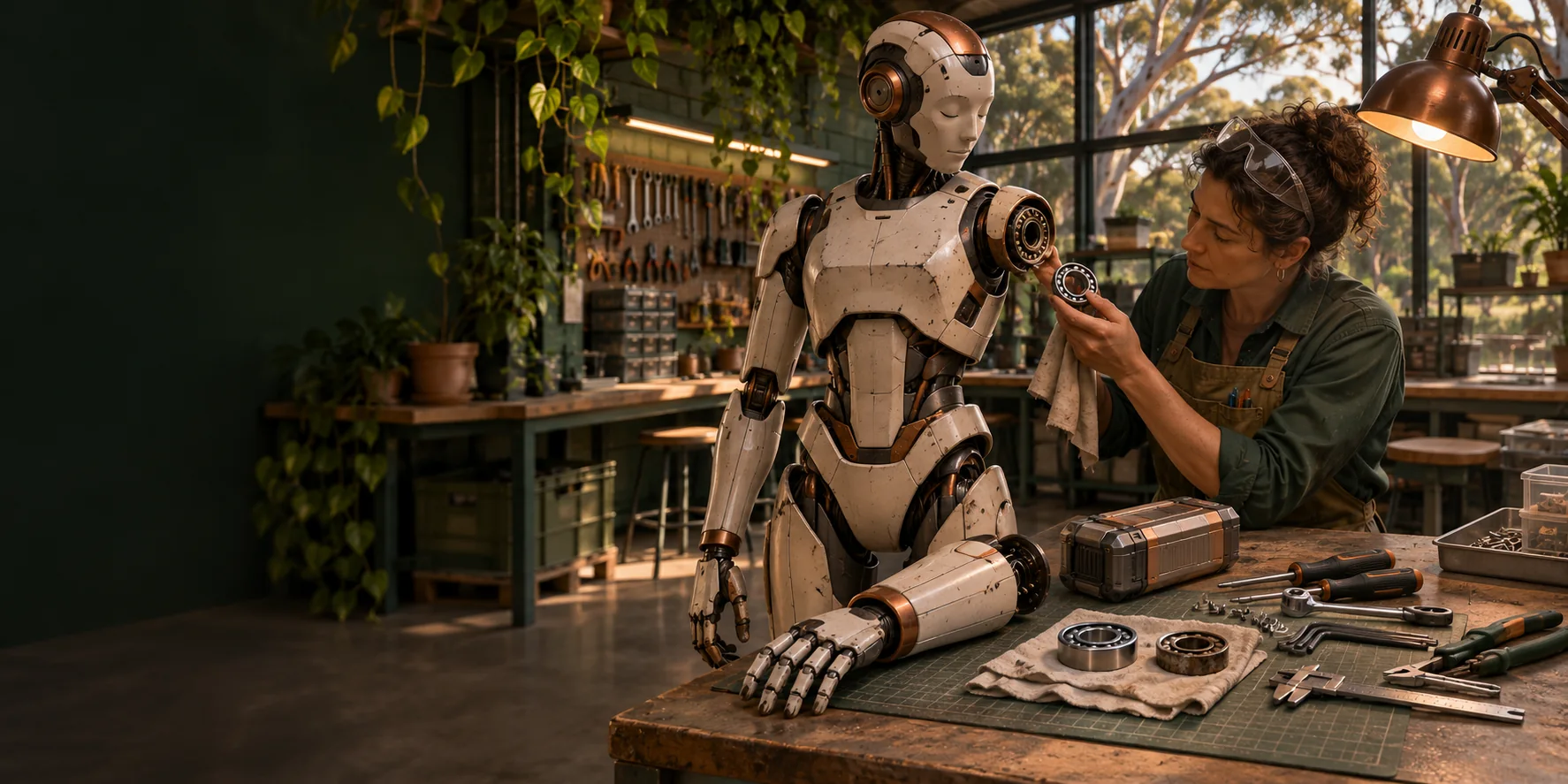
Concept of a technician inspecting a modular robot joint beside replaceable components in a repair workshop.

A Fair Go in the Age of Superintelligence

Machines materials and long service lives

Explore annual production, surviving fleets, refurbishment, motors and the material in each machine.

AI-generated concept image · 7 November 2026 · Image credits and prompt

Research and default assumptions dated

Jump to calculator ↓

Default scenario dated 7 November 2026.
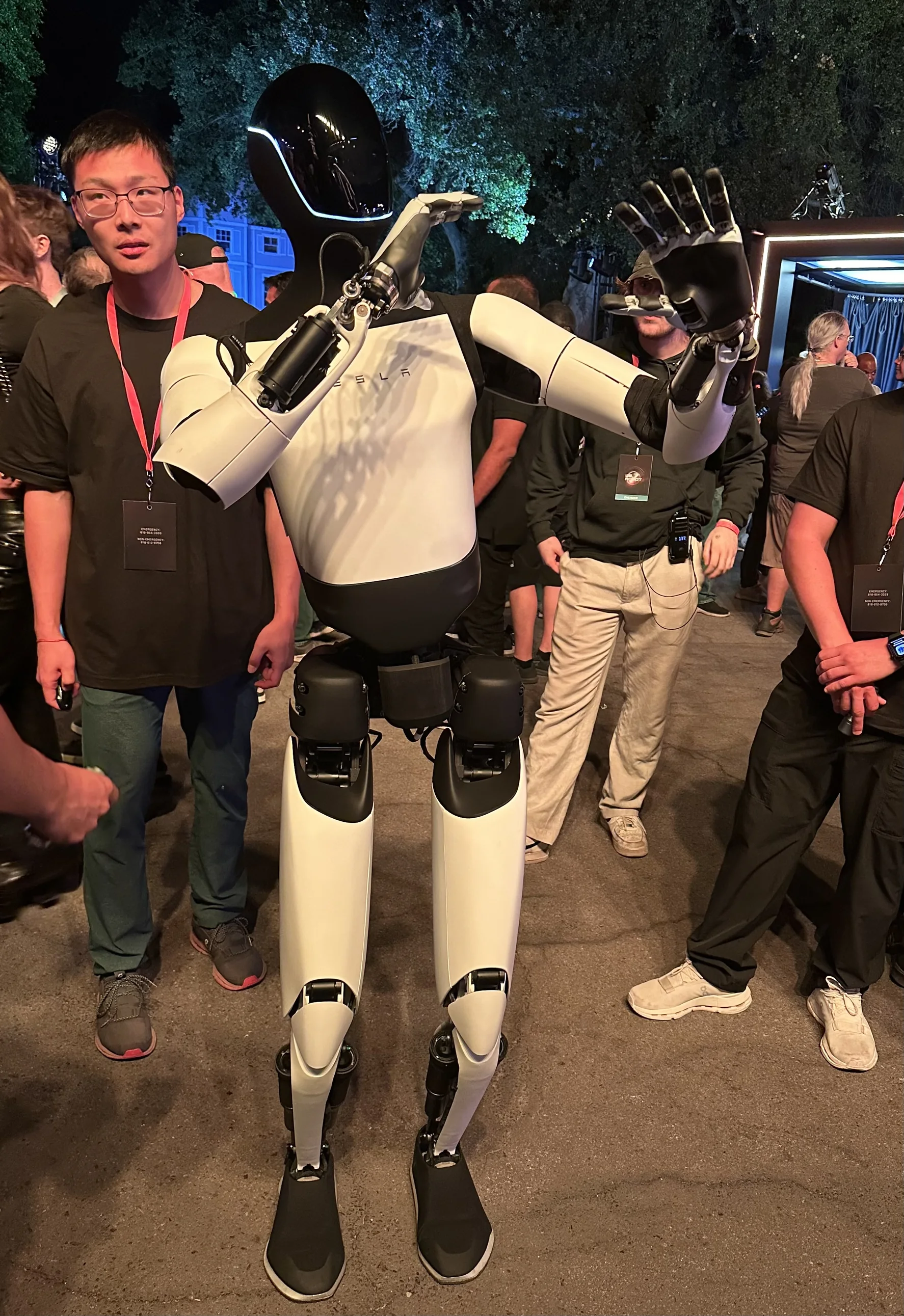
A Tesla Optimus humanoid robot at an October 2024 public event.
PhotographTesla Optimus on display at the company's October 2024 event.Steve Jurvetson · 10 October 2024 · CC BY 2.0 · Source · Credits and details · Open full-size image
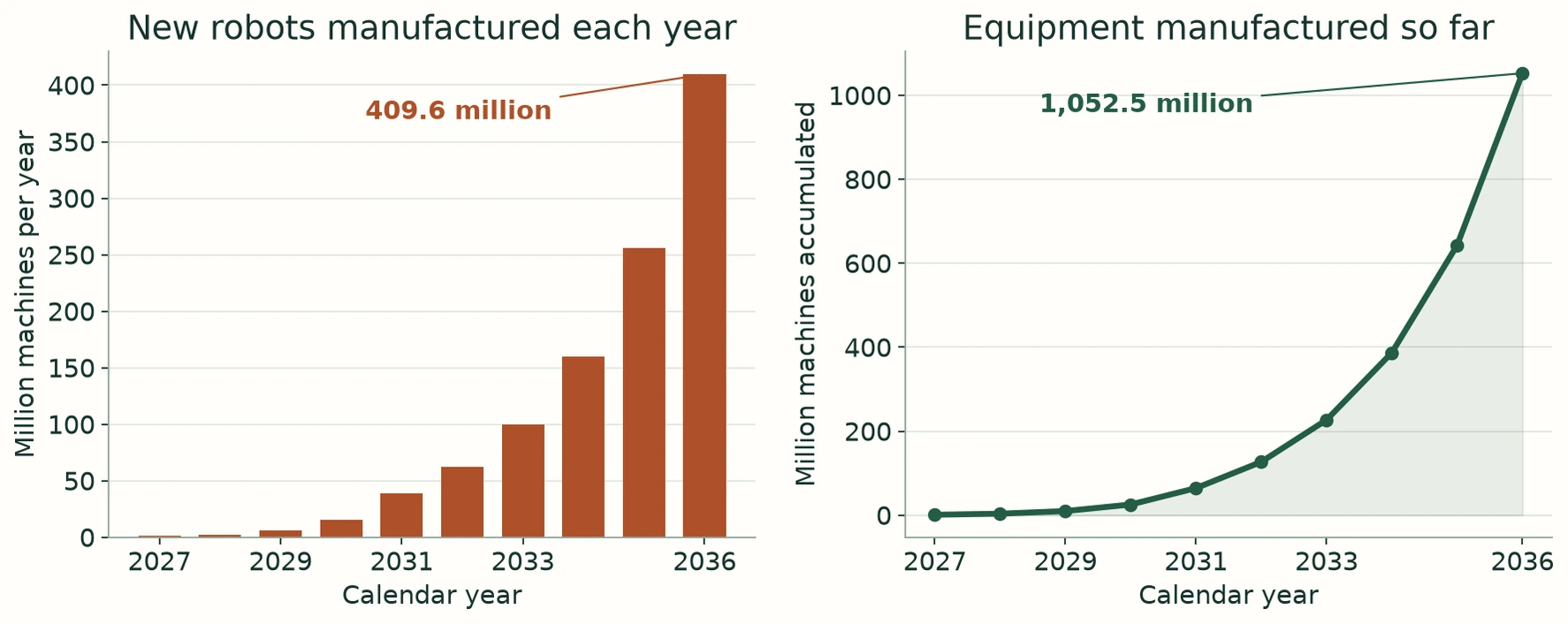
Two plots show annual robot production reaching 409.6 million during 2036 and accumulated manufacture reaching about 1,052.5 million by that year.
Fixed worked exampleThe accelerated scenario makes 409.6 million new robots during 2036 and accumulates about 1.053 billion manufactured over 2027 to 2036. The operating fleet then deducts actual permanent retirements. Annual flow and accumulated equipment answer different questions.Sovereign Capacity Lab calculations prepared for Luke Nathan Hayes · 7 November 2026 · Strange But True Public Source Licence · Source · Credits and details · Open full-size image
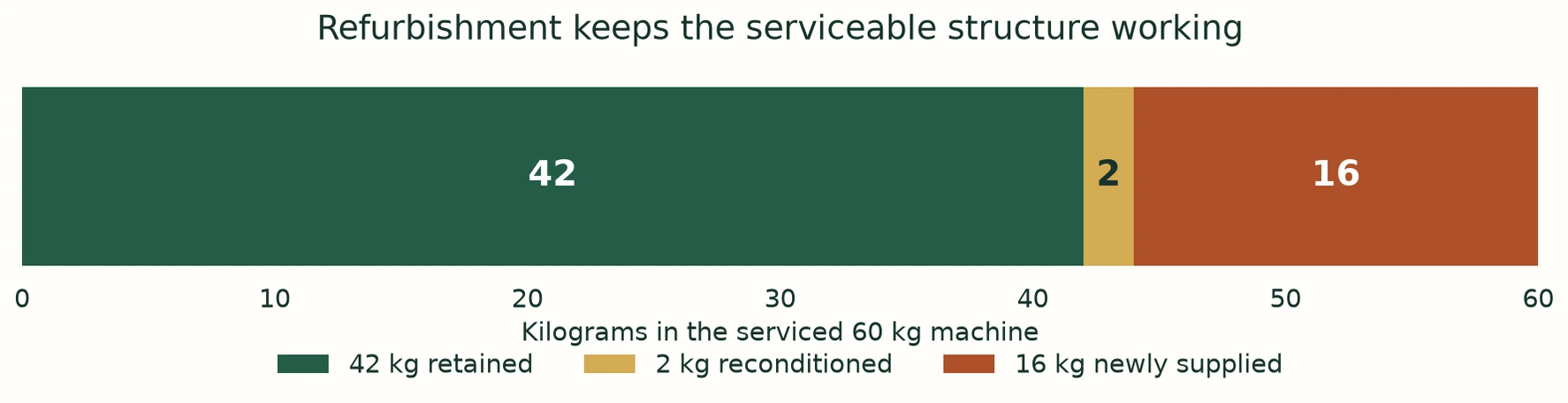
A stacked mass bar shows 42 kilograms retained, two kilograms supplied through reconditioning and sixteen kilograms of new modules in a sixty kilogram serviced robot.
Fixed worked exampleIn the worked overhaul, a 60 kg robot retains 42 kg. Its 18 kg module allowance can include 2 kg of reconditioned parts and 16 kg of newly supplied material. One million such jobs therefore need 16,000 tonnes of new modules while retaining 42,000 tonnes of equipment.Sovereign Capacity Lab calculations prepared for Luke Nathan Hayes · 7 November 2026 · Strange But True Public Source Licence · Source · Credits and details · Open full-size image