A custom board that brings the camera, sensors, power, storage and communication parts into one buildable island device.
Sensorium layer
Beach and weather monitoring for shared island awareness.
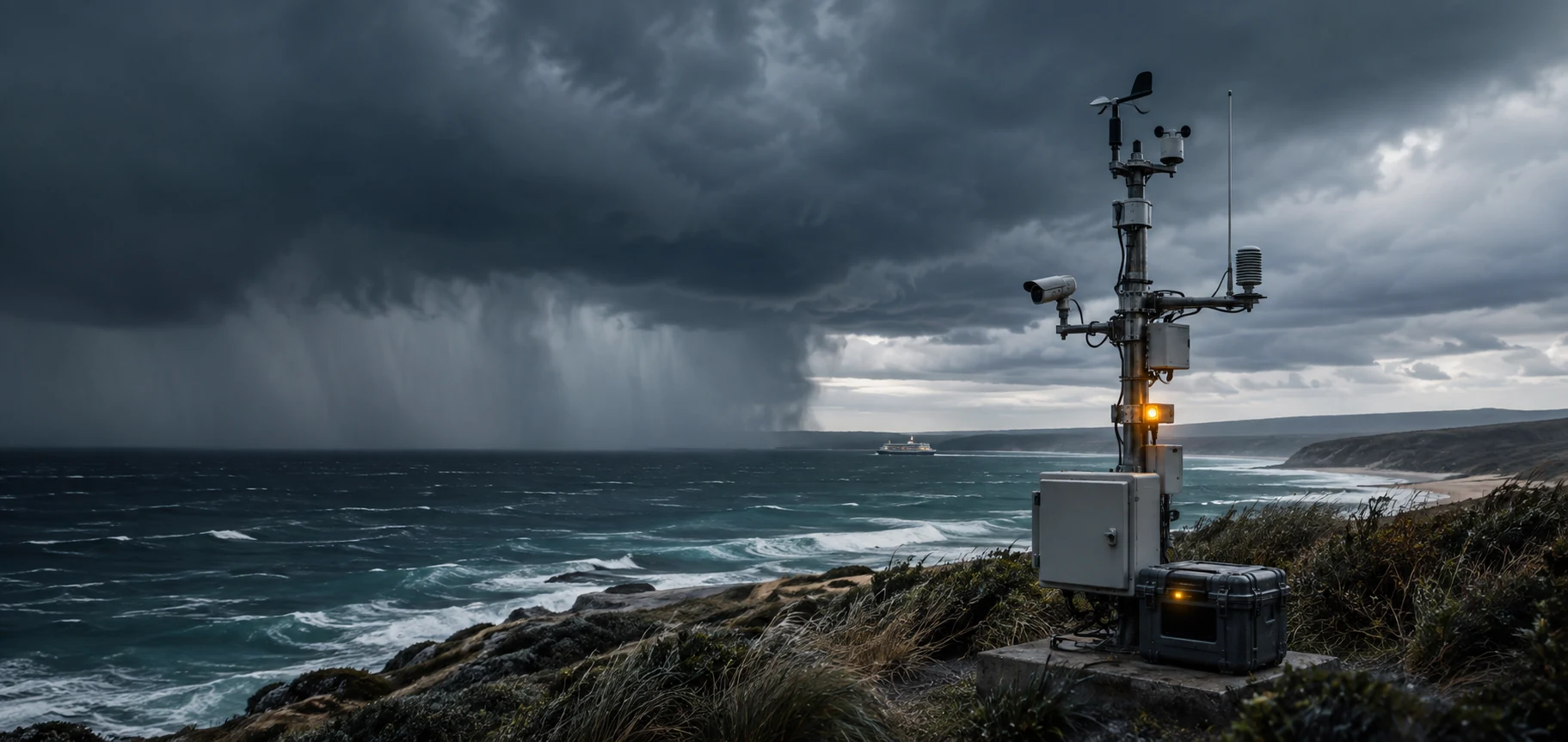
Custom camera and weather points can give the island useful public context: surf visibility, rain, wind, heat, smoke haze, visitor pressure, ferry weather and environmental change. The design centre is conditions, safety, learning and care for place.
AI-assisted board design
Use Flux to dream custom mini-computer motherboards into the build.
Flux can help design custom computer boards for hobby projects and ambitious prototypes: camera inputs, weather sensors, power monitoring, relays, status lights, LoRa connectors, enclosure health and whatever weird useful island hardware the build team imagines.
The motherboard can be beautiful, clever and practical at the same time. The public value is in turning imagination into a design that can be shared, reviewed, fabricated, repaired and improved by local makers.
Outdoor camera or small hobby camera, aimed at shared public conditions.
Temperature, humidity, pressure, rainfall, wind, light, UV or smoke-haze indicators depending on the site.
Solar, battery, USB-C, mains or PoE options, with brownout recovery and simple health checks.
Wi-Fi, Ethernet, LTE, LoRa-style telemetry or store-and-forward sync depending on location and budget.
Clear test points, reset button, status light, service connector and local storage so maintainers can understand the camera point quickly.
Signal pipeline
Turn readings into useful public signal.
The value comes from turning raw sensor readings into screen-ready, time-aware local context, with the small camera box, rugged kiosk simulation and cloud AI analysis each doing the job that suits it.
Camera snapshots, weather readings and device health checks are collected at the camera point.
Use cropping, low-resolution views, downsampling or summaries to keep the focus on surf, sky, wind, heat and shared conditions.
Use local review, kiosk compute or cloud AI to convert readings into plain notes like windy, hot, smoke haze, rough surf or good morning window.
Approved condition cards appear on venue TVs, community screens, rugged kiosks, media pages or public dashboards.
Aggregated patterns can support grants, safety planning, climate notes and local research.
Hyperlocal media
Conditions become useful stories.
Ready S.E.T. Co-op Hyperlocal Media can turn sensor notes into everyday public value: surf morning summaries, storm prep posts, heat reminders, ferry weather explainers, camera maintenance updates and learning content for students or volunteers.
Disaster readiness
The same feed helps in disruption.
If smoke, heat, heavy rain, ferry disruption or power pressure changes quickly, the proposed screen layer could have trusted local context ready to route through screens and public updates. Cloud AI can help interpret patterns when online; urgent claims still need human review.
Public trust
Show shared conditions with a clear purpose.
Beach and weather cameras can help people understand the day: surf, rain, wind, smoke haze, heat, ferry weather, crowd pressure and environmental change. Each camera view can carry a plain public reason, a known host and a visible explanation of what it is for.
Good camera design can feel generous and neighbourly: point at shared conditions, choose respectful viewpoints, honour cultural boundaries, and keep the approval path easy to understand.