Out on the water · back to the shoreline

Cleaning the bay with oyster reefs

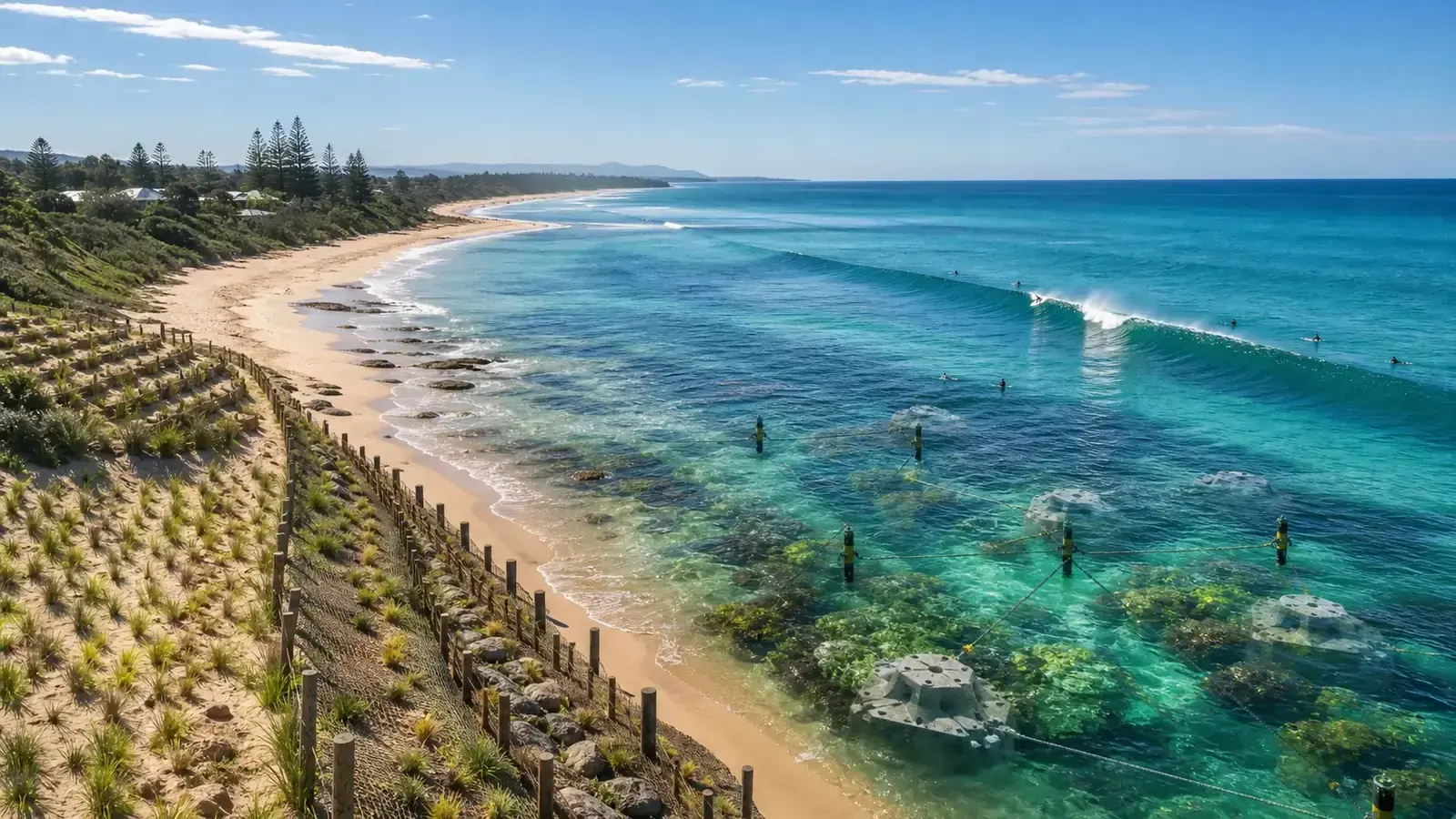
Oyster and shellfish reefs are real, living habitat. They filter the water clean, give little fish a place to hide, and take the push out of the waves before they reach the beach. Sand from a dig could help seed new ones, where the sea Country custodians choose.

Little workers

One oyster can clean a bathtub a day.

Known

This part is real, not a maybe. A grown oyster feeds by drawing water through itself, and a single one can clean something like a bathtub of water in a day. Pack thousands of them onto a reef and the whole patch of bay runs clearer. Prawns and little fish shelter in the nooks, and the reef takes the sting out of the waves. Reefs like this once lined Moreton Bay before they were dredged away.

From a handful to a whole field

Sand from the dig could seed the reefs.

Every reef starts small and grows. Here is how the spoil from a dig could seed them, from a school project up to a broad bed. Each one is an idea for now, and each one waits on the Quandamooka people's say-so before it touches the water.

School oyster nursery trays

kids grow the first spat

The smallest start: trays of baby oysters that a school class could look after and learn from. A little clean sand under the trays gives the young shells something to grip. One class, one jetty, a first go.

  • about 1 tip-truck load of sand, the spoil from roughly 2 metres of a people-sized tunnel
    Modelled

Community oyster basket set

baskets off the local jetty

A set of baskets slung under a community jetty, where locals could tend the oysters together on a weekend. Enough sand to bed a proper little patch. Something a street or a club could take on.

  • about 4 tip-truck loads of sand, the spoil from roughly 9 metres of a people-sized tunnel
    Modelled

Shellfish reef patch

a real reef takes hold

Now it is a reef you could snorkel over: a firm patch on the bay floor where oysters and mussels build up year on year. The clean sand and shell gives them a base to grow on, and fish would move in fast.

  • about 14 tip-truck loads of sand, the spoil from roughly 29 metres of a people-sized tunnel
    Modelled

Bay habitat chain

reefs joined up along the shore

String a few reef patches along the shoreline and you get a chain: shelter running the length of a bay, waves softened all down the coast. More sand, more reef, more places for life to gather.

  • about 35 tip-truck loads of sand, the spoil from roughly 70 metres of a people-sized tunnel
    Modelled

Moreton Bay cleaning trial

a real go at clearer water

A patch big enough to actually shift how clear a stretch of Quandamooka water runs, and to measure it properly across the seasons. This is the scale where the filtering starts to show. Nothing goes in without agreement first.

  • about 67 tip-truck loads of sand, the spoil from roughly 134 metres of a people-sized tunnel
    Modelled

Oyster lease support field

the broadest reef bed drawn so far

The largest one on the drawing board: a broad bed that could sit beside the local oyster leases and, over deep time, help bring back the reefs the bay has lost. Only ever built if the custodians want it, at the pace they set.

  • about 104 tip-truck loads of sand, the spoil from roughly 207 metres of a people-sized tunnel
    Modelled

Whose water this is

The bay is Quandamooka Country.

None of this goes in the water on a hunch. Any reef, and any sand laid offshore, needs the Quandamooka people's agreement through QYAC, and it goes only where the sea Country custodians choose. The reefs themselves are proven in bays around the world; putting them here is only an idea, and it waits on the people who hold this water.

Keep going

Where this goes next.

See the other things a dig's sand could build over at community builds, walk back to the shoreline, or count the sand a single tunnel would give.