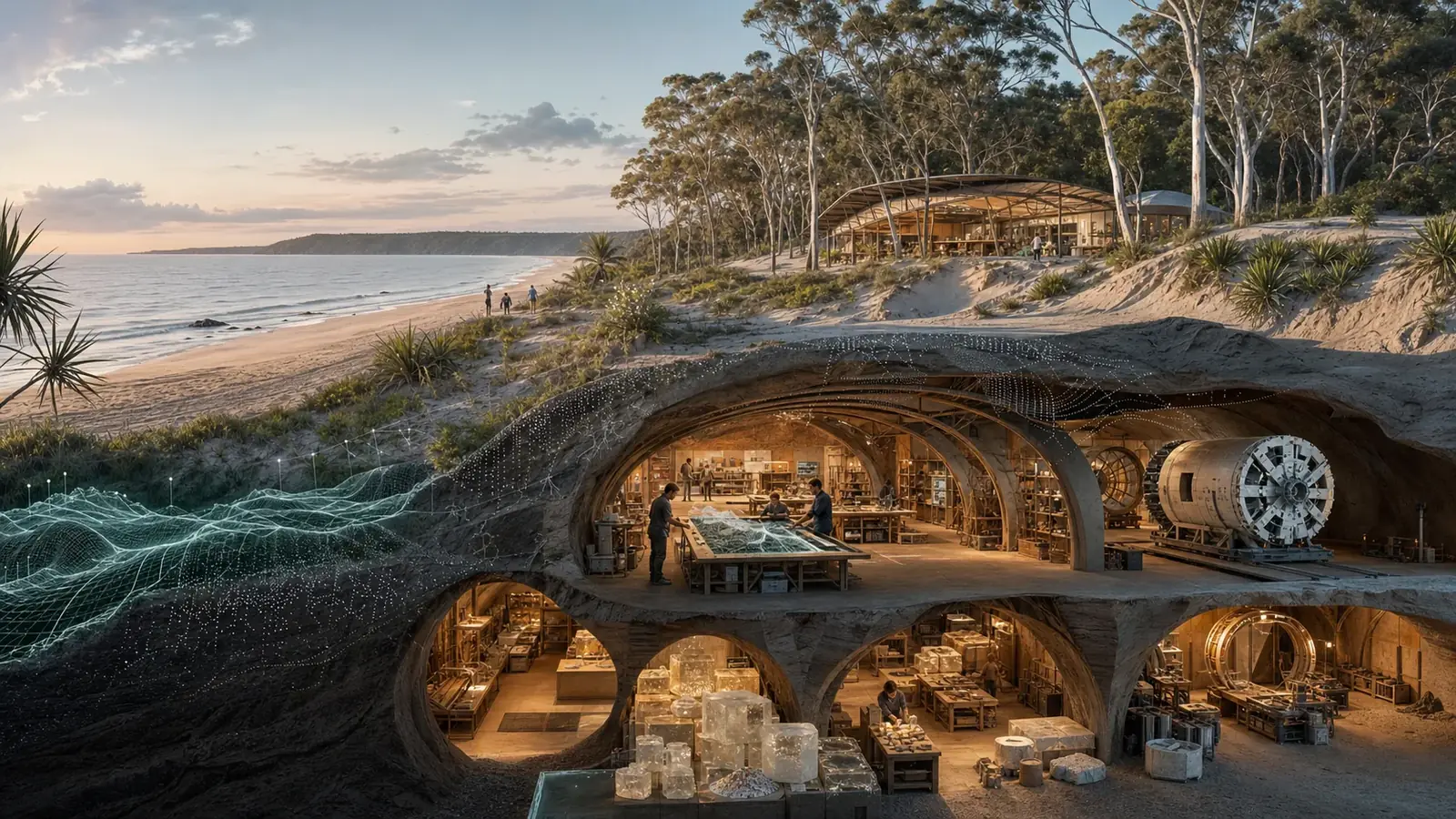
Building under the dunes · back to tunnels

Dig a tunnel, count the sand

Dig a tunnel through the dunes and a pile of sand comes out the other end. On most jobs that pile is a headache to cart away. Here it's the whole point: the sand you dig is the stuff you build with. These aren't highway tunnels, mind. The biggest is about 3.3 metres across, the size the Boring Company digs, and most would be smaller, sized for a person, a little robot, or just the water, power and sewage lines. Slide the size below and watch what comes out.

Have a play

How big a hole, how much sand?

Known

The sums here are just the size of a round tunnel and the weight of sand that fills it. Slide the two handles. The workings are shown at the bottom so you can check them.


?Olympic swimming pools of sand come out
?tip-truck loads to shift it
?suburban blocks you could raise a whole metre, or turn into new reef

Rough on purpose: a real dig is not a perfect tube, and sand weighs a bit more or less depending on how wet and packed it is. This shows the shape of the idea, not a survey. Sand taken as about 1.6 tonnes a cubic metre.

Where it could go

The pile is a shopping list.

All that sand is one pile, and you can only spend it once. So think of these as choices, not a total. Each one comes with a rough sense of the power it takes, because moving sand is cheap but melting it is not.

New land and reef

where most of it goes

Nearly all of it could go straight back to work as new ground: raising land above the flood line, shoring up a beach, or building an artificial reef out past the shallows, only where the sea Country custodians agree. This is the cheap part, little more than the fuel to carry and shape it.

  • New reef, raised land, restored dune
    Modelled

Blocks to build with

walls without shipping in cement

Pressed and set, the sand could become the blocks and panels you build homes and rooms from, made on the island instead of barged over. Pressing takes some power, but nothing like melting.

  • Building blocks, wall panels, pavers
    Modelled

Glass

the hot one

Melt even a tenth of what a tunnel like this gives, and you'd have the glass for the windows of ? whole homes. Melting is where the real power goes in: for one decent-sized window, roughly what your home uses in two or three days.

  • Windows, bottles, glassware
    Known

The makings of solar cells

the power-hungry high end

A tiny slice, cleaned right down, could start the journey to solar cells. This is the dear, thirsty end of the whole thing, and the reason making solar panels from our own sand is a long climb, not a quick win. More on the quartz page.

  • A start on home-made solar
    Speculative

Why bother counting

The hole and the harvest are the same job.

On an ordinary building site the dug-out sand is waste, trucked off and paid to disappear. Turn that around and the dig pays for itself twice: once as the room or tunnel you wanted, and again as the pile of material you build the next thing with. That is the whole idea behind turning the dig into rooms and wasting nothing. For the real things it could build, from a bus stop to an oyster reef, see what the sand could build for us. And none of it moves a grain until the island's fresh water is safe and the Quandamooka people, through QYAC, have a say.

Keep going

The rest of the dig.

How you get through the soaked sand in the first place is on digging under wet sand. What the hole becomes is turning the dig into rooms. And the far horizon it all points at is the city under the dunes.