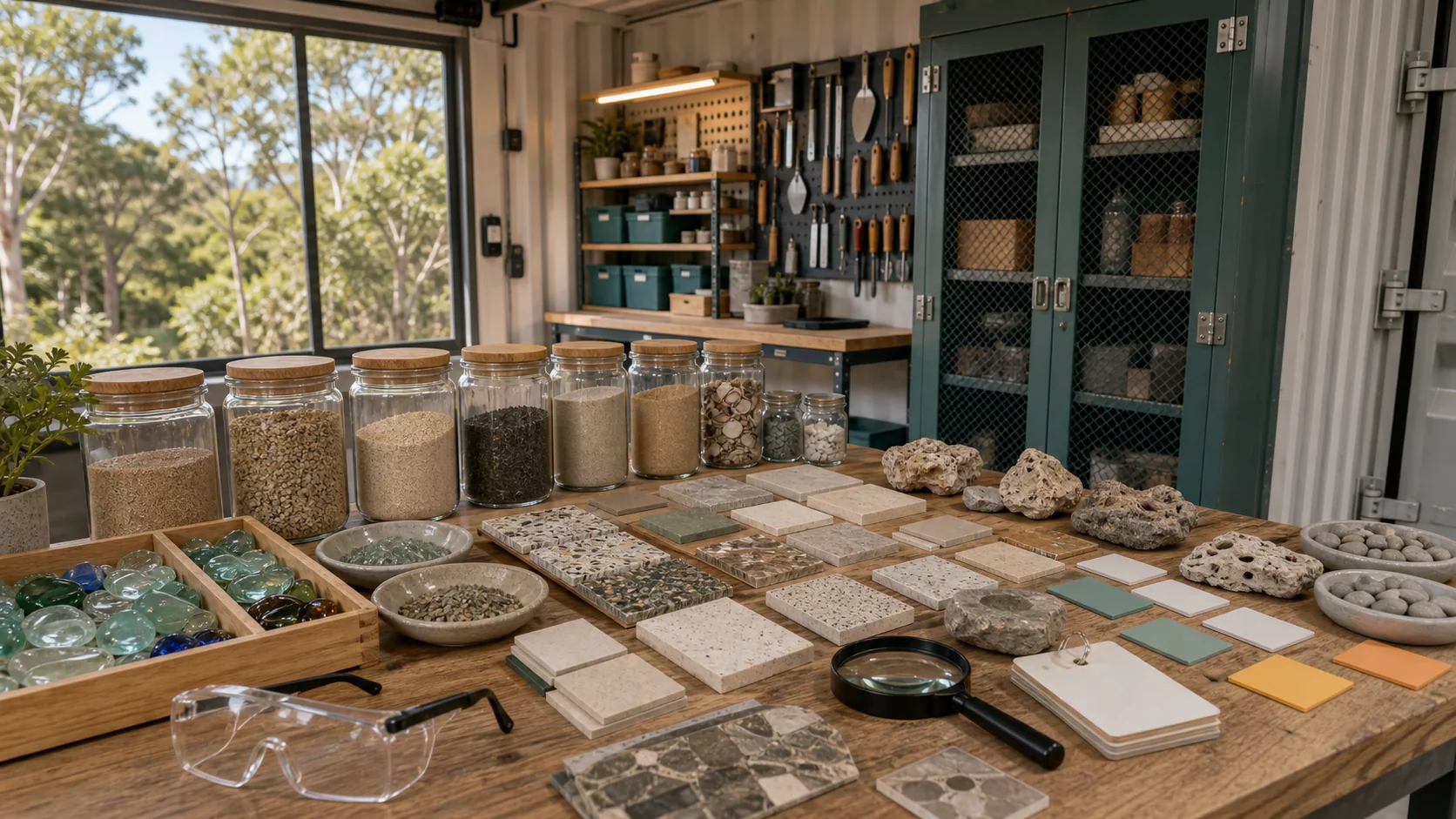
Brighter, harder tiles
the everyday oneGround up fine, zircon is what makes bathroom tiles and glazes bright white and hard to chip. It's the plainest, most common use, and the easiest place to start.
- Tougher tiles and glazesKnown
One of the five minerals · back to the sand
Mixed in with the pale sand are tiny crystals that barely notice heat, acid or time. They're called zircon, and some of them are older than the mountains, nearly as old as the Earth itself. That toughness is the whole point of them.
Older than the hills
The oldest zircon crystals ever found are around four and a half billion years old. Picture that: these little grains were already here before there were mountains, before there were fish, and they came through it all without a scratch. Something that tough isn't going to flinch at a hot oven, which is exactly what makes it handy. It was mined from these dunes for years, so it's really here, not a guess.
What it could turn into
Everything zircon is good for comes back to the same thing: it holds up where softer stuff gives in. Some of these the island could reach for soon; others are a long way off.
Ground up fine, zircon is what makes bathroom tiles and glazes bright white and hard to chip. It's the plainest, most common use, and the easiest place to start.
Cleaned up, zircon becomes a white ceramic so tough it's used for knife blades that never rust, dental crowns, and the heat shields on jet engine parts. It laughs at heat that would soften metal.
To melt sand or make anything really hot, you first need a container that won't melt too. Zircon shrugs off heat past 2,000 degrees, hotter even than the furnace that turns sand into glass, so it lines the furnaces and kilns. It's the unglamorous stuff that lets all the other stuff happen.
Turned into metal, zircon lets the tiny bits inside a nuclear reactor pass through it almost untouched, so it's what the fuel tubes are made of. That ties it straight to the fuel hiding in the monazite grain. It's a long way off for the island, but worth knowing they sit in the same sand.
Cleaning zircon leaves a leftover liquid. Instead of a mess to get rid of, that liquid could be the very thing that sets a local building stone, made without shipping in cement. It joins up with the tunnels idea.
Worth knowing
Zircon carries a whisper of natural radioactivity, woven into the crystal. In the ground, or in a tile on your wall, it's low and harmless. It only becomes something to manage when you process a lot of it at once, and then it just means doing the job properly: good dust control, checks on the workers, the right permits. It's the same careful handling the monazite page lays out. Not a reason to fear the sand, just a reason to treat it with respect.
Keep going
The rest of the sand, one at a time: quartz, almost the whole island; rutile and ilmenite, the titanium sands; and monazite, the grain that carries a fuel. Or start at the bench and learn to spot them yourself.